Why it represents the country
Brazil named the rufous-bellied thrush, known in Portuguese as the sabiá-laranjeira, a national symbol by a presidential decree of 3 October 2002. The decree made it a symbol of the country's birdlife. Its song and its presence in towns and cities across much of Brazil made it a familiar and popular choice.
The bird was loved long before the decree. In 1966 the state of São Paulo named it the state bird. The sabiá is also famous in Brazilian literature. The 19th-century poem Canção do Exílio (Song of Exile) by Gonçalves Dias begins with a poet far from home remembering his land, where palm trees grow and the sabiá sings. It is one of the best-known poems in the Portuguese language, and many Brazilians learn it at school.
The sabiá is also linked with spring. It breeds from about September to January, and during that season its song is heard often in gardens, parks and streets. For many Brazilians, the song is a sign that the warm season has begun.
About the animal
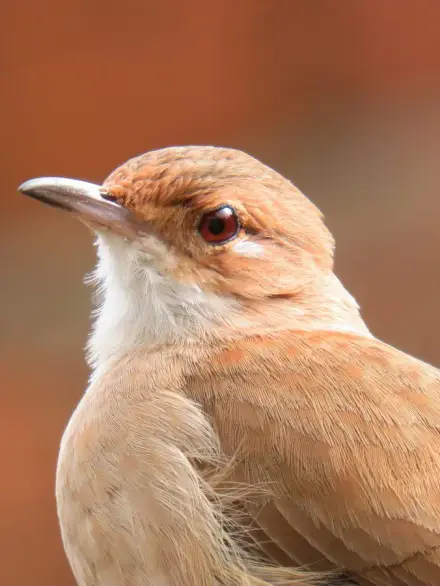
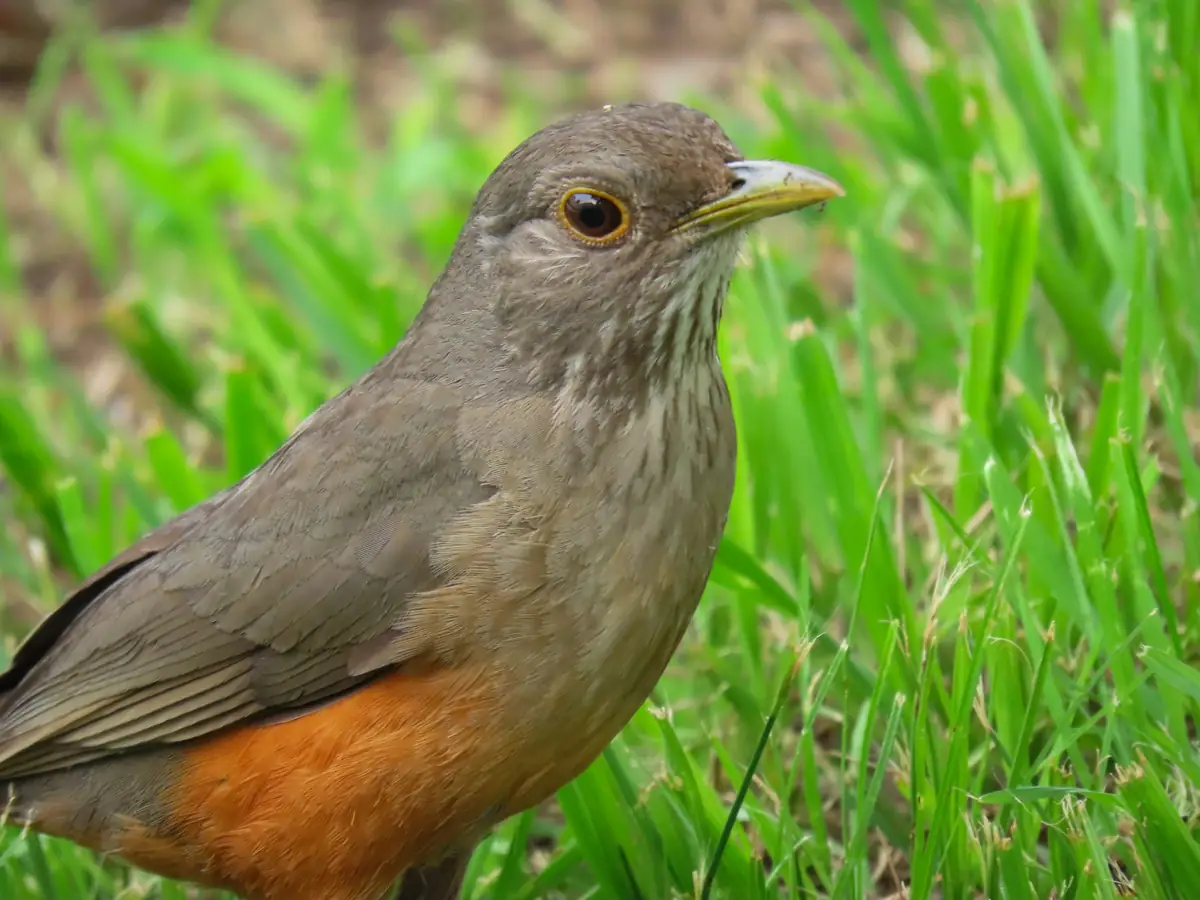
The rufous-bellied thrush is a medium-sized songbird, about 23 centimeters long and weighing around 70 to 80 grams. Its back is grayish brown, its throat is whitish with brown streaks, and its belly is a warm orange-rust color. That belly gives the bird both its English name and its Portuguese one, since laranja is the Portuguese word for orange. It has a yellowish bill and a yellow ring around the eye. Males and females look much alike, although females are often slightly larger, with paler underparts.
It lives in eastern and southern South America, in Brazil, Argentina, Bolivia, Paraguay and Uruguay, but not in the Amazon rainforest. It prefers open woodland and forest edges, and it has adapted well to farms, parks and city gardens, as long as there is water nearby.
The sabiá feeds on the ground and in trees. It eats insects and other small creatures, larvae, earthworms and ripe fruit. When it eats fruit, it later drops the seeds in new places, so it helps spread many plants.
Its song is a series of clear, flute-like phrases that can go on for a long time. In the breeding season the pair builds a cup-shaped nest, and the female lays three or four blue-green eggs speckled with brown.
Conservation
The rufous-bellied thrush is listed as Least Concern on the IUCN Red List. It is common across its large range, and its numbers are considered stable. Unlike many birds, it has done well in landscapes changed by people, such as farms, parks and cities.
The sabiá still faces some pressures. Songbirds in Brazil are sometimes caught illegally and kept in cages for their singing, although wild birds are protected by Brazilian law. Trees, fruiting plants and clean water in towns and cities help sabiás and many other birds.
Because it is so common and so easy to hear, the national bird is a good introduction to birdwatching. Many people in Brazilian cities never see rarer wildlife, but they can learn to recognize the sabiá's song from a window or a park.
Fun facts
- The sabiá-laranjeira has been the state bird of São Paulo since 1966, decades before it became a national symbol.
- Its Portuguese name comes from the orange color of its belly.
- A sabiá sings in the opening lines of Canção do Exílio, one of the best-known poems in Brazilian literature.
Frequently asked questions
What is the national bird of Brazil?
The national bird of Brazil is the rufous-bellied thrush (officially designated). Known in Brazil as the sabiá-laranjeira, it is a medium-sized songbird with an orange-rust belly, and its melodious song is a familiar sound in Brazilian towns and gardens.
Which country has the rufous-bellied thrush as its national bird?
The rufous-bellied thrush is the national bird of Brazil. The rufous-bellied thrush is also known as sabiá-laranjeira.
Why is the rufous-bellied thrush the national bird of Brazil?
A presidential decree of 3 October 2002 named the rufous-bellied thrush, or sabiá-laranjeira, a national symbol of Brazil's birdlife, and its song and presence in towns across much of the country made it a familiar, popular choice. The bird was loved long before that: São Paulo made it the state bird in 1966, and it sings in Canção do Exílio, one of the best-known poems in the Portuguese language.
Is the rufous-bellied thrush endangered?
The rufous-bellied thrush is listed as Least Concern on the IUCN Red List. It is common across its large range, its numbers are considered stable, and it has done well on farms, in parks and in cities.
Where does the rufous-bellied thrush live?
Forest edges, farmland, parks and gardens in eastern and southern South America.
Sources
- Presidência da República (Planalto). Decreto de 3 de outubro de 2002.
- IUCN Red List of Threatened Species. Turdus rufiventris (assessment 2016).
- Conservation status: IUCN Red List of Threatened Species.