The Americas National Animals Quiz
This quiz has 10 questions drawn from the national animals of 21 countries in North, Central and South America and the Caribbean. Guess the country from a photo, pick each country's animal, and decide which ones are threatened or officially designated.
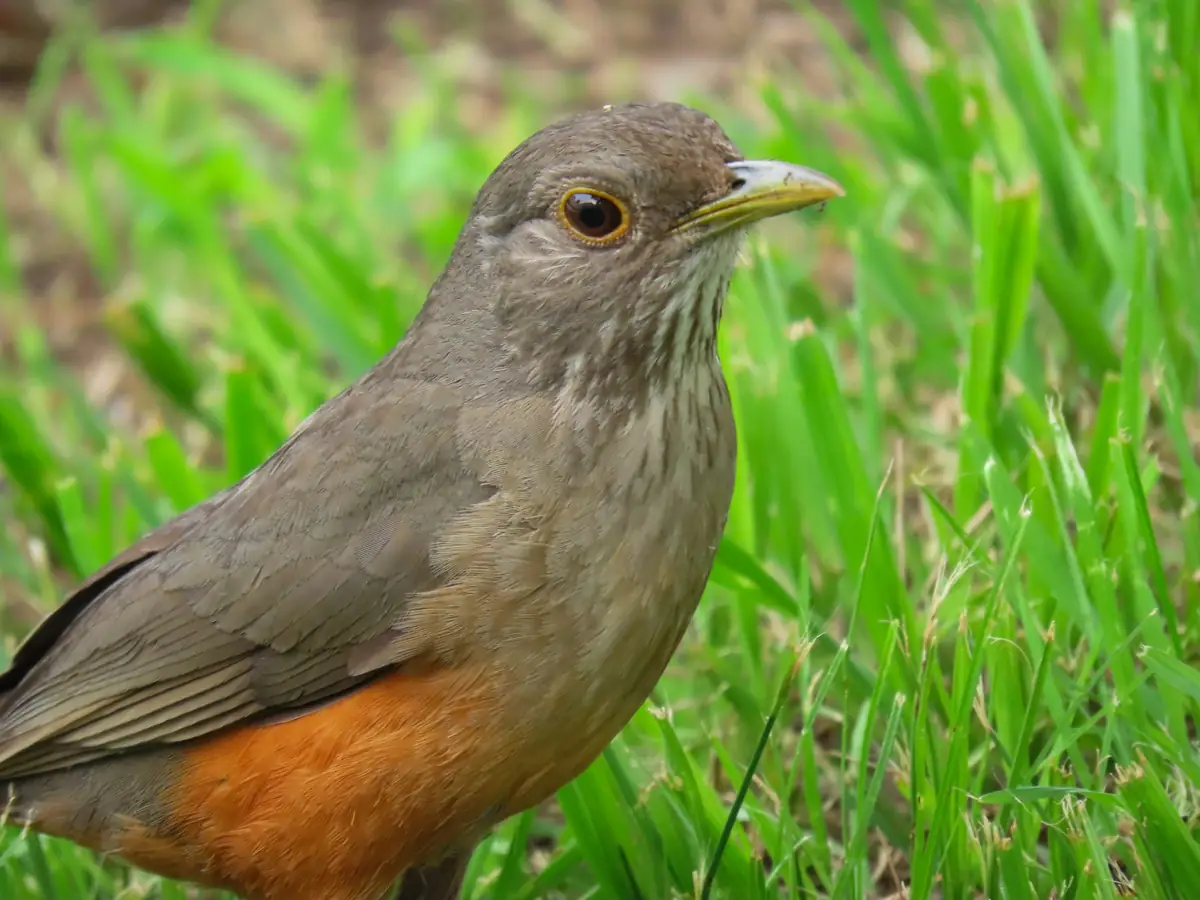
Which country has this as its national bird?
Answers and explanations
These are the 10 questions that open this page. After "Play again" the questions change, and every answer is explained as you go.
Which country has this as its national bird? (Rufous-bellied thrush)
Answer: Brazil
The national bird of Brazil is the rufous-bellied thrush (officially designated). A presidential decree of 3 October 2002 named the rufous-bellied thrush, or sabiá-laranjeira, a national symbol of Brazil's birdlife, and its song and presence in towns across much of the country made it a familiar, popular choice. The bird was loved long before that: São Paulo made it the state bird in 1966, and it sings in Canção do Exílio, one of the best-known poems in the Portuguese language. More about Brazil →
What is the national bird of Trinidad and Tobago?
Answer: Scarlet ibis
The national bird of Trinidad and Tobago is the scarlet ibis (a widely recognized national symbol, not set by law). Trinidad and Tobago has two national birds, one for each island, and both appear on the coat of arms created in 1962, the year of independence: the scarlet ibis represents Trinidad and the cocrico represents Tobago. The committee that designed it chose pictures showing features of the islands themselves, including these two native birds. The ibis's best-known home, the Caroni Swamp in central Trinidad, is one of the country's most famous places to watch wildlife. More about Trinidad and Tobago →
Andean condor: is it a threatened species (Vulnerable, Endangered or Critically Endangered) on the IUCN Red List?
Answer: Yes, threatened
The Andean condor is listed as Vulnerable on the IUCN Red List, raised from Near Threatened in 2020 because numbers are falling and the world population is estimated at only about 10,000 birds. In Colombia it has become very rare, and reintroduction programs have released condors bred in captivity into the high mountains. More about Colombia →
Which country has this as its national animal? (North American beaver)
Answer: Canada
The national animal of Canada is the North American beaver (officially designated). The National Symbol of Canada Act, which received royal assent on 24 March 1975, declares the beaver a symbol of the sovereignty of Canada. The link goes back centuries: from the 1600s to the middle of the 1800s, demand in Europe for beaver fur drew traders and explorers deep into the continent and shaped the growth of the land that would become Canada, and the beaver became Canada's first widely popular symbol, even before the maple leaf. More about Canada →
Golden eagle, national bird of Mexico: officially designated, or a national symbol by tradition?
Answer: National symbol
The national bird of Mexico is the golden eagle (a widely recognized national symbol, not set by law). The Mexican government identifies the eagle at the center of the coat of arms, which also sits in the middle of the national flag, as the golden eagle, called águila real in Spanish. The scene recalls the traditional story of how the Mexica, often called the Aztecs, founded Tenochtitlan on an island in a lake where Mexico City stands today, which makes the eagle one of the oldest and most familiar images in the country. More about Mexico →
What is the national bird of Uruguay?
Answer: Southern lapwing (tero)
The national bird of Uruguay is the southern lapwing (a widely recognized national symbol, not set by law). The southern lapwing, or tero, is the bird most widely described as Uruguay's national bird, and it is the emblem of the national rugby team, Los Teros. No law or decree naming it has been found, so its status rests on popular tradition. More about Uruguay →
Which country has this as its national animal? (Huemul)
Answer: Chile
The national animal of Chile is the huemul (a widely recognized national symbol, not set by law). The huemul holds up Chile's coat of arms, adopted in 1834, together with the Andean condor. It lives only in the southern Andes of Chile and Argentina, so it is a truly local choice, and for many Chileans it stands for the wild south of the country. In 2006 a decree also declared it a natural monument of Chile. More about Chile →
Resplendent quetzal: is it a threatened species (Vulnerable, Endangered or Critically Endangered) on the IUCN Red List?
Answer: No, not threatened
The resplendent quetzal is listed as Near Threatened on the IUCN Red List, with a world population estimated at roughly 20,000 to 50,000 birds that is thought to be falling. The main threat is the loss and breaking up of the cloud forests it depends on. More about Guatemala →
What is the national animal of Peru?
Answer: Vicuña
The national animal of Peru is the vicuña (a widely recognized national symbol, not set by law). The vicuña stands for the animal kingdom on Peru's coat of arms, set by a law of the Constituent Congress on 25 February 1825; the shield's three parts show the country's natural wealth, with a cinchona tree for plants and a horn spilling coins for minerals. It lives wild in Peru's high Andes, and its wool was so prized in the Inca Empire that only the emperor was allowed to wear it. More about Peru →
Which country has this as its national bird? (Rufous hornero)
Answer: Argentina
The national bird of Argentina is the rufous hornero (a widely recognized national symbol, not set by law). The rufous hornero won a vote, not a law: in 1928 the Buenos Aires newspaper La Razón, backed by the Asociación Ornitológica del Plata, asked schoolchildren across the country to choose the bird that best represented Argentina, and the hornero won clearly, with the Andean condor second. The children pointed out that it lives in almost every part of the country, stays all year, often pairs for life, and builds a careful clay nest that is a model of hard work. More about Argentina →
How the questions are made
Every question is built from the national animal pages on this site: the country, the animal, whether it was officially designated or is a national symbol by tradition, and its IUCN Red List category. Each explanation repeats the short answer from that country's page, which lists its sources.
Threat questions skip domestic animals, animals extinct or possibly extinct in the wild, and subspecies such as the Italian wolf, because the IUCN category on those pages covers the whole species. Photo questions skip animals shared by several countries, such as the lion, so there is only ever one right answer.