Europe National Animals Quiz
This quiz has 10 questions drawn from the national animals of 22 European countries. Guess the country from a photo, pick each country's animal, and decide which ones are threatened or officially designated.
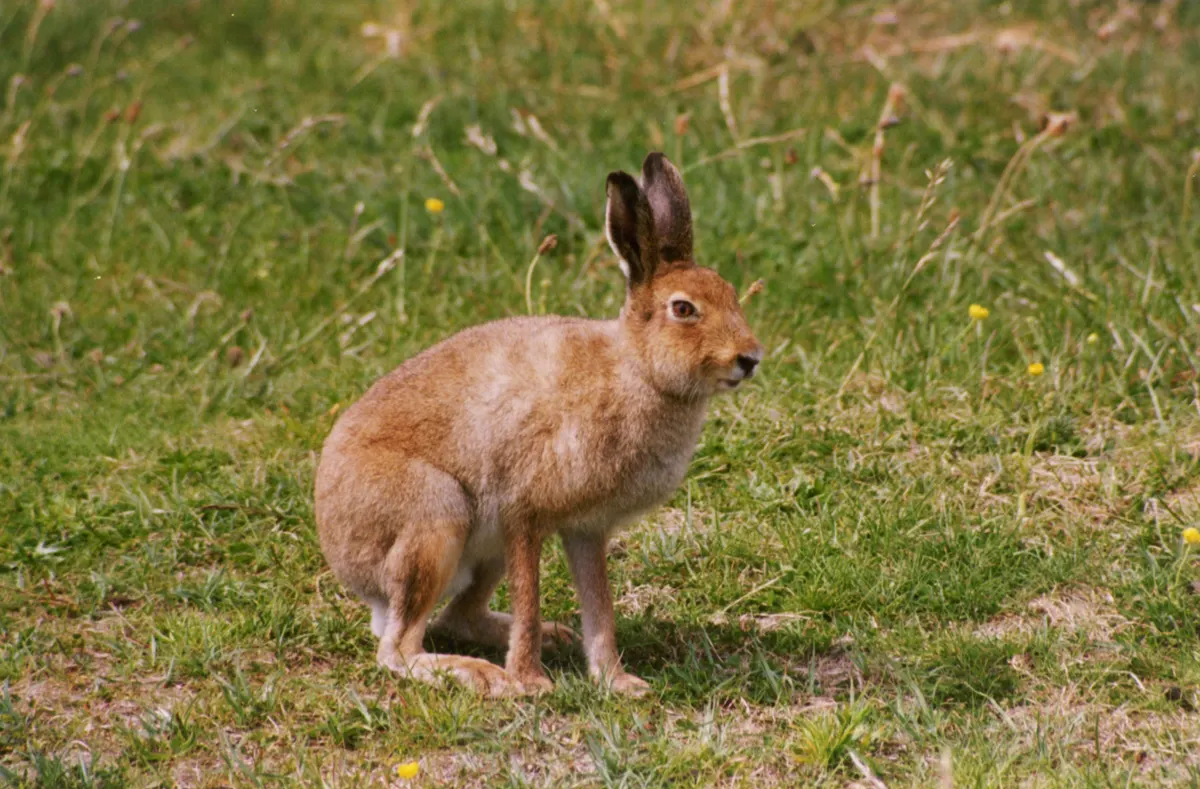
Which country has this as its national animal?
Answers and explanations
These are the 10 questions that open this page. After "Play again" the questions change, and every answer is explained as you go.
Which country has this as its national animal? (Irish hare)
Answer: Ireland
The national animal of Ireland is the Irish hare (a widely recognized national symbol, not set by law). Ireland has never officially chosen a national animal (its official emblem is the harp), but when people name one, the Irish hare is the most common choice. It lives nowhere else in the world, it is the only member of the hare and rabbit family native to Ireland, and it has been on the island for about 12,900 years. It also has a place in Irish culture: a committee led by W. B. Yeats chose native animals for the new state's first coins, and the threepence first issued in 1928 showed a hare. More about Ireland →
What is the national animal of the United Kingdom?
Answer: Lion
The national animal of the United Kingdom is the lion (a widely recognized national symbol, not set by law). The United Kingdom has never named an official national animal, but the lion is the one most often linked with it because it is the real animal at the heart of the Royal Arms, where the three lions of England fill two quarters of the shield and an English lion supports it (the Scottish unicorn on the other side is mythical). The lion has been an emblem of English kings for about eight hundred years, and Richard I's three lions have been England's arms ever since; they also live on in the Three Lions badge of England's football team. More about United Kingdom →
White-throated dipper: is it a threatened species (Vulnerable, Endangered or Critically Endangered) on the IUCN Red List?
Answer: No, not threatened
The white-throated dipper is listed as Least Concern on the IUCN Red List, and Norway has a large breeding population of around 10,000 to 40,000 pairs. It depends on clean, fast-flowing water, so pollution, acid rain and dams can harm it. More about Norway →
Which country has this as its national animal? (European bison)
Answer: Belarus
The national animal of Belarus is the European bison (a widely recognized national symbol, not set by law). The European bison is not named in any law, but the National Library of Belarus lists it among the symbols of the country, and it appears on the Brest Region's coat of arms and flag. Belovezhskaya Pushcha, where bison were brought back in 1946, makes the animal a living emblem of Belarusian nature. More about Belarus →
Mute swan, national bird of Denmark: officially designated, or a national symbol by tradition?
Answer: National symbol
The national bird of Denmark is the mute swan (a widely recognized national symbol, not set by law). In 1984 viewers of the Danish television program Dus med dyrene voted for the mute swan, called knopsvane in Danish, replacing the skylark that the Ministry of Education had named in 1960. The swan has deep roots in Danish culture through Hans Christian Andersen's fairy tale The Ugly Duckling, and it is a familiar sight all year on Denmark's shallow bays, fjords and lakes. More about Denmark →
What is the national bird of Latvia?
Answer: White wagtail
The national bird of Latvia is the white wagtail (a widely recognized national symbol, not set by law). The white wagtail was chosen as Latvia's national bird in 1965 by the Latvian Society for Nature and Monument Protection and other ornithologists, because it is well known across the country and often praised in Latvian folklore as a symbol of diligence. More about Latvia →
Which country has this as its national animal? (Pine marten)
Answer: Croatia
The national animal of Croatia is the pine marten (a widely recognized national symbol, not set by law). In Croatian the marten is called kuna, which was also the name of Croatia's currency from 1994 until the end of 2022, and the link goes back to the Middle Ages, when taxes and payments in lands including Slavonia were recorded in marten skins. Because of this long history on coins and in payments, the pine marten is widely recognized as a Croatian symbol, even though no law names a national animal. More about Croatia →
Black-tailed godwit: is it a threatened species (Vulnerable, Endangered or Critically Endangered) on the IUCN Red List?
Answer: No, not threatened
The black-tailed godwit is listed as Near Threatened on the IUCN Red List. In the Netherlands it fell from about 120,000 breeding pairs around 1960 to fewer than 30,000 by 2015, mainly because of the intensive farming of grasslands. More about Netherlands →
What is the national animal of Spain?
Answer: Spanish fighting bull
The national animal of Spain is the Spanish fighting bull (a widely recognized national symbol, not set by law). The Spanish fighting bull is the national animal of Spain by tradition, not by law: it has long been tied to Spanish culture, from ancient stone sculptures to bullfighting and the Osborne bull. Spain's Supreme Court has stated that the bull is not an official symbol, but a 2024 study calls it Spain's most emblematic animal. More about Spain →
Which country has this as its national bird? (White-tailed eagle)
Answer: Poland
The national bird of Poland is the white-tailed eagle (a widely recognized national symbol, not set by law). Poland's coat of arms shows a crowned white eagle on a red shield, and a white bird resembling an eagle has been the emblem of the Polish state since 1295. The law describes only a heraldic eagle, but many historians believe its model was the white-tailed eagle, and the National Bank of Poland points to the bird's great size, majestic look and pale tail. More about Poland →
How the questions are made
Every question is built from the national animal pages on this site: the country, the animal, whether it was officially designated or is a national symbol by tradition, and its IUCN Red List category. Each explanation repeats the short answer from that country's page, which lists its sources.
Threat questions skip domestic animals, animals extinct or possibly extinct in the wild, and subspecies such as the Italian wolf, because the IUCN category on those pages covers the whole species. Photo questions skip animals shared by several countries, such as the lion, so there is only ever one right answer.