Why it represents the country
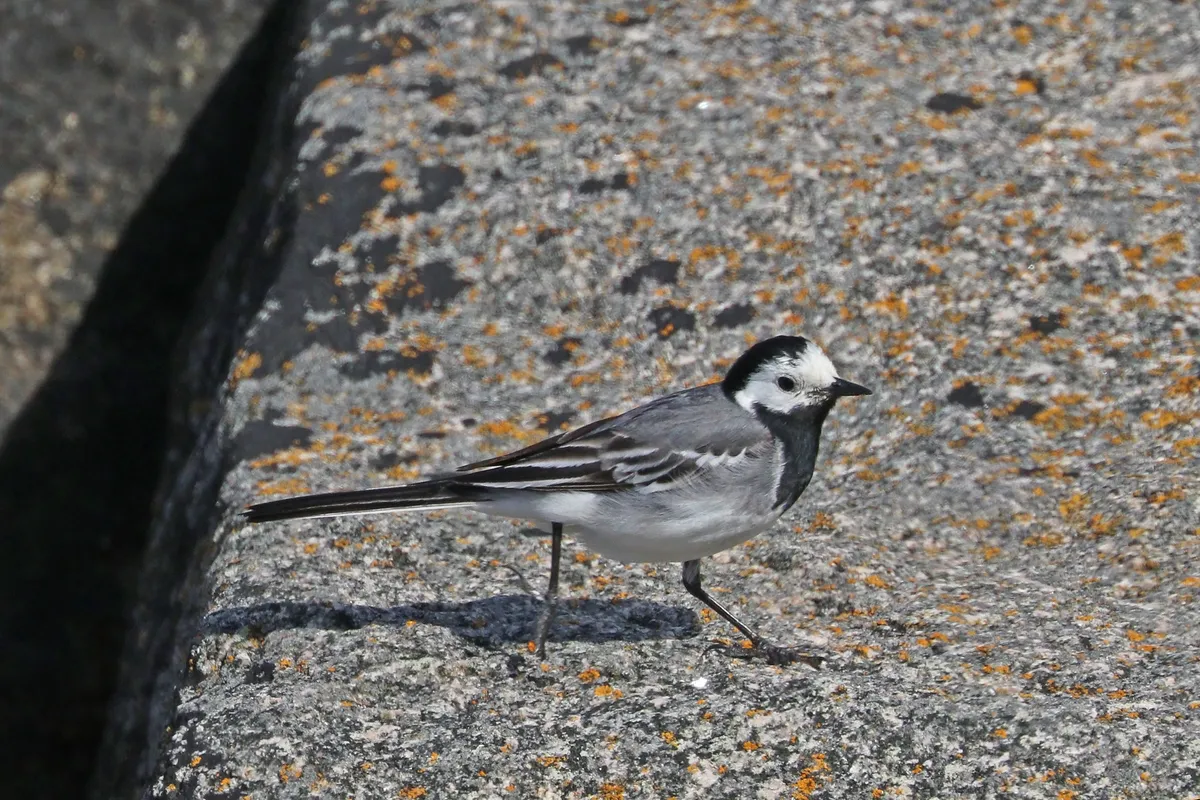
The white wagtail, baltā cielava in Latvian, was recognised as Latvia's national bird in 1965, according to the public broadcaster LSM. It was chosen by the Latvian Society for Nature and Monument Protection together with other ornithologists, as a bird that is well known across the country and often praised in Latvian folklore. No law sets out the choice, so it is a traditional rather than a legal symbol.
The white wagtail appears in Latvian folk songs, where it is described as a symbol of hard work and diligence. Viesturs Ķerus, chair of the Latvian Ornithological Society, has said the wagtail is very close to Latvians both physically and spiritually: it lives right beside people and is always busy, running about and catching insects. As he put it, the wagtail is what we would like to be.
The white wagtail has also travelled on Latvian mail. In 2019, when the joint Europa stamp series was dedicated to national birds, Latvijas Pasts issued two stamps showing the white wagtail, designed by the artist Ģirts Grīva, with a first-day cancellation in Riga on 26 April 2019.
About the animal
The white wagtail is a slender songbird about 16.5 to 19 centimeters long, much of it tail. Adults usually weigh around 20 to 26 grams. It is easy to recognise by its black, white and grey plumage; the male wears a black cap, while the female's cap is usually grey or only partly black.
The white wagtail feeds by day, mostly on the ground, running after insects and other small invertebrates and wagging its long tail up and down as it goes. It is often seen alone or in pairs, but during migration wagtails gather in flocks at good feeding places and at night roosts.
The white wagtail nests in a crevice or hole. In Latvia, the female tucks the nest into a well-hidden spot such as a brush pile, a woodpile or a heap of stones, and sometimes even an unused tractor. A clutch usually has 5 to 6 eggs, which the female incubates for about 13 days, and the young leave the nest about two weeks after hatching. Pairs usually raise two broods a year.
The white wagtail breeds from Europe across Asia and winters in Africa, the Middle East and southern Asia. In Latvia it is seen from April to October; it is a short-distance migrant that spends the winter elsewhere in Europe, though in mild winters a few may stay. Its return in early April, once the snow has melted, is a familiar sign of spring.
Conservation
The white wagtail is listed as Least Concern on the IUCN Red List, and it is also rated Least Concern in Europe. It is protected under Annex III of the Bern Convention on European wildlife.
The white wagtail does well alongside people, nesting in woodpiles, stone heaps and other sheltered spots around homes and farmsteads. Ornithologists in Latvia suggest that if a wagtail has nested in a machine or a pile of materials, people leave it undisturbed for about a month so the chicks can be raised.
The white wagtail is short-lived on average: the typical life expectancy is about 2 years, with birds usually breeding at 1 year old. The oldest known wild bird recorded by the British ringing scheme reached 11 years and 3 months.
Fun facts
- In 2019, Latvia put the white wagtail on two Europa stamps: a €0.78 stamp printed in 46,000 copies and a €1.71 stamp printed in 30,000 copies.
- The white wagtail's long tail is almost always moving, bobbing up and down as the bird walks or pauses.
- Scientists recognise 11 subspecies of the white wagtail; the one that nests in Latvia is Motacilla alba alba.
Other national symbols of Latvia
- National flower
Oxeye daisy Leucanthemum vulgare National symbol
The oxeye daisy (pīpene) is called Latvia's national plant by the Latvian Nature Fund on LV portāls and listed as the national flower by a Latvian academy's guide to state symbols; no designation act was found.
Frequently asked questions
What is the national bird of Latvia?
The national bird of Latvia is the white wagtail (a widely recognized national symbol, not set by law). The white wagtail is a small black, white and grey songbird that lives close to people in Latvian farmsteads and towns from April to October.
Which country has the white wagtail as its national bird?
The white wagtail is the national bird of Latvia.
Why is the white wagtail the national bird of Latvia?
The white wagtail was chosen as Latvia's national bird in 1965 by the Latvian Society for Nature and Monument Protection and other ornithologists, because it is well known across the country and often praised in Latvian folklore as a symbol of diligence.
Is the white wagtail endangered?
The white wagtail is listed as Least Concern on the IUCN Red List as a species, and it is also rated Least Concern in Europe.
Where does the white wagtail live?
Open ground near people and water; in Latvia, farmsteads, towns and the seashore from April to October.
Sources
- LSM (Latvian Public Broadcasting). Eiropas sērijas pastmarkas šogad rotā Latvijas nacionālais putns – baltā cielava (24 April 2019).
- LSM (Latvian Public Broadcasting) / Latvian Radio. Putns, kuram daudzi grib līdzināties. Iepazīstam cilvēkam tuvo balto cielavu (22 July 2026).
- NATTOUR (Ludza Municipality). White wagtail.
- British Trust for Ornithology (BTO). BirdFacts: Pied/White Wagtail.
- Bird Society of Singapore. White Wagtail.
- Animal Diversity Web (University of Michigan). Motacilla alba (classification).
- LV portāls / Latvijas Dabas fonds: Meklē jāņuzāles ceļmalā! 12 dabisko pļavu augi tavam vainagam (20 June 2025) ("Latvijas nacionālais augs").
- Baltic International Academy (bsa.edu.lv): Latvian State Symbols ("National flower: daisy").
- Conservation status: IUCN Red List of Threatened Species.