Why it represents the country
Indonesia recognized the Komodo dragon as a national animal in a presidential decree issued in 1993, which named several animals as national symbols. The Komodo dragon was given the role of the country's national animal.
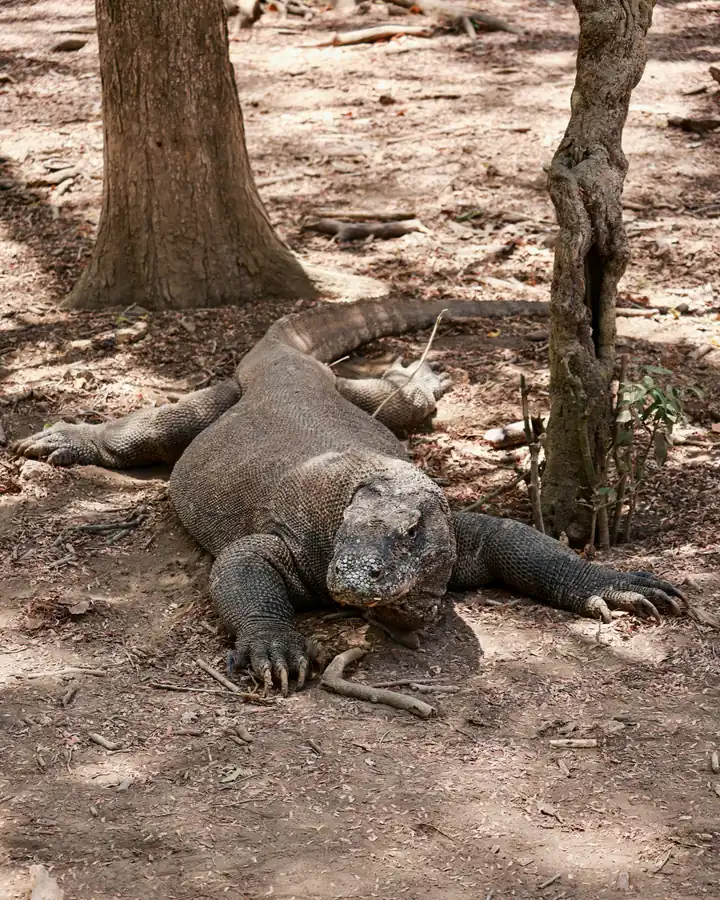
It is easy to see why. The Komodo dragon is found only in Indonesia, on Komodo, Rinca, Flores, Padar and a few smaller islands in the Lesser Sunda chain. It is the largest lizard on Earth, and its size and prehistoric look have made it famous around the world. Scientists outside the region only described it in 1912, and news of a real living dragon soon drew researchers and, later, visitors from many countries.
The dragon is also closely linked to one of Indonesia's best-known protected areas. Komodo National Park was created in 1980 to protect the lizard and its habitat, and it was listed as a UNESCO World Heritage Site in 1991. Interest in the dragon has made it an important draw for nature tourism, which in turn has encouraged its protection.
About the animal
Komodo dragons can grow to around three meters long, and large males are much heavier than females. The heaviest reliably weighed wild dragon, according to the Smithsonian's National Zoo, was about 166 kilograms. They have tough, scaly skin, strong legs with curved claws and a long, muscular tail. Young dragons are green with yellow and black bands, while adults are a plainer brown to grayish red. Like snakes, they flick a long, forked tongue to pick up scents in the air, and they can smell a carcass up to about 4 kilometers away.
They are powerful predators and also scavengers. Adults eat deer, wild pigs, water buffalo and carrion. A dragon usually hunts by ambush, waiting beside a trail and then attacking, and it can run at up to about 16 to 20 kilometers per hour in short bursts. Research has shown that Komodo dragons have venom glands in their lower jaw, and the venom is thought to lower blood pressure and prevent blood from clotting, which helps weaken prey. When several dragons gather at a carcass, the largest males usually eat first.
A Komodo dragon can eat a very large meal in one go, up to about 80 percent of its own body weight, and then go a long time before eating again. Its flexible skull and stretchy throat let it swallow big pieces whole. Young dragons spend their first months in trees, where they are safer from larger dragons, which may eat smaller ones. There they feed on insects, small lizards, eggs and birds.
Mating takes place in the middle of the year, and rival males wrestle while standing upright on their hind legs. Females lay up to about 30 eggs, often in burrows or in mounds dug by other animals, and may guard the nest. The eggs take about eight to nine months to hatch, and the hatchlings are about 40 centimeters long. Komodo dragons have also been recorded producing young without mating, a process called parthenogenesis, in zoos where a female had no contact with males.
Conservation
The Komodo dragon is listed as Endangered on the IUCN Red List. The main reason is its very small range: it lives on only a few islands, and the total area of suitable habitat is limited. International trade in the species is banned under CITES Appendix I.
Climate change is expected to make this worse, because rising sea levels could shrink the low-lying coastal areas the dragon uses. Outside protected areas, the loss of forest and savanna to farms and settlements, poaching, and the hunting of deer and other prey also put pressure on dragon populations.
Inside Komodo National Park the population is considered relatively stable and is closely monitored. Protecting prey animals, managing tourism carefully and conserving the dragon's habitat on Flores, where it has less protection, are all important for its future.
Fun facts
- The Komodo dragon is the largest living lizard in the world.
- Young Komodo dragons live mostly in trees to stay away from bigger dragons.
- Female Komodo dragons in zoos have produced young without a male, through parthenogenesis.
National bird of Indonesia: Javan hawk-eagle
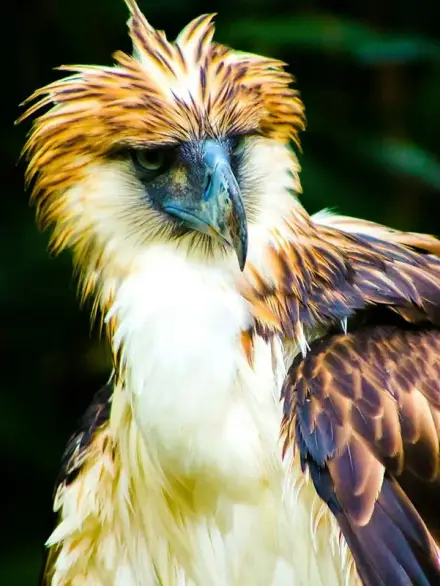
Javan hawk-eagle Nisaetus bartelsi Officially designated
Presidential Decree No. 4 of 1993 named the Javan hawk-eagle one of Indonesia's three national animals, representing the air, as the 'rare animal'.
The Javan hawk-eagle lives only on the Indonesian islands of Java and Bali, in the patches of humid tropical forest that remain, now mostly on steep slopes, ridges and mountains between about 200 and 1,200 metres. The eagle hunts from a perch, dropping onto mammals, birds and reptiles. The IUCN Red List classes the species as Endangered, with an estimated 300 to 1,200 mature birds left, and trapping for trade is now its biggest threat.
Other national symbols of Indonesia
- National flower
Arabian jasmine (melati putih) Jasminum sambac Officially designated
Presidential Decree No. 4 of 1993 named jasmine (melati) Indonesia's 'puspa bangsa', the flower of the nation.
Frequently asked questions
What is the national animal of Indonesia?
The national animal of Indonesia is the Komodo dragon (officially designated). It is the largest living lizard on Earth and lives only on Komodo, Rinca, Flores, Padar and a few smaller islands in eastern Indonesia.
Which country has the Komodo dragon as its national animal?
The Komodo dragon is the national animal of Indonesia. The Komodo dragon is also known as Komodo monitor.
Why is the Komodo dragon the national animal of Indonesia?
A presidential decree issued in 1993 named several animals as national symbols and gave the Komodo dragon the role of national animal. It is found only in Indonesia, it is the largest lizard on Earth, and its size and prehistoric look have made it famous around the world.
Is the Komodo dragon endangered?
The Komodo dragon is listed as Endangered on the IUCN Red List, mainly because it lives on only a few islands with a limited total area of suitable habitat. Inside Komodo National Park the population is considered relatively stable and is closely monitored.
Where does the Komodo dragon live?
Dry grassland, savanna and tropical forest on a few islands in eastern Indonesia.
What is the national bird of Indonesia?
The national bird of Indonesia is the Javan hawk-eagle (officially designated). Presidential Decree No. 4 of 1993 named the Javan hawk-eagle one of Indonesia's three national animals, representing the air, as the 'rare animal'.
Sources
- Smithsonian's National Zoo and Conservation Biology Institute. Komodo dragon.
- UNESCO World Heritage Centre. Komodo National Park.
- Encyclopaedia Britannica. Komodo dragon.
- Animal Diversity Web, University of Michigan. Varanus komodoensis: Komodo dragon.
- IUCN Red List of Threatened Species. Varanus komodoensis (assessment 2021).
- Keputusan Presiden RI Nomor 4 Tahun 1993 tentang Satwa dan Bunga Nasional (full text, Wikisource).
- Thai PBS: 6 national birds of Asia (Javan hawk-eagle, national bird of Indonesia).
- BirdLife DataZone: Javan Hawk-eagle Nisaetus bartelsi Species Factsheet.
- Keputusan Presiden RI Nomor 4 Tahun 1993 tentang Satwa dan Bunga Nasional (full text, Wikisource).
- Conservation status: IUCN Red List of Threatened Species.