Why it represents the country
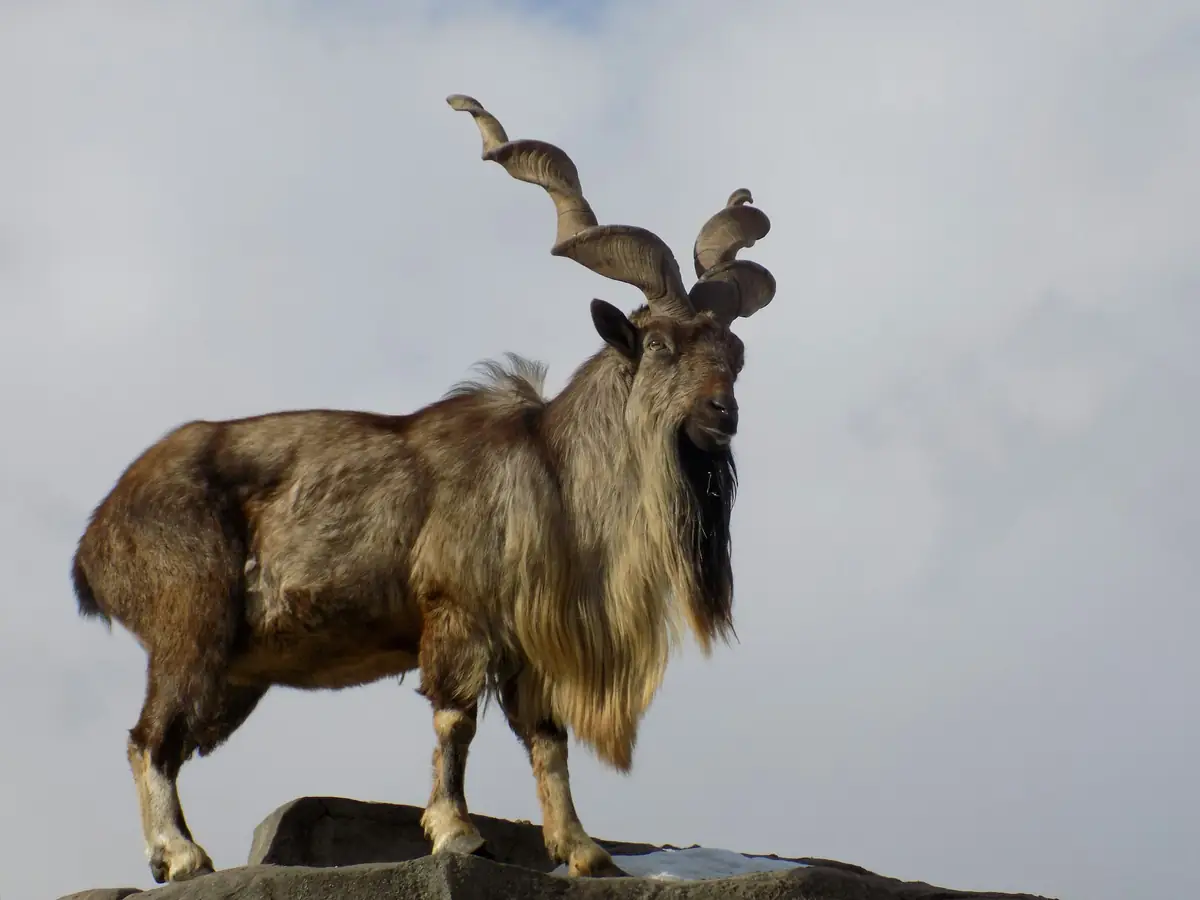
The markhor is widely recognized as the national animal of Pakistan. No specific law naming it has been found, but the choice is accepted across the country and internationally. When the United Nations General Assembly created the International Day of the Markhor, first celebrated on 24 May 2024, the UN described the markhor as the national animal of Pakistan.
The markhor suits a country with some of the highest mountains in the world. It lives on steep cliffs and rocky slopes where few other large animals can go, and it is admired for its strength, sure footing and magnificent horns. It has become a well-known face of wildlife protection in the country.
The markhor is also a symbol of conservation success. Its numbers fell sharply in the late 20th century, and work with mountain communities has since helped it recover in several areas. Today the markhor is a reminder that people and wildlife can share the mountains.
About the animal
The markhor is a large wild goat. Males are much bigger than females: adult males weigh about 80 to 110 kilograms, while females weigh about 32 to 50 kilograms. The coat ranges from light tan to dark brown and grows longer and thicker in winter. Males also grow a long, shaggy beard and a mane of long hair on the throat and chest.
The markhor's horns are its most famous feature. They twist upward in tight corkscrew spirals, and in older males they can reach about 1.6 meters in length. Females have horns too, but much shorter ones. The name markhor is often explained as coming from words meaning snake horn, a reference to the twisting shape.
Markhor live in the mountains of Central and South Asia, usually between about 600 and 3,600 meters, in open woodlands of oak, pine and juniper, on scrubby slopes and on cliffs. They are superb climbers. They feed on grasses in spring and summer, and on leaves, twigs and shrubs in autumn and winter. They are most active in the early morning and late afternoon.
Females and young live in small herds, while adult males usually live alone for much of the year. The breeding season comes in late autumn and winter, when males clash horns to compete for females. After a pregnancy of about five months, a female gives birth to one or two kids, which can follow her over rocky ground within a short time.
Conservation
The markhor is listed as Near Threatened on the IUCN Red List. It was once listed as Endangered, but its status was improved after conservation work helped several populations grow. The UN notes that roughly 5,700 mature markhor remain in the wild, and the species has been listed on Appendix I of CITES since 1992, which bans international commercial trade.
The main threats are habitat loss, illegal hunting and climate change. Markhor also compete for food with domestic goats and sheep that graze the same slopes, and farming has spread into parts of their habitat.
Community-based conservation has made a real difference. In several mountain valleys, local people have agreed to stop poaching and to guard markhor herds, and in return they receive part of the income that conservation brings to their villages. Where this approach has worked, markhor numbers have risen, and it is now seen as a model for protecting other mountain wildlife.
Fun facts
- A male markhor's corkscrew horns can grow to about 1.6 meters long.
- The United Nations marks 24 May as the International Day of the Markhor, first celebrated in 2024.
- A markhor's alarm call sounds very much like the bleat of a domestic goat.
National bird of Pakistan: Chukar partridge
Chukar partridge Alectoris chukar National symbol
Pakistan's Ministry of Foreign Affairs lists the chukar partridge as the national bird among the country's national symbols.
The chukar partridge is a sandy-brown game bird of dry, rocky slopes, native to Eurasia and introduced to western North America, Hawaii and New Zealand. Dark bars along the flanks, a black band across the head and neck and a red bill make the chukar easy to recognise. Chukars run up steep ground so nimbly that hunters nicknamed them the "devil bird", and they bathe in dust almost every day.
Frequently asked questions
What is the national animal of Pakistan?
The national animal of Pakistan is the markhor (a widely recognized national symbol, not set by law). It is a large wild goat with spectacular corkscrew horns that can reach about 1.6 meters in older males, and it climbs steep cliffs and rocky slopes with ease.
Which country has the markhor as its national animal?
The markhor is the national animal of Pakistan. The markhor is also known as screw-horned goat.
Why is the markhor the national animal of Pakistan?
No specific law naming the markhor has been found, but the choice is accepted across Pakistan and internationally; when the UN General Assembly created the International Day of the Markhor, first celebrated on 24 May 2024, it described the markhor as the national animal of Pakistan. It suits a country with some of the highest mountains in the world, and it is admired for its strength, sure footing and magnificent horns.
Is the markhor endangered?
The markhor is listed as Near Threatened on the IUCN Red List; it was once listed as Endangered, but its status improved after conservation work helped several populations grow. The UN notes that roughly 5,700 mature markhor remain in the wild.
Where does the markhor live?
Steep, rocky mountain slopes with open oak, pine and juniper woodland.
What is the national bird of Pakistan?
The national bird of Pakistan is the chukar partridge (a widely recognized national symbol, not set by law). Pakistan's Ministry of Foreign Affairs lists the chukar partridge as the national bird among the country's national symbols.
Sources
- United Nations. International Day of the Markhor.
- Animal Diversity Web, University of Michigan. Capra falconeri: markhor.
- IUCN Red List of Threatened Species. Capra falconeri (assessment 2015).
- Ministry of Foreign Affairs, Pakistan (Embassy Ankara): National symbols of Pakistan.
- Cornell Lab of Ornithology, All About Birds: Chukar Overview.
- Conservation status: IUCN Red List of Threatened Species.