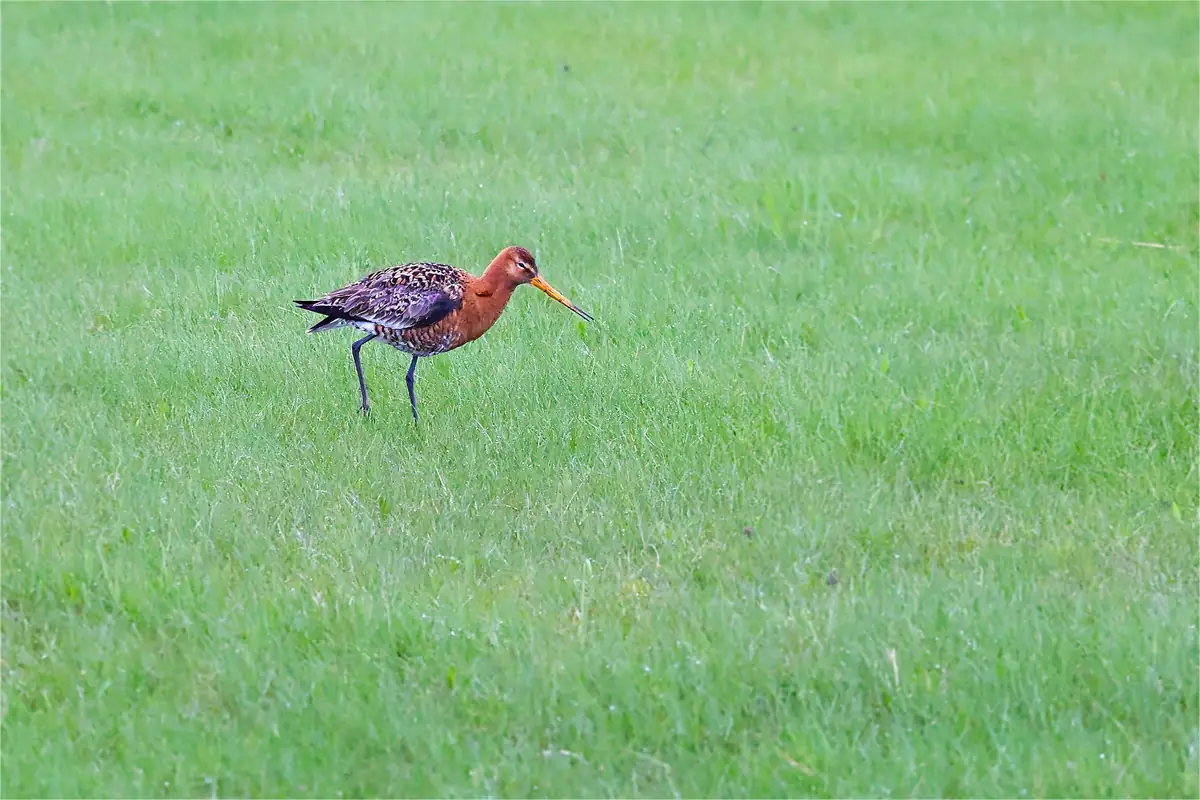
Why it represents the country
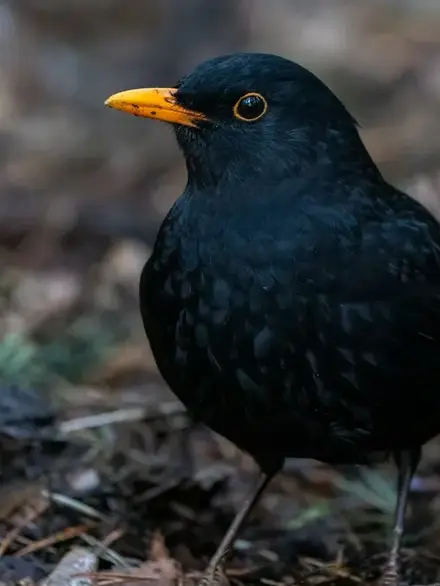
The Netherlands chose its national bird by public vote. In 2015 the radio nature program Vroege Vogels and the bird protection society Vogelbescherming Nederland invited people to vote. More than 41,000 votes were cast, and the black-tailed godwit, called the grutto in Dutch, won with nearly a quarter of them. The blackbird came second and the house sparrow third. It is a popular choice, not a legal one.
The godwit is closely tied to the Dutch landscape. Wet meadows grazed by cows, crossed by ditches and dotted with windmills are exactly where godwits like to breed, and a large share of the godwits of western Europe nest in the Netherlands. The bird's loud call, which sounds a bit like its Dutch name, is one of the familiar sounds of the Dutch countryside in spring.
The vote was also meant to draw attention to the bird's decline. By choosing the godwit, voters chose a national bird that needs help, and one whose future depends on how Dutch farmland is managed.
About the animal
The black-tailed godwit is an elegant wading bird with long legs and a very long, straight bill. In the breeding season the male's head, neck and breast turn a warm orange-brown, while in winter both sexes are plain grey-brown. In flight it shows a bold white wing bar and a white rump above a black tail band, which gives the bird its name.
Godwits use their long bills to probe deep into soft soil and mud. On the breeding grounds they eat worms, insect larvae and other small animals from the meadows. In winter many feed in wetlands, rice fields and estuaries, where they also eat seeds and grains.
Most Dutch godwits arrive back from their winter homes in late winter and early spring. Pairs nest on the ground in tall grass. The chicks leave the nest soon after hatching and find their own insects among the grass stems, while the parents stand guard and call noisily at crows, foxes and other predators. The chicks need rich, flowery meadows with plenty of insects to grow quickly.
After breeding, the birds fly south. Many Dutch godwits spend the winter in West Africa, and some stop over in Spain and Portugal on the way, making long journeys every year between the Netherlands and Africa.
Conservation
The black-tailed godwit is listed as Near Threatened on the IUCN Red List. In the Netherlands its decline has been steep. According to Vogelbescherming Nederland, there were about 120,000 breeding pairs around 1960, and fewer than 30,000 by 2015.
The main cause is the intensive farming of grasslands. Meadows that are drained, heavily fertilized and mown early in the season have fewer flowers and insects, and mowing machines can destroy nests and chicks. Lower water levels also make the soil too hard for godwits to probe. Predators such as foxes and crows then take many of the chicks that are left.
Farmers, volunteers and conservation groups now work together to help. Some farmers delay mowing, leave strips of grass standing, raise water levels in parts of their land and mark nests so machines can avoid them. Protecting wet, flowery meadows helps not only the godwit but also other meadow birds such as lapwings and redshanks.
Where to see the black-tailed godwit in the wild
Wild black-tailed godwits in the Netherlands breed in moist to wet grassland on clay and peat soils, with the highest densities in Friesland, the Kop van Overijssel, Noord-Holland north of the North Sea Canal and the Green Heart.
Watch wild animals from a distance, never feed them, and follow the rules and rangers of each protected area.
Fun facts
- The Dutch name for the godwit, grutto, echoes the sound of the bird's own call.
- More than 41,000 votes were cast in the 2015 contest to choose the Dutch national bird.
- Many Dutch godwits spend the winter in West Africa and fly back to the same meadows each spring.
Frequently asked questions
What is the national bird of the Netherlands?
The national bird of the Netherlands is the black-tailed godwit (a widely recognized national symbol, not set by law). It is an elegant, long-legged wading bird of wet meadows, called the grutto in Dutch, and a large share of the godwits of western Europe nest in the Netherlands.
Which country has the black-tailed godwit as its national bird?
The black-tailed godwit is the national bird of the Netherlands.
Why is the black-tailed godwit the national bird of the Netherlands?
In 2015 the radio nature program Vroege Vogels and the bird protection society Vogelbescherming Nederland held a public vote, and the black-tailed godwit won with nearly a quarter of more than 41,000 votes, ahead of the blackbird and the house sparrow. The bird is closely tied to the Dutch landscape of wet, grazed meadows, and the vote was also meant to draw attention to its decline.
Is the black-tailed godwit endangered?
The black-tailed godwit is listed as Near Threatened on the IUCN Red List. In the Netherlands it fell from about 120,000 breeding pairs around 1960 to fewer than 30,000 by 2015, mainly because of the intensive farming of grasslands.
Where does the black-tailed godwit live?
Wet, flowery grasslands and meadows, often on farmland.
Where can you see the black-tailed godwit in the wild?
Wild black-tailed godwits in the Netherlands breed in moist to wet grassland on clay and peat soils, with the highest densities in Friesland, the Kop van Overijssel, Noord-Holland north of the North Sea Canal and the Green Heart.
Sources
- Vogelbescherming Nederland. Grutto gekozen tot nationale vogel.
- IUCN Red List of Threatened Species. Limosa limosa (assessment 2025).
- Sovon Vogelonderzoek – Black-tailed Godwit (Grutto): distribution and trends.
- Conservation status: IUCN Red List of Threatened Species.