Why it represents the country
Poland's coat of arms, set out in the Constitution and in a 1980 law on national symbols, shows a crowned white eagle on a red shield. The law describes a heraldic white eagle and does not name any real species, so the white-tailed eagle is a national symbol by tradition rather than by law. A white bird resembling an eagle has been the emblem of the Polish state since 1295.
Many historians believe the model was the white-tailed eagle rather than the golden eagle. The National Bank of Poland points to the bird's great size and majestic look, and to its pale tail, which may have helped make it the symbol of the Polans, the early tribe that gave Poland its name. A popular legend tells of Lech, the legendary forefather of the Poles, who saw a white eagle on its nest against a red evening sky and founded his settlement, Gniezno, on that spot.
The bird is also part of Polish money. Since 1995 the National Bank of Poland has issued gold investment coins called Bielik, the Polish name for the white-tailed eagle. The modern design of the national emblem goes back to a 1927 version by Zygmunt Kamiński, a professor at the Warsaw University of Technology.
About the animal
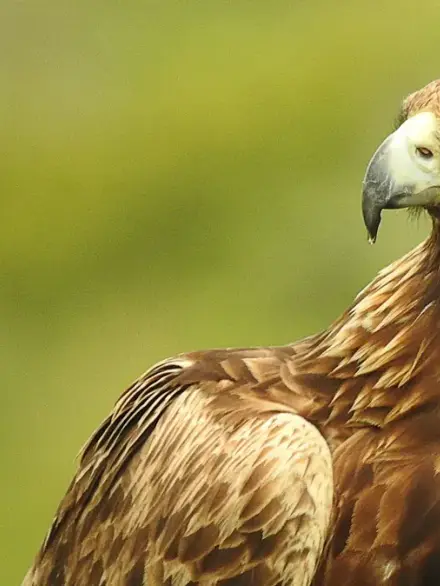
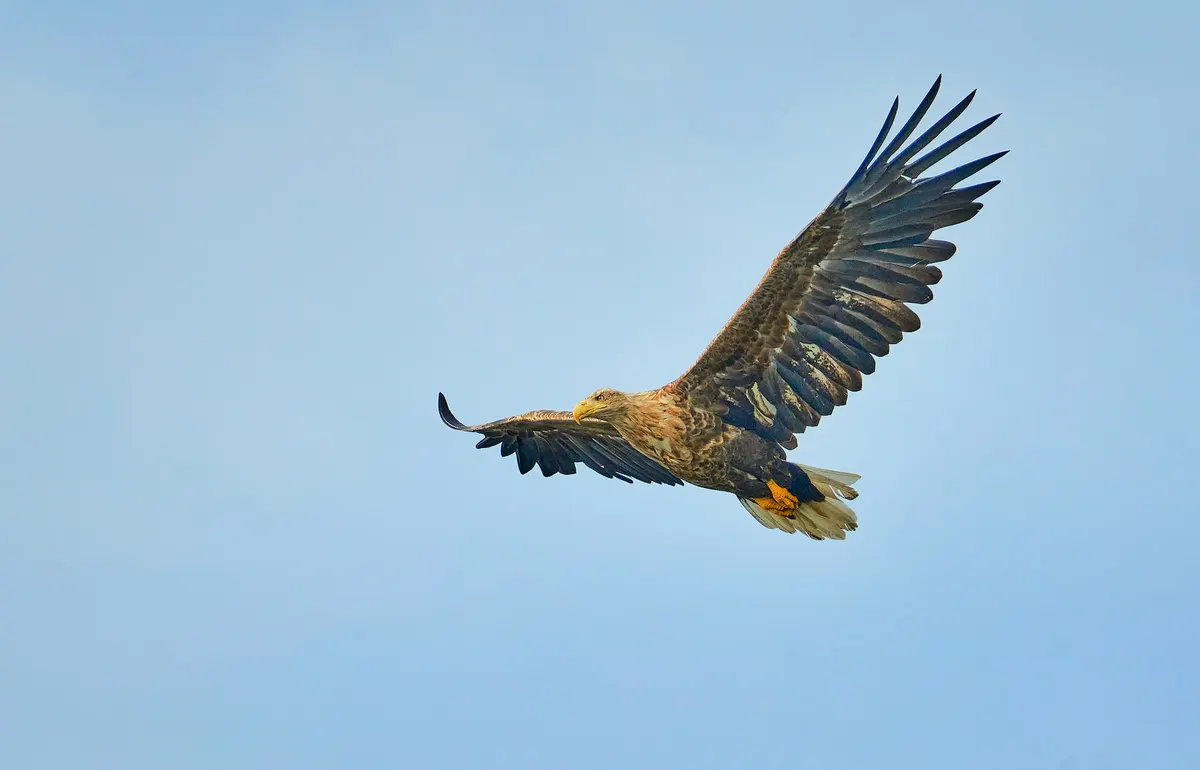
The white-tailed eagle is one of the largest eagles in Europe. Adults are about 75 to 90 centimeters long, with a wingspan of up to about 2.45 meters, and the heaviest birds weigh close to 7 kilograms. Females are larger than males. Adults are mostly brown, with a paler head and neck, a massive yellow beak and a short, wedge-shaped white tail.
Young eagles look quite different. They are darker and more mottled, with a dark beak and a dark tail, and they take several years to reach full adult colors. In flight the white-tailed eagle looks huge, with long, broad wings that are often compared to a flying door.
The white-tailed eagle lives near water. It eats mainly fish and waterbirds, which it snatches from the surface of lakes, rivers and the sea, and it also eats a lot of carrion, especially in winter. It sometimes steals food from other birds, such as ospreys. Its bare lower legs and rough-soled toes help it hold slippery fish.
Pairs usually stay together for life and keep the same territory year after year. In Poland they nest high in old trees, often near lakes or rivers, and add new branches every season. Over the years a nest can become enormous, up to about 1.8 meters across. The female usually lays one to three eggs in late winter or early spring.
Conservation
The white-tailed eagle is listed as Least Concern on the IUCN Red List. In the past it was shot, trapped and poisoned across Europe, and in the 20th century pesticides such as DDT caused many eggs to fail. It had vanished from the British Isles by 1918 and from most of southern Europe by the 1950s.
Poland's eagles tell a story of recovery. At the start of the 20th century only about 20 pairs nested in what is now Poland. There were about 100 pairs around 1970, 223 pairs in 1994 and 767 pairs in 2008, according to figures from Polish ornithologists published by the National Bank of Poland. Poland now has one of the largest populations in Europe, after Norway and Russia.
Strict legal protection, quiet zones around nests and the work of Polish conservationists helped the comeback. Today's threats include lead poisoning from eating animals shot with lead ammunition, collisions with power lines and wind turbines, and disturbance near nests. Protecting old trees close to lakes and rivers is important for its future.
Fun facts
- A white eagle has been the emblem of the Polish state since 1295.
- Poland's gold investment coins are named Bielik, the Polish word for the white-tailed eagle.
- In about a century, Poland's white-tailed eagles grew from around 20 nesting pairs to more than 700.
Frequently asked questions
What is the national bird of Poland?
The national bird of Poland is the white-tailed eagle (a widely recognized national symbol, not set by law). It is Poland's largest bird of prey, a mostly brown eagle with a paler head, a massive yellow beak, a short white tail and a wingspan of up to about 2.45 meters.
Which country has the white-tailed eagle as its national bird?
The white-tailed eagle is the national bird of Poland. The white-tailed eagle is also known as sea eagle or white-tailed sea-eagle.
Why is the white-tailed eagle the national bird of Poland?
Poland's coat of arms shows a crowned white eagle on a red shield, and a white bird resembling an eagle has been the emblem of the Polish state since 1295. The law describes only a heraldic eagle, but many historians believe its model was the white-tailed eagle, and the National Bank of Poland points to the bird's great size, majestic look and pale tail.
Is the white-tailed eagle endangered?
The white-tailed eagle is listed as Least Concern on the IUCN Red List. In Poland it has made a strong recovery, from only about 20 nesting pairs at the start of the 20th century to 767 pairs in 2008, giving the country one of the largest populations in Europe.
Where does the white-tailed eagle live?
Lakes, river valleys, coasts and wetlands with old trees for nesting.
Sources
- Narodowy Bank Polski. Bankoteka magazine no. 15 (English edition): the White-tailed eagle.
- National Geographic Polska. Orzeł bielik jest największym ptakiem drapieżnym w Polsce.
- Encyclopaedia Britannica. Sea eagle.
- IUCN Red List of Threatened Species. Haliaeetus albicilla (assessment 2021).
- Conservation status: IUCN Red List of Threatened Species.