Why it represents the country
The fennec fox is Algeria's national animal by tradition. No law names it, but the tiny desert fox is closely tied to the country's identity. Algeria's national football team is known as Les Fennecs, the Fennecs.
The choice suits the landscape. Most of Algeria lies within the Sahara, the largest hot desert in the world, and the fennec is one of the animals best adapted to life there. It copes with burning days, cold nights and very little water, which makes it a fitting emblem for a desert country.
Algeria also has a long scientific link to the species. When naturalists in the late 1700s and early 1800s gave the fennec its early scientific names, several of those descriptions were based on animals from Algeria and neighboring North African countries. Today the fennec is protected by law in Algeria.
About the animal
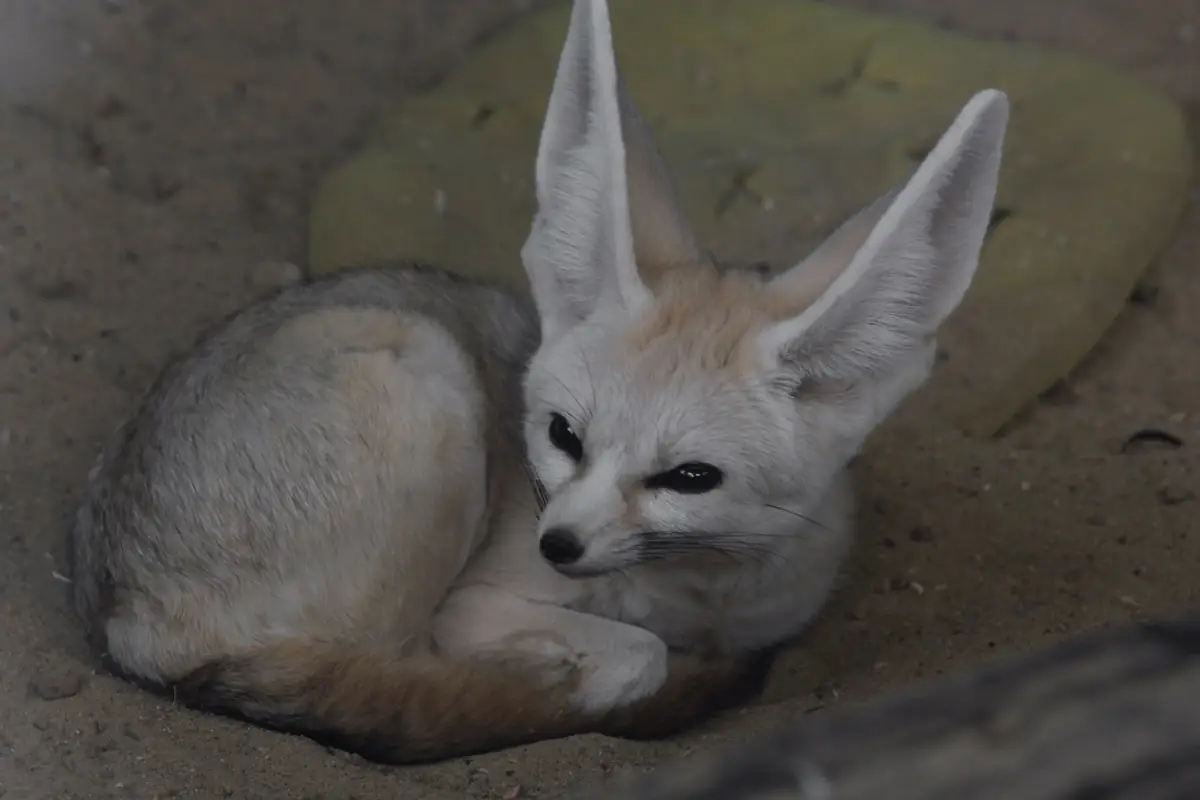
The fennec is the smallest fox in the world. It weighs only about 0.8 to 1.5 kilograms, less than an average house cat, and its body is about 30 to 40 centimeters long, with a bushy tail that adds another 18 to 30 centimeters. Its thick, silky coat is a pale sandy color that blends into the desert, with white on the face, legs and belly and a black tip on the tail.
Its most famous feature is its ears, which can be about 15 centimeters long, huge for such a small head. The ears help in two ways: they give off body heat, which keeps the fox cool, and they are sensitive enough to hear small animals moving under the sand. The soles of its feet are covered with thick fur, which protects them from the hot ground.
Fennecs are active mainly at night, when the desert is cooler, and spend the hot day in burrows they dig in the sand, often under bushes whose roots help hold the tunnel walls in place. Some dens have several entrances and may be shared by more than one family. Fennecs eat almost anything they can find, including insects, small rodents, lizards, birds, eggs, fruit, leaves and roots. They can go for long periods without drinking, getting the water they need from their food.
Fennecs are social animals. A family group can include up to about 10 foxes: a breeding pair that often stays together for life, their young and sometimes older offspring. Mating takes place in winter, and pups are born after a pregnancy of about 50 days, usually two to four in a litter. They are born blind and weigh only about 50 grams, and both parents help to raise them.
Conservation
The fennec fox is listed as Least Concern on the IUCN Red List. It has a wide range across the Sahara and North Africa, and it lives in remote, dry places where few people settle.
Even so, fennecs face some threats. In parts of North Africa they are trapped to be shown or sold to tourists, and they are also kept as exotic pets in some parts of the world. Where permanent settlements have spread into the desert, as in parts of southern Morocco, fennecs have disappeared from those areas. Because they are shy and live in such remote places, scientists still know little about how many there are.
The fennec is listed in Appendix II of CITES, which regulates international trade, and it is protected by law in Algeria and several other North African countries. It also lives in a number of protected areas. Fennecs are wild animals with special needs, and leaving them in the desert is the best way to make sure Algeria's national animal stays common.
Where to see the fennec fox in the wild
Wild fennec foxes in Algeria live across the sandy deserts of the Algerian Sahara, and researchers have studied them near El Oued and Ouargla in the country's northeastern Sahara.
Watch wild animals from a distance, never feed them, and follow the rules and rangers of each protected area.
Fun facts
- A fennec's ears can be about 15 centimeters long, big enough to hear prey moving under the sand.
- Fennecs can go for long periods without drinking, getting water from the food they eat.
- A fennec can jump about 70 centimeters straight up, more than three times its height at the shoulder.
Frequently asked questions
What is the national animal of Algeria?
The national animal of Algeria is the fennec fox (a widely recognized national symbol, not set by law). The fennec fox is the smallest fox in the world, a sandy-colored desert fox whose ears, about 15 centimeters long, help it stay cool and hear small animals moving under the sand.
Which country has the fennec fox as its national animal?
The fennec fox is the national animal of Algeria.
Why is the fennec fox the national animal of Algeria?
No law names the fennec fox, but by tradition it is Algeria's national animal and is closely tied to the country's identity: the national football team is known as Les Fennecs. Most of Algeria lies within the Sahara, and the fennec, which copes with burning days, cold nights and very little water, is one of the animals best adapted to life there, a fitting emblem for a desert country.
Is the fennec fox endangered?
The fennec fox is listed as Least Concern on the IUCN Red List, with a wide range across the Sahara and North Africa. It still faces some threats, such as being trapped for tourists or kept as an exotic pet, and it is protected by law in Algeria.
Where does the fennec fox live?
Sandy deserts and dunes of the Sahara and nearby dry lands.
Where can you see the fennec fox in the wild?
Wild fennec foxes in Algeria live across the sandy deserts of the Algerian Sahara, and researchers have studied them near El Oued and Ouargla in the country's northeastern Sahara.
Sources
- Animal Diversity Web, University of Michigan. Vulpes zerda: fennec fox.
- IUCN Red List of Threatened Species. Vulpes zerda (assessment 2015).
- San Diego Zoo Wildlife Alliance Library – Fennec fox fact sheet: population and conservation.
- Mammal Diversity Database – Vulpes zerda.
- Folia Zoologica – First quantitative data on the diet of the fennec fox in Algeria (2012).
- Conservation status: IUCN Red List of Threatened Species.