Why it represents the country
The bald eagle has represented the United States since 1782, when it was placed at the center of the Great Seal. It holds an olive branch in one talon and a bundle of arrows in the other. Since then it has appeared on coins, banknotes, passports and government buildings.
For more than two centuries the eagle was treated as the national bird without a law that said so. That changed in December 2024, when a bill naming the bald eagle as the official national bird was signed into law.
The choice was not always popular. In a 1784 letter to his daughter, Benjamin Franklin grumbled that the eagle was a bird of bad moral character because it sometimes steals fish from other birds. The eagle's image won out, and today it is one of the most recognized national symbols in the world.
About the animal
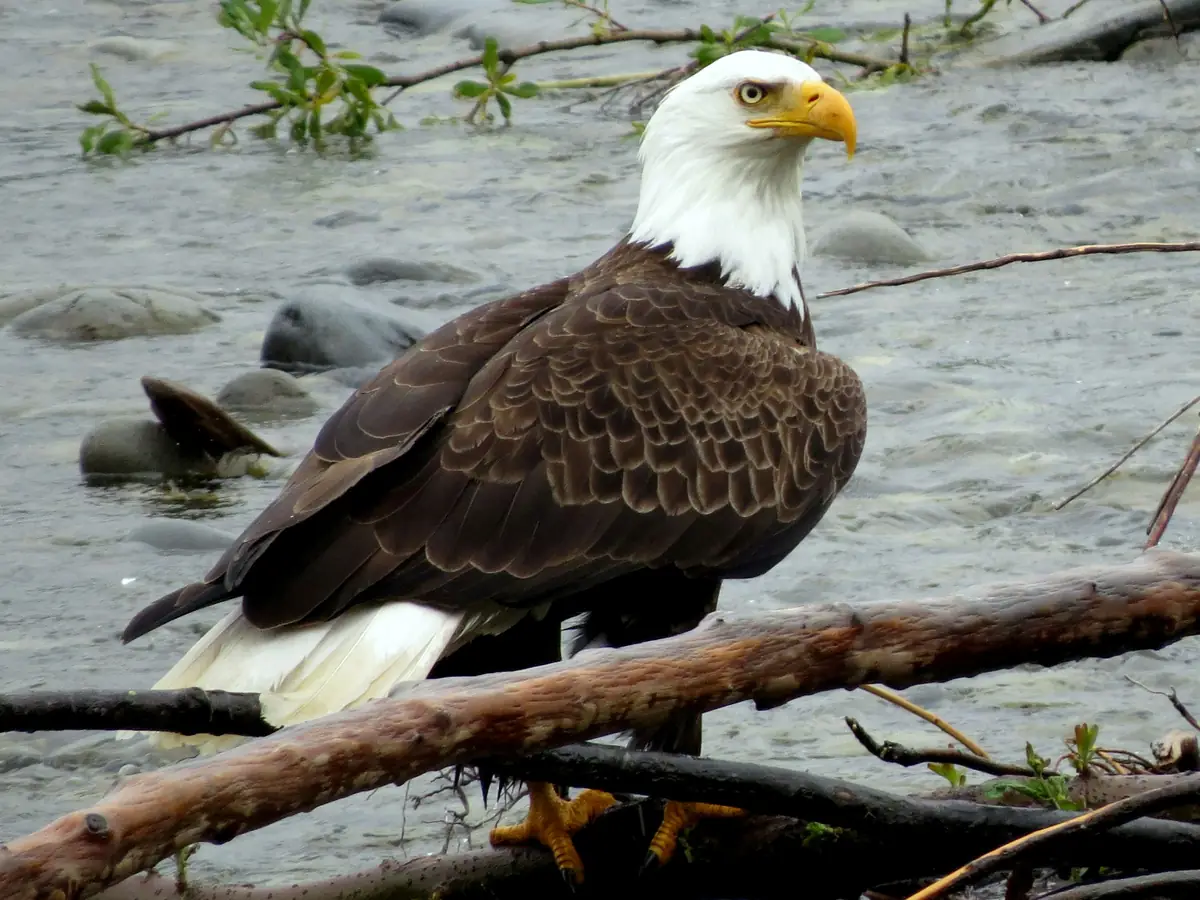
Despite its name, the bald eagle is not bald. The name comes from an older meaning of the word bald, which meant white-headed. Adults have a dark brown body, a bright white head and tail, and a large yellow hooked bill. Young eagles are mottled brown and take about four to five years to grow their full adult colors.
Bald eagles are found only in North America and are almost always near water. Fish are their main food, which they snatch from the surface with their feet. They also eat waterbirds and carrion, and they are known for taking fish from ospreys and other birds, just as Franklin complained.
Pairs usually mate for life and return to the same nest year after year, adding new sticks each season. Over time a nest can become enormous. Bald eagles build some of the largest nests of any North American bird, and a few have grown to weigh more than a ton.
Females are larger than males, as in most birds of prey. With a wingspan of around two meters, a soaring bald eagle is a spectacular sight, and many people travel in winter to watch eagles gather along rivers where fish are easy to catch.
Conservation
In the middle of the 20th century the bald eagle was in serious trouble in the lower 48 states. Habitat loss, shooting and especially the pesticide DDT had caused its numbers to crash. DDT built up in the fish that eagles ate and made their eggshells so thin that they broke during incubation.
The United States banned DDT for most uses in 1972, and the eagle was protected under federal law. Nesting sites were guarded and birds were released into areas where they had vanished. The recovery was so strong that the bald eagle was removed from the federal list of endangered and threatened species in 2007.
Today the bald eagle is listed as Least Concern on the IUCN Red List, and its numbers in the United States are far higher than at their low point. It is still protected by federal law, and lead poisoning from ammunition fragments and fishing tackle remains a concern that wildlife agencies continue to watch.
Fun facts
- The word bald in the eagle's name comes from an old word meaning white, describing its white head.
- Bald eagle nests are reused and enlarged for years, and some have grown to more than two meters across.
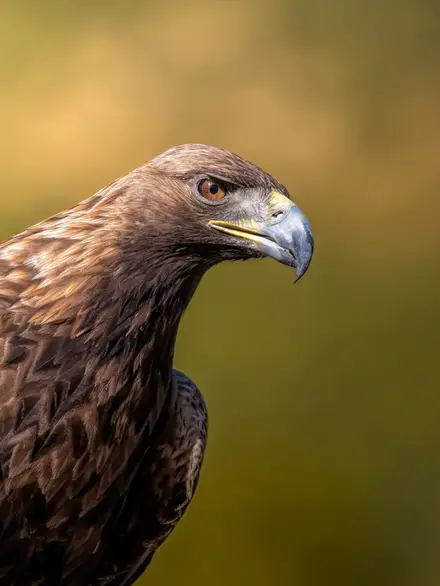
- Young bald eagles are mostly brown and are often mistaken for golden eagles until their white head and tail appear.
Other national symbols of the United States
- National flower
Rose Rosa Officially designated
The rose became the US national floral emblem in 1986, when Congress passed a joint resolution and President Reagan issued Proclamation 5574.
Frequently asked questions
What is the national bird of the United States?
The national bird of the United States is the bald eagle (officially designated). The bald eagle is a large North American eagle with a dark brown body, a bright white head and tail and a yellow hooked bill, and it appears on the Great Seal, coins, banknotes, passports and government buildings.
Which country has the bald eagle as its national bird?
The bald eagle is the national bird of the United States.
Why is the bald eagle the national bird of the United States?
The bald eagle has represented the United States since 1782, when it was placed at the center of the Great Seal holding an olive branch and a bundle of arrows. For more than two centuries it was treated as the national bird without a law that said so, until a bill naming it the official national bird was signed into law in December 2024.
Is the bald eagle endangered?
The bald eagle is listed as Least Concern on the IUCN Red List, and its numbers in the United States are far higher than at their low point in the mid-20th century. After DDT was banned for most uses in 1972 and the eagle was protected by federal law, it recovered so well that it was removed from the federal list of endangered and threatened species in 2007.
Where does the bald eagle live?
Near lakes, rivers, coasts and marshes across North America.
See also: Most Popular Dog Breeds in the United States (2025)
Sources
- U.S. Fish and Wildlife Service. Bald eagle.
- Office of U.S. Senator Cynthia Lummis. President signs Lummis-Mullin bill to designate the bald eagle as the national bird.
- IUCN Red List of Threatened Species. Haliaeetus leucocephalus (assessment 2024).
- 36 U.S. Code § 303 - National floral emblem (LII, Cornell).
- The American Presidency Project - Proclamation 5574: Designation of the Rose as the National Floral Emblem (20 Nov 1986).
- Conservation status: IUCN Red List of Threatened Species.