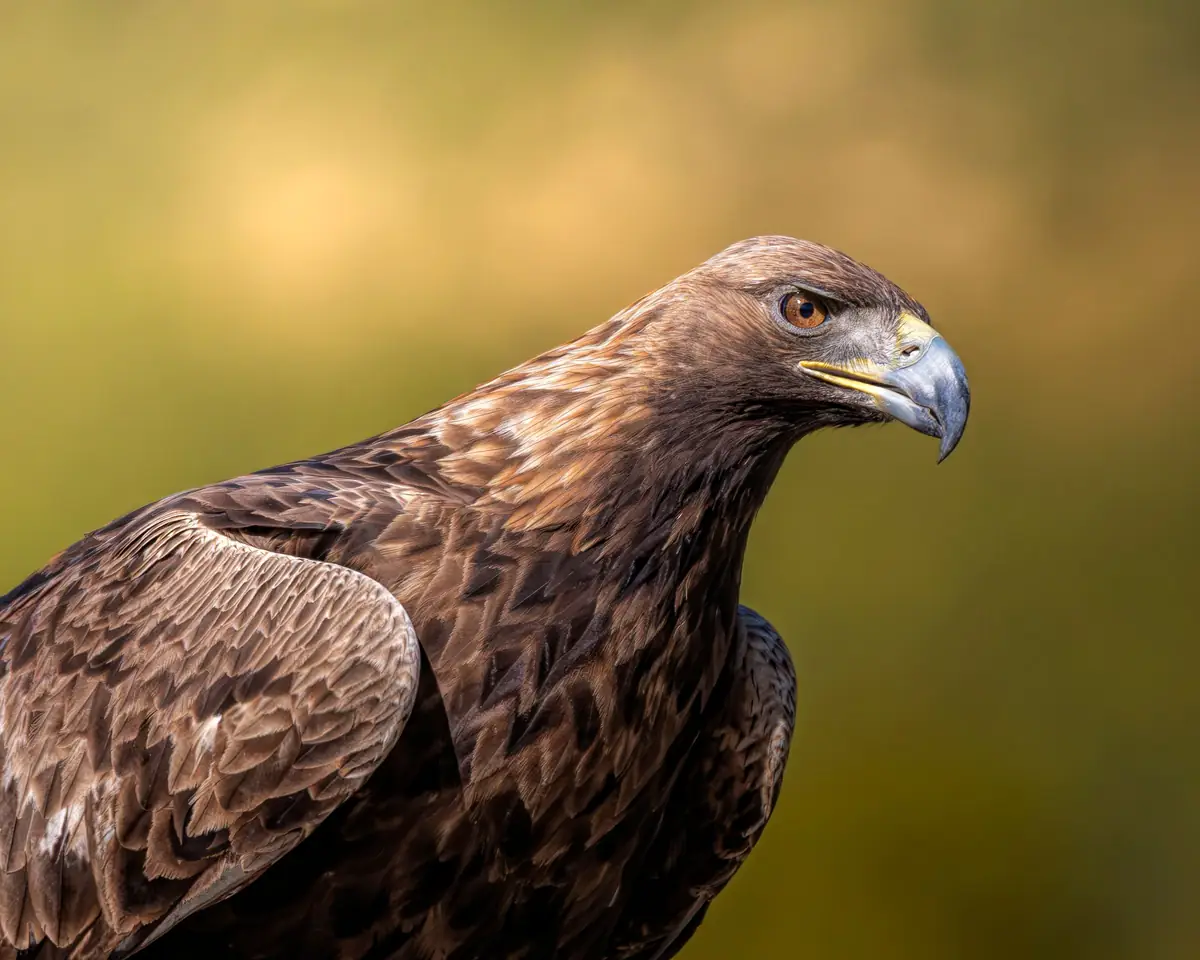
Why it represents the country
An eagle stands at the center of Mexico's coat of arms, which also sits in the middle of the national flag. The eagle is perched on a flowering nopal cactus that grows from a rock in a lake, and it holds a snake in its beak and one talon. The Mexican government identifies this bird as the golden eagle, called águila real, or royal eagle, in Spanish. The current design was drawn by the artist Francisco Eppens Helguera and adopted in 1968, and a 1984 law sets out how the coat of arms, the flag and the national anthem must be used.
The scene recalls the traditional story of how the Mexica, often called the Aztecs, founded their city of Tenochtitlan on an island in a lake in the Valley of Mexico. Mexico City stands on the same site today. That long history makes the eagle one of the oldest and most familiar images in the country. It appears on coins, official documents and public buildings.
Mexico also honors the living bird. Every year on 13 February the country marks the National Day of the Golden Eagle (Día Nacional del Águila Real). The environment ministry uses the day to remind people that the eagle on the flag is a real wild animal, and one that needs protection.
About the animal
The golden eagle is one of the largest birds of prey in the Northern Hemisphere and the most widely distributed eagle in the world. It lives across much of North America, Europe and Asia and in parts of North Africa. Adults are dark brown, with golden feathers on the back of the head and neck that give the bird its name. The wingspan is usually between about 1.8 and 2.3 meters, and, as in most birds of prey, females are larger and heavier than males.
Golden eagles prefer open country: mountains, grasslands, scrub, deserts and canyons, where they can spot prey from the air. They hunt mainly medium-sized mammals such as rabbits, hares, ground squirrels and prairie dogs, and they also take birds, reptiles and carrion. Many hunts start with the eagle soaring or gliding low over the ground. In a steep dive, a golden eagle can reach well over 200 kilometers per hour.
Pairs build large nests of sticks on cliff ledges and other high places, and many return to the same nest for several years, adding new material each season. The female lays up to four eggs, but usually only one or two chicks survive to leave the nest.
Young golden eagles have white patches on the wings and a white base to the tail. These patches fade slowly, and a bird does not reach its full adult plumage until it is around five or six years old.
Conservation
Worldwide, the golden eagle is listed as Least Concern on the IUCN Red List, because it has a huge range and a large total population.
The picture in Mexico is different. There the golden eagle lives mainly in the mountains, grasslands and deserts of the north and center of the country, and it is much less common than in the northern parts of its range. Mexico's official list of protected species, the standard known as NOM-059-SEMARNAT-2010, classes it as threatened (amenazada). The main dangers are the loss of open habitat, the robbing of eggs and chicks from nests, and illegal trade in the birds.
Mexican wildlife agencies and researchers count nesting pairs, protect important areas and hold public events on the national day. Golden eagles breed slowly and need large territories, so keeping wide, quiet, open landscapes is central to protecting the bird on Mexico's flag.
Fun facts
- The golden eagle is the most widely distributed eagle on Earth, found in North America, Europe, Asia and North Africa.
- In a hunting dive, a golden eagle can reach speeds of well over 200 kilometers per hour.
- Young golden eagles carry white wing and tail patches that slowly disappear until they gain adult plumage at about five or six years old.
Other national symbols of Mexico
- National flower
Dahlia Dahlia spp. Officially designated
Mexico's president declared the dahlia the national flower by decree in 1963, at the request of botanists and flower growers.
Frequently asked questions
What is the national bird of Mexico?
The national bird of Mexico is the golden eagle (a widely recognized national symbol, not set by law). The golden eagle is a large, dark brown bird of prey with golden feathers on the back of its head and neck, and the government identifies it as the eagle perched on a cactus with a snake at the center of Mexico's coat of arms and flag.
Which country has the golden eagle as its national bird?
The golden eagle is the national bird of Mexico. The same species is also the national bird of Germany.
Why is the golden eagle the national bird of Mexico?
The Mexican government identifies the eagle at the center of the coat of arms, which also sits in the middle of the national flag, as the golden eagle, called águila real in Spanish. The scene recalls the traditional story of how the Mexica, often called the Aztecs, founded Tenochtitlan on an island in a lake where Mexico City stands today, which makes the eagle one of the oldest and most familiar images in the country.
Is the golden eagle endangered?
Worldwide, the golden eagle is listed as Least Concern on the IUCN Red List because of its huge range and large total population. In Mexico, though, it is much less common, and the country's official list of protected species (NOM-059-SEMARNAT-2010) classes it as threatened.
Where does the golden eagle live?
Open mountains, grasslands, deserts and canyons with cliffs for nesting.
Sources
- Encyclopaedia Britannica. Golden eagle.
- SEMARNAT, Gobierno de México. Águila real, símbolo viviente.
- CONANP. Águila real (ficha de especie).
- IUCN Red List of Threatened Species. Aquila chrysaetos (assessment 2021).
- SEMARNAT, Gobierno de México – Dalia, flor representativa de México.
- Conservation status: IUCN Red List of Threatened Species.