Why it represents the country
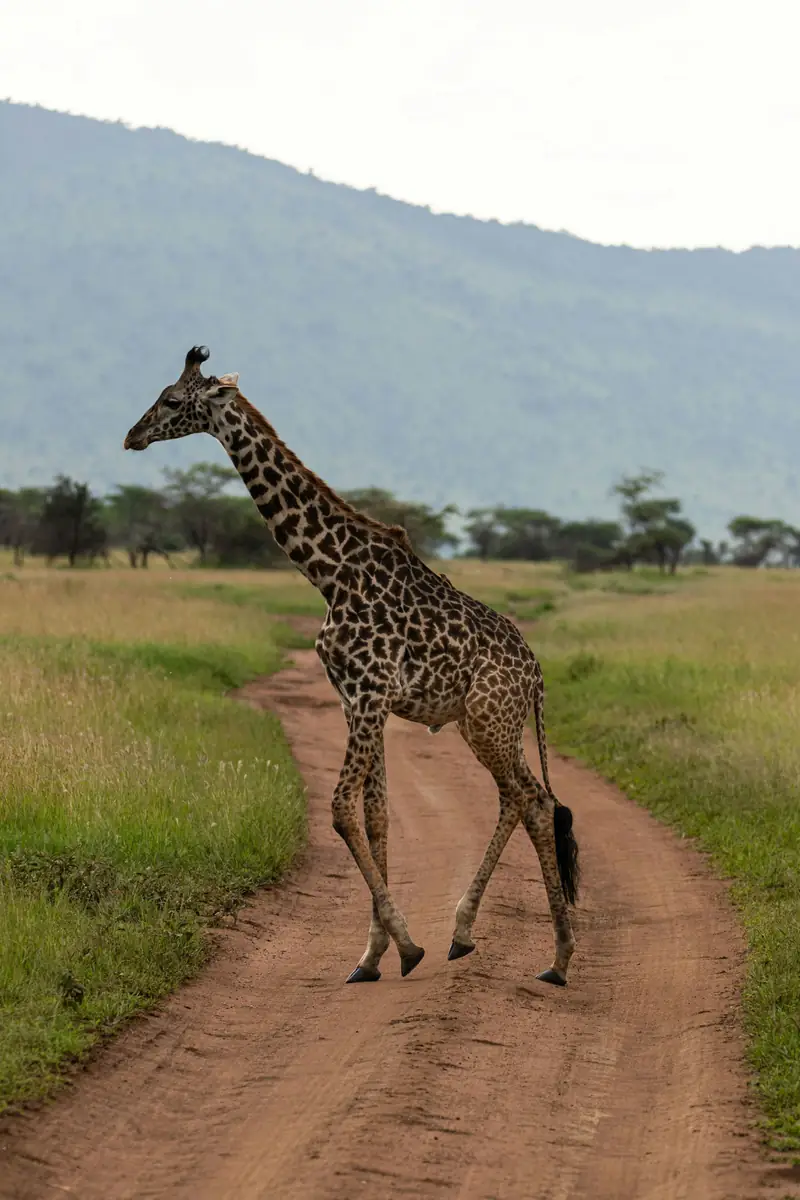
The Masai giraffe is widely regarded as Tanzania's national animal. It is not one of the country's official national symbols, which, according to Tanzania's mission to the United Nations, are the flag, the national anthem, the coat of arms and the Uhuru (Freedom) Torch. Even so, the giraffe has long been used as an informal emblem of the country.
A well-known example is the national airline, Air Tanzania, which uses a giraffe as its logo. Giraffes are also protected by Tanzanian law, and killing one without permission can lead to a prison sentence.
The Masai giraffe also has a close scientific link to the country. It was described by the German zoologist Paul Matschie in 1898, based on the skin of a female collected near Lake Eyasi, in what is now northern Tanzania. Today it lives mainly in Tanzania and in central and southern Kenya.
About the animal
Giraffes are the tallest animals on land. A large male can stand more than 5 meters from the ground to the top of his head, and females are somewhat shorter. The long neck has only seven bones, the same number as a human neck, but each one is very long. The front legs are also longer than the back legs, which gives the body its sloping shape.
The Masai giraffe is recognized by its jagged, leaf-like blotches, which reach from the head down to the hooves. Each giraffe's pattern is unique and stays the same for life. Both sexes have short, skin-covered horns called ossicones. Genetic studies published in 2016 suggested that giraffes belong to more than one species, so some scientists now treat the Masai giraffe as a species of its own rather than a subspecies.
Giraffes eat leaves, flowers, seed pods and fruit, including those of thorny trees. A long, dark tongue and flexible lips let them pick leaves from between sharp thorns, and their back teeth crush the thorns they swallow. An adult male can eat as much as about 66 kilograms of food in a day. Giraffes drink only occasionally, so they can live some distance from water.
Giraffes live in loose herds whose members come and go. A female is pregnant for about 15 months and gives birth standing up, so the calf drops about 2 meters to the ground. Within about 15 minutes it is on its feet and drinking its mother's milk. After a few weeks, mothers often leave their calves together in a group while one of the adults keeps watch, a kind of giraffe nursery.
Conservation
The Masai giraffe is listed as Endangered on the IUCN Red List. Its numbers fell by about half in recent decades, mainly because of poaching and the loss of habitat as land is turned into farms and settlements.
Research in northern Tanzania has shown that threats differ from place to place. Outside protected areas, adults are more likely to be killed by poachers, while inside parks, young calves are more often taken by lions and other predators. Protected areas remain important for keeping giraffes in the wider landscape, and community-managed wildlife areas have also helped giraffes.
Tanzania National Parks, the Kenya Wildlife Service and conservation groups all work to protect the Masai giraffe. Giraffes have also gained international attention: in 2019 they were added to Appendix II of CITES, which means international trade in giraffe parts is now regulated.
Fun facts
- A giraffe's neck has only seven bones, the same number as a human neck.
- A newborn giraffe drops about 2 meters to the ground and is usually on its feet within about 15 minutes.
- Each giraffe's coat pattern is unique and stays the same throughout its life.
Frequently asked questions
What is the national animal of Tanzania?
The national animal of Tanzania is the Masai giraffe (a widely recognized national symbol, not set by law). The Masai giraffe is a subspecies of the tallest land animal, recognized by its jagged, leaf-like blotches, and it lives mainly in Tanzania and in central and southern Kenya.
Which country has the Masai giraffe as its national animal?
The Masai giraffe is the national animal of Tanzania. The Masai giraffe is also known as Kilimanjaro giraffe.
Why is the Masai giraffe the national animal of Tanzania?
The Masai giraffe is not one of Tanzania's official national symbols, which are the flag, the national anthem, the coat of arms and the Uhuru (Freedom) Torch, but the giraffe has long been used as an informal emblem of the country; the national airline, Air Tanzania, uses a giraffe as its logo. The Masai giraffe also has a close scientific link to Tanzania: it was described in 1898 from the skin of a female collected near Lake Eyasi, in what is now northern Tanzania.
Is the Masai giraffe endangered?
The Masai giraffe is listed as Endangered on the IUCN Red List. Its numbers fell by about half in recent decades, mainly because of poaching and the loss of habitat as land is turned into farms and settlements.
Where does the Masai giraffe live?
Savanna, open woodland and acacia bush in East Africa.
Sources
- The Citizen (Tanzania). National symbols: what happened to the giraffe?.
- IUCN Red List of Threatened Species. Giraffa camelopardalis ssp. tippelskirchi (assessment 2019).
- Conservation status: IUCN Red List of Threatened Species.