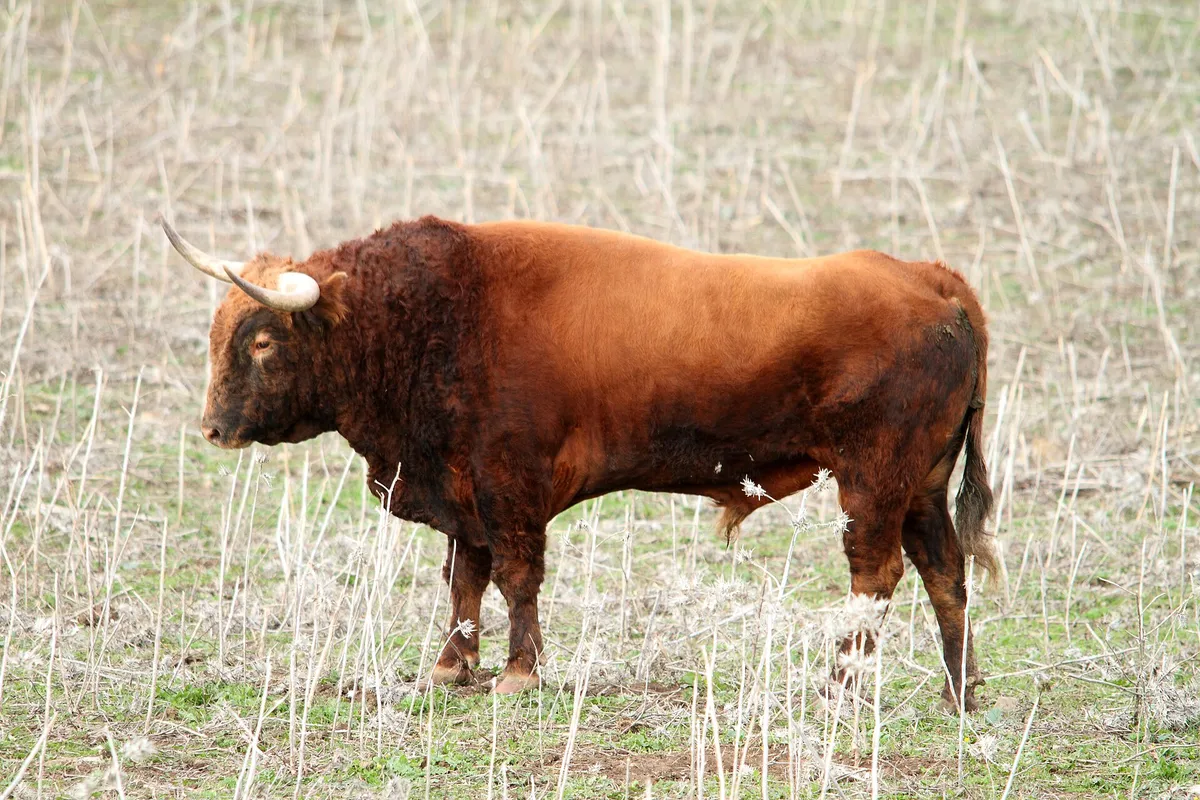
Why it represents the country
The Spanish fighting bull is traditionally known as Spain's national animal, even though no law names it. In a trademark case reported in January 2017, Spain's Supreme Court stated that the bull is not an official symbol of Spain. A 2024 study by veterinary researchers at the University of Murcia nevertheless describes the fighting bull as the most emblematic animal in Spain. The lion, which has a long history in Spanish heraldry and was called "the lion of Spain" in the time of Philip II, is sometimes named as an alternative.
The bull has a very old place in the Iberian landscape. At Guisando, in the province of Ávila, four granite animal sculptures, believed to be bulls or boars, are attributed to the Vettones and dated to the 3rd century BCE; they may have been meant to protect livestock or aid fertility. In later centuries the bull became closely tied to bullfighting, or tauromaquia, which Spain's Supreme Court has described as part of the country's cultural heritage, and which remains the subject of ethical debate.
The Osborne bull is the fighting bull's most familiar modern image. In 1956 the Osborne company commissioned a bull silhouette from an advertising agency directed by Manolo Prieto to promote its brandy, and the first wooden version went up beside the Madrid–Burgos road. Later metal versions stood about 7 meters tall, and after a 1962 rule pushed signs farther from the road they grew to 14 meters. A 1988 road law banned roadside advertising, but in 1997 the Supreme Court allowed the bulls to stay, recognizing their aesthetic and cultural value.
About the animal
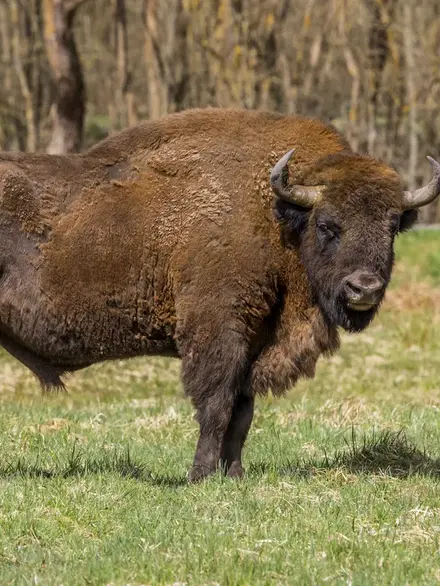
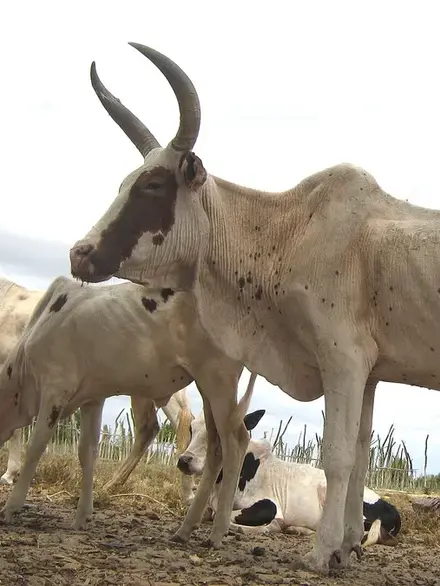
The Spanish fighting bull belongs to the same species as other domestic cattle, Bos taurus, but it has been bred for its temperament rather than for meat or milk. Spain's official breed standard describes adult males weighing around 500 kilograms and females around 300 kilograms, with a large difference between the sexes. The coat comes in ten groups of colors, mostly black, but also grey, red, chestnut and other shades, and the horns are usually short and hooked.
Fighting cattle are very territorial. In their own surroundings they are generally calm, but outside their natural habitat they become irritable and difficult to handle. Because each breeding line has been shaped by its breeders, scientists sometimes call the fighting bull a "breed of breeds", and it is considered one of the oldest cattle breeds in the world.
The breed grows slowly. Cows usually have their first calf only at about 3 to 3.5 years of age, and a newborn calf weighs about 14 to 28 kilograms. Calves nurse for a long time, 6 to 12 months, and bulls reach about 450 to 600 kilograms by the age of 4 to 4.5 years.
Like all cattle, fighting bulls are ruminants with a four-chambered stomach that lets them digest tough grasses. They live in herds organized by a dominance hierarchy. A cow carries her single calf for about nine months, and domestic cattle can live more than 20 years when they are not culled.
Conservation
The Spanish fighting bull is a domestic breed, so it is not assessed on the IUCN Red List. Its numbers depend on the farms that raise it: a 2024 study counted 726 fighting bull ranches in Spain's dehesa regions, but only 631 were active in the breed's herd book in 2022, and the trend has been downward in recent years. The average ranch keeps 144 breeding cows and 9 breeding bulls.
Fighting bulls are mostly raised extensively, roaming large pastures at low density. Researchers say their balanced grazing keeps scrub from taking over, helps prevent soil erosion and supports the dehesa, a landscape the European Union classes as a High Nature Value system. Farms dedicated only to fighting bulls cover about 315,301 hectares, or 8.97 percent of Spain's dehesa.
Fun facts
- The Osborne bull began as a brandy advertisement in 1956 and now stands up to 14 meters tall on Spanish hilltops.
- Spain's Supreme Court allowed the Osborne bulls to stay in 1997 because of their aesthetic and cultural value, and Andalusia lists its bulls as part of its heritage.
- Spain's official breed standard recognizes ten groups of coat colors in the fighting bull, although black is by far the most common.
Frequently asked questions
What is the national animal of Spain?
The national animal of Spain is the Spanish fighting bull (a widely recognized national symbol, not set by law). The Spanish fighting bull is a breed of domestic cattle raised on Spain's dehesa pastures, and its black silhouette stands beside Spanish roads as the Osborne bull.
Which country has the Spanish fighting bull as its national animal?
The Spanish fighting bull is the national animal of Spain.
Why is the Spanish fighting bull the national animal of Spain?
The Spanish fighting bull is the national animal of Spain by tradition, not by law: it has long been tied to Spanish culture, from ancient stone sculptures to bullfighting and the Osborne bull. Spain's Supreme Court has stated that the bull is not an official symbol, but a 2024 study calls it Spain's most emblematic animal.
Where does the Spanish fighting bull live?
Domestic breed raised extensively on the dehesa, the open oak pasturelands of western and southern Spain.
See also: Most Popular Dog Breeds in Spain (2024)
Sources
- Legal Today. El Tribunal Supremo rechaza anular la marca 'Toro' de Osborne porque el toro no es símbolo oficial de España (24 January 2017).
- Billiken. ¿León o toro?: conocé cuál es el animal nacional de España (20 April 2025).
- Revista Mexicana de Ciencias Pecuarias (Sanes et al., Universidad de Murcia). Estudio del impacto de las ganaderías de bovino de lidia en la dehesa española (2024).
- Boletín Oficial del Estado (BOE). Real Decreto 60/2001, sobre prototipo racial de la raza bovina de lidia.
- Revista Complutense de Ciencias Veterinarias (Lomillos Pérez & Alonso de la Varga, Universidad de León). Características, tratamiento y comercialización de la carne procedente de la raza de lidia (2016).
- Turismo Castilla y León (Junta de Castilla y León). Toros de Guisando.
- The Objective. La historia del toro de Osborne (26 June 2024).
- Andalucia.com. The Osborne Bull.
- Animal Diversity Web (University of Michigan). Bos taurus.
- Conservation status: IUCN Red List of Threatened Species.