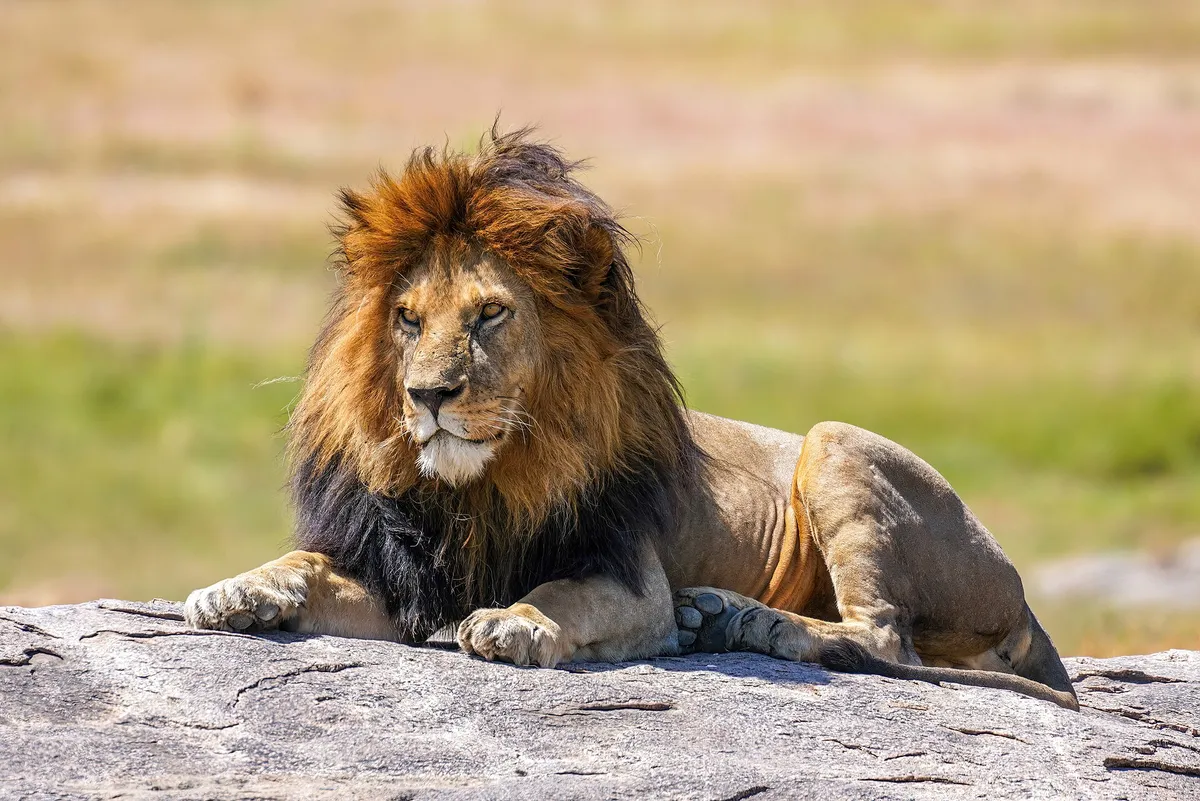
Why it represents the country
The lion is the animal most closely tied to Belgium, because it is the country's coat of arms. Article 193 of the Belgian Constitution states that the Belgian nation adopts red, yellow and black as its colours, and the Lion of Belgium, with the motto "Unity makes strength", as the arms of the kingdom. Belgium has no law naming a national animal, so the lion's place is heraldic rather than an official national animal title.
The Belgian lion comes from the shield of the old Duchy of Brabant: a gold lion standing on its hind legs, with red claws and tongue, on a black field. The arms of the kingdom were set out in a Royal Decree of 17 March 1837. On the illustrations of 1837 the motto appeared only in French, "L'union fait la force"; today it is also used in Dutch, "Eendracht maakt macht", and German, "Einigkeit macht stark". The black, yellow and red of Belgium's flag come from the same Brabant shield and were first worn on cockades in Brussels in 1787.
The lion appears on many other Belgian emblems as well. The royal flag, whose current pattern dates from a Royal Decree of 21 July 1921, shows the Belgian lion beneath the royal crown. The Flemish Community has long used a black lion with red tongue and claws on a yellow field, and the German-speaking Community chose a red lion surrounded by nine blue flowers, recalling the red lions of the old duchies of Limburg and Luxembourg.
About the animal
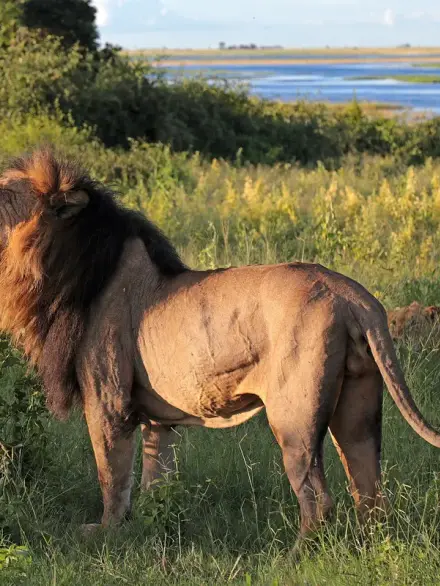
The lion is a large, muscular cat, and adult males are easy to recognize by their shaggy manes, which range in color from blond to reddish-brown to black. Females measure about 1.4 to 1.7 meters long and males about 1.7 to 2.5 meters, plus a tail of 70 to 105 centimeters. Lions stand about 1 to 1.2 meters at the shoulder. Females weigh 122 to 180 kilograms, and males 150 to 260 kilograms.
Lions are the only cats that live in large social groups, called prides. A pride is built around related females and may include several to as many as 40 lions, along with one or more resident males. The females raise the cubs and do most of the hunting, going after large animals such as zebras and wildebeest, while males sometimes join in.
Much of a lion's day is spent resting: inactive periods can add up to 21 hours in a 24-hour period. In the wild, a lioness may live up to 16 years, but males rarely live past 12.
Lions live in a wide range of habitats, from open plains to thick brush and dry thorn forest. Today they are found across most of sub-Saharan Africa outside deserts and rainforests, while the Asiatic lion survives only in the Gir Forest of northwest India.
Conservation
The lion is listed as Vulnerable on the IUCN Red List as a species, based on its 2023 assessment. That assessment used estimates of about 23,000 adult and subadult lions in Africa and about 670 in India. Lions are already extinct in North Africa and Southwest Asia.
The main threat to lions is the loss of their habitat to growing human populations. As their living space shrinks, lions come into closer contact with people and livestock, and farmers often kill them in retaliation. Lions are also killed as hunting trophies, and they are regionally extinct in 15 African countries.
In March 2025, IUCN published its first Green Status assessment for the lion, which measures how far a species has recovered, and ranked it "Largely Depleted". The species remains Vulnerable on the Red List.
Fun facts
- A lion's roar can be heard up to 4.8 kilometers away.
- The black, yellow and red of the Belgian flag are the colours of the old Brabant coat of arms: a gold lion with red claws and tongue on a black shield.
- Belgium's motto "Unity makes strength" appears with the lion on the national arms, and is used in French, Dutch and German.
Frequently asked questions
What is the national animal of Belgium?
The national animal of Belgium is the lion (a widely recognized national symbol, not set by law). The lion is a large African and Asian cat that appears as a gold lion on a black shield in Belgium's coat of arms, together with the motto "Unity makes strength".
Which country has the lion as its national animal?
The lion is the national animal of Belgium. The same species is also the national animal of Czechia, Ethiopia, Kenya, Morocco and the United Kingdom.
Why is the lion the national animal of Belgium?
The lion is linked to Belgium because Article 193 of the Belgian Constitution names the Lion of Belgium as the arms of the kingdom. The lion itself comes from the coat of arms of the old Duchy of Brabant, and the arms of the kingdom were set out in a Royal Decree of 17 March 1837.
Is the lion endangered?
The lion is listed as Vulnerable on the IUCN Red List as a species, based on its 2023 assessment. About 23,000 adult and subadult lions were estimated to live in Africa and about 670 in India.
Where does the lion live?
Open plains, thick brush and dry thorn forest in sub-Saharan Africa, plus India's Gir Forest.
Sources
- Constitute Project. Belgium's Constitution of 1831 with Amendments through 2014 (Article 193).
- Michel R. Lupant, Proceedings of the 30th International Congress of Vexillology (FIAV). Flags and Coats of Arms of the Kingdom of Belgium.
- Heraldica.org. Heraldry in Belgium.
- San Diego Zoo Wildlife Alliance. Lion.
- Smithsonian's National Zoo & Conservation Biology Institute. Lion.
- Animal Diversity Web (University of Michigan). Panthera leo.
- African Wildlife Foundation. Lion.
- Down To Earth. 'Largely depleted': IUCN's new Green Status assessment for the lion in Africa and India.
- Conservation status: IUCN Red List of Threatened Species.