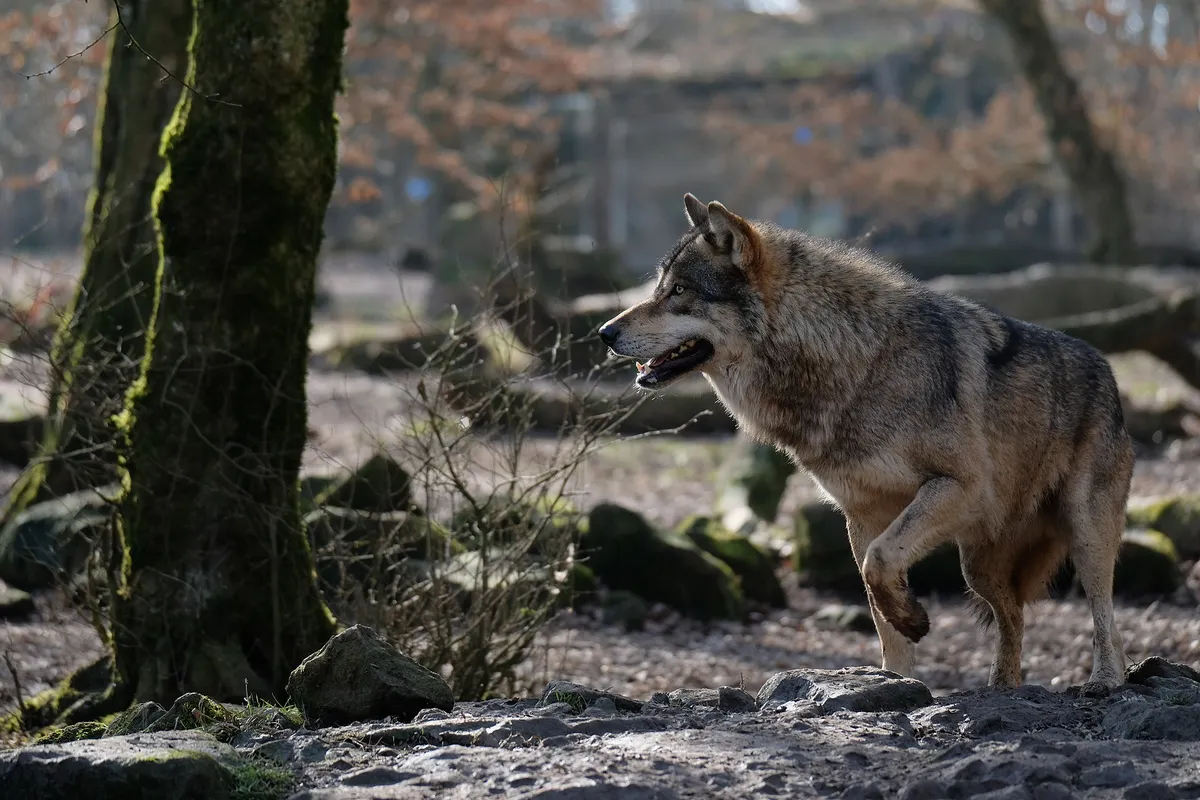
Why it represents the country
The gray wolf was declared Estonia's national animal in 2018. The choice was announced on Monday, 23 April 2018, on the programme Osoon. There was no public referendum: according to the daily Postimees, a jury of about 20 nature conservation and cultural organizations made the decision. Estonia's official nature portal, Loodusveeb, names the Estonian Theriological Society, the Estonian Society for Nature Conservation and the Estonian Sheep and Goat Breeders Association among the groups behind it, and Estonian World also lists the Estonian Museum of Natural History and Tallinn Zoo. No law or government decision designates the wolf, so it is a traditional rather than a legal symbol.
The gray wolf was picked partly because none of Estonia's earlier national species was a forest animal. The barn swallow has been the national bird since 1962 and the cornflower the national flower since 1969, and both are found in open country, so the organizers wanted a national animal that lives in the woods. The wolf beat the beaver, badger, fox, hedgehog and roe deer. The hedgehog was its strongest rival and a favorite in an online poll by Postimees, but the judges saw it as more of a park and farmyard animal.
The gray wolf also holds a special place in Estonian culture. The organizations described it as a symbol of wild and untouched nature, tough, clever, brave and loyal to its family, and bogs and forests are sometimes called "wolf lands". More than 500 folk names and stories about the wolf have been written down in Estonia, and the folklorist Marju Kõivupuu has said the animal leaves no one indifferent. Loodusveeb adds that the wolf reflects the balance between farming and forest life and is an indicator of a healthy forest.
About the animal
The gray wolf is a large, long-legged wild dog. Adults stand about 60 to 90 centimeters at the shoulder, and the bushy tail adds roughly 35 to 52 centimeters. Males usually weigh about 30 to 80 kilograms and females about 23 to 55 kilograms, though size varies a lot from region to region. The wolves of Estonia belong to the Eurasian subspecies, Canis lupus lupus.
The gray wolf lives in packs, family groups that usually have 5 to 9 members, although packs of 2 to 36 wolves have been recorded. A pack hunts large prey together, while single wolves also catch smaller animals such as beavers and rabbits and eat carrion. In Estonia, the main prey are roe deer, wild boar and elk. Howling helps pack members keep in touch, coordinate their hunts and tell other packs where their territory lies.
Wolves travel widely. They usually trot at about 8 kilometers per hour and can cover up to around 200 kilometers in a day, and in a chase they can reach roughly 55 to 70 kilometers per hour. As predators of deer and other plant-eaters, they help shape the forest landscape.
Pups are born after a pregnancy of about 60 to 63 days, usually six or seven in a litter. They are born blind and deaf, weigh about half a kilogram, and stay in or near the den for 8 to 10 weeks while other pack members bring them food. In the wild, wolves live on average 5 to 6 years, though some reach about 13.
Conservation
The gray wolf is listed as Least Concern on the IUCN Red List as a species, with an estimated 200,000 to 250,000 wolves worldwide and about 17,000 in Europe. In Europe it is protected under the Bern Convention and the EU Habitats Directive, with exceptions that allow regulated hunting in the Baltic states.
Estonia manages its wolves through hunting quotas. In 2018 the country had about 200 wolves in 20 to 25 packs. According to the Environment Agency, numbers grew in 2025: there were 33 packs with pups that autumn, including six that cross the border, and an estimated 300 to 350 wolves, falling to 130 to 150 by spring 2026 after a season in which 167 wolves were hunted. The aim is to keep about 20 to 30 breeding packs while limiting damage to livestock.
Wolves sometimes kill sheep and cattle, so their numbers are often debated by farmers, hunters and conservationists, and hunting quotas have even been challenged in court. Wolves have not attacked people in Estonia for about 150 years.
Fun facts
- More than 500 folk names and stories about the wolf have been recorded in Estonia.
- In February 2019, construction workers rescued what they thought was a dog from the icy Pärnu River near Sindi; vets found it was a young wolf, which was fitted with a GPS collar and released the same evening.
- A gray wolf can cover up to about 200 kilometers in a single day.
National bird of Estonia: Barn swallow
Barn swallow Hirundo rustica National symbol
The barn swallow was named Estonia's national bird in 1962, after the teacher and nature writer Kustas Põldmaa proposed it at a meeting of the ornithological section of the Estonian Naturalists' Society; no law designates it.
The barn swallow is a small bird with a glossy blue-black back, a red throat, pale underparts and long tail streamers, and it spends most of its time in the air. Barn swallows breed widely across the Northern Hemisphere and head south for the winter, many of them to Africa. Graceful and acrobatic, swallows dart low over fields in search of insects and skim lakes and rivers, scooping up water to drink.
Other national symbols of Estonia
- National flower
Cornflower Centaurea cyanus National symbol
The cornflower became Estonia's national flower after a vote that began in 1968 on the ETV quiz series Tammelehe viktoriin, in which viewers proposed 38 flowers; the choice was announced in the June 1969 issue of Eesti Loodus.
Frequently asked questions
What is the national animal of Estonia?
The national animal of Estonia is the gray wolf (a widely recognized national symbol, not set by law). The gray wolf is a large wild dog that lives in family packs and is found across Estonia, mostly in big forests, bogs and other wilderness areas.
Which country has the gray wolf as its national animal?
The gray wolf is the national animal of Estonia. The same species is also the national animal of Italy.
Why is the gray wolf the national animal of Estonia?
The gray wolf was chosen in 2018 by a jury of about 20 Estonian nature conservation and cultural organizations, which saw it as a symbol of wild, untouched nature and wanted a forest animal, since none of Estonia's earlier national species lived in the woods. It beat the beaver, badger, fox, hedgehog and roe deer.
Is the gray wolf endangered?
The gray wolf is listed as Least Concern on the IUCN Red List as a species, with an estimated 200,000 to 250,000 wolves worldwide. In Estonia its numbers are managed through hunting quotas, and the population was estimated at 300 to 350 wolves in autumn 2025.
Where does the gray wolf live?
Forests, bogs and other large wild landscapes; in Estonia, found fairly evenly across the country, mostly in big wilderness areas.
What is the national bird of Estonia?
The national bird of Estonia is the barn swallow (a widely recognized national symbol, not set by law). The barn swallow was named Estonia's national bird in 1962, after the teacher and nature writer Kustas Põldmaa proposed it at a meeting of the ornithological section of the Estonian Naturalists' Society; no law designates it.
Sources
- Loodusveeb (Environment Agency of Estonia). National species.
- Postimees. Wolf picked national animal over hedgehog (24 April 2018).
- ERR. Mati Kaal ei mõista, miks rahvuslooma üldse valiti (24 April 2018).
- Estonian World. Estonia picks the wolf as the national animal (27 April 2018).
- Estonian World. “Dog” rescued from an icy Estonian river is a wolf (22 February 2019).
- ERR News. 2025-2026 wolf cull quota slightly lower than last season's.
- ERR News. Estonia's bear population continues to grow (July 2026; includes Environment Agency wolf figures).
- Animal Diversity Web (University of Michigan). Canis lupus (gray wolf).
- San Diego Zoo Wildlife Alliance Library. Gray wolf fact sheet: population and conservation status.
- Loodusveeb (Environment Agency of Estonia): National species.
- CIA World Factbook (2020 archive): Estonia - National symbol(s).
- RSPB: Swallow (Hirundo rustica).
- Loodusveeb (Environment Agency of Estonia): National species.
- CIA World Factbook (2020 archive): Estonia - National symbol(s).
- Conservation status: IUCN Red List of Threatened Species.