Why it represents the country
Thailand chose the elephant as its national animal on 13 March 1963, when a national committee set up to select a national animal agreed on the white elephant. Decades later, on 26 May 1998, the Thai cabinet declared 13 March to be Thai Elephant Day, so that people would remember the elephant's place in Thai history and help protect it. In 2001 the Thai elephant was confirmed as one of three national symbols, together with the golden shower tree, called ratchaphruek, and the traditional pavilion known as the sala Thai.
Elephants have been part of Thai life for many centuries. They carried timber and goods, worked in farming and forestry, and in earlier times were ridden into battle. Rare pale elephants, known as white elephants, were long associated with the royal court. Until 1917 the flag of Siam showed a white elephant on a red background.
Elephants are also chosen because of their long lives and their close bond with people. On Thai Elephant Day, schools, parks and elephant camps hold events, and many people bring fruit and other treats for the elephants.
About the animal
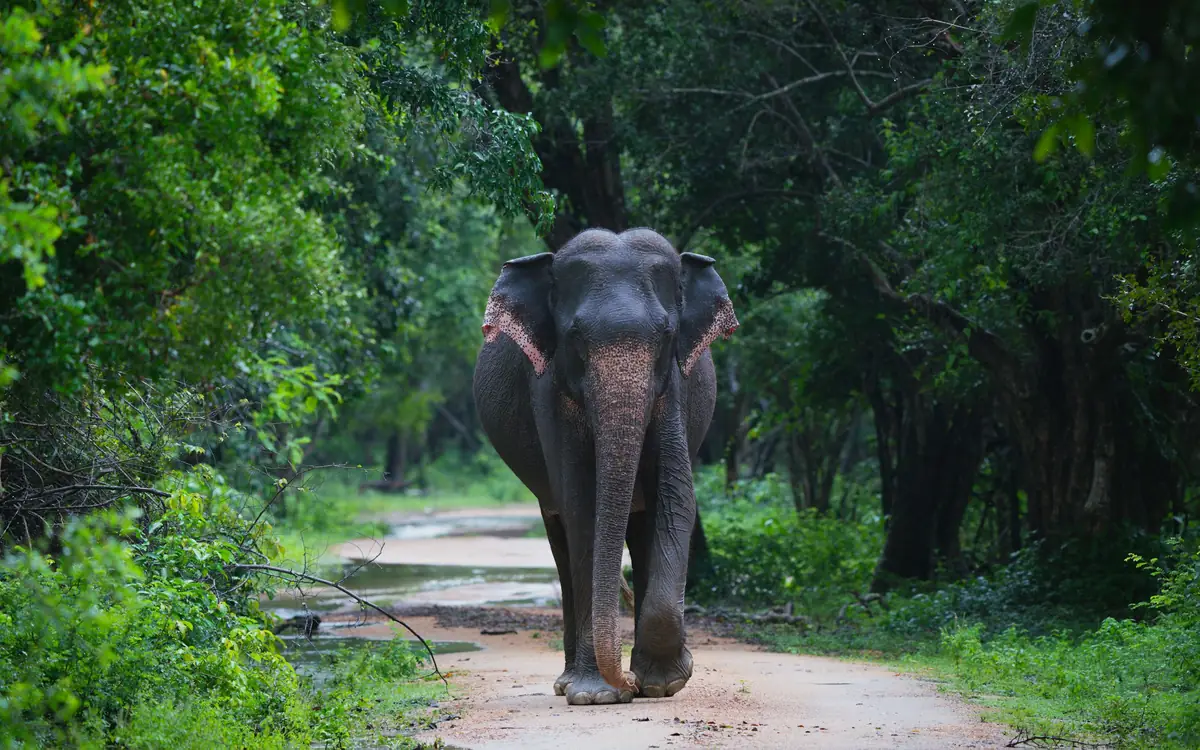
The Asian elephant is the largest land animal in Asia. Adult males can weigh several tonnes, and females are smaller. Compared with African elephants, Asian elephants have smaller, rounded ears, a more rounded or level back, and a trunk tip with one finger-like point instead of two. Only some males grow long tusks, and females have none or only very short ones.
Elephants are plant eaters with huge appetites. They feed on grasses, bamboo, leaves, bark, roots and fruit, and they may spend 12 to 18 hours a day eating. They also need to drink every day and like to bathe in rivers and pools, spraying water and mud over their skin to keep cool and protect it from the sun.
Females and their young live in family groups led by an older female, the matriarch, who remembers where to find food and water through the seasons. Adult males usually live alone or in small groups. Elephants keep in touch with rumbles, trumpets and touch, and some of their calls are so low that humans cannot hear them.
An elephant pregnancy is one of the longest of any animal, lasting about 18 to 23 months. A newborn calf weighs about 100 kilograms and can stand within hours. The whole family helps look after it, and a calf may keep drinking its mother's milk for several years. Elephants can live for 60 years or more.
Conservation
The Asian elephant is listed as Endangered on the IUCN Red List. Across Asia it has lost most of its former range as forests have been cut down for farms, towns and roads. Poaching for ivory is a threat to males with tusks, and elephants that raid crops can come into dangerous conflict with farmers.
Thailand's Department of National Parks, Wildlife and Plant Conservation estimates that roughly 4,000 to 4,400 wild elephants live in the country's national parks, wildlife sanctuaries and other protected areas. Keeping these forests connected, so that herds can move safely, and helping villages near the forests to prevent conflict with elephants are key parts of their protection.
Thailand also has many elephants living under human care. After commercial logging in natural forests was banned in 1989, many working elephants lost their jobs. Today their welfare is a major concern, and Thai Elephant Day is used to remind people that both wild and captive elephants need good care and safe places to live.
Where to see the Asian elephant in the wild
Wild Asian elephants in Thailand live in large forest protected areas such as Khao Yai National Park, Kui Buri National Park and the Huai Kha Khaeng Wildlife Sanctuary.
Khao Yai National Park
Khao Yai National Park is part of the Dong Phayayen-Khao Yai Forest Complex, a World Heritage Site where numbers of tigers, elephants and gaur are reported as stable or increasing.
Official page ↗Kui Buri National Park
Kui Buri National Park, part of the Kaeng Krachan Forest Complex, is known for elephant viewing managed through zoning and controlled access.
Official page ↗Huai Kha Khaeng Wildlife Sanctuary
Huai Kha Khaeng Wildlife Sanctuary, with neighbouring Thung Yai Naresuan, is home to a wide range of large mammals, especially elephants and tigers.
Official page ↗
Watch wild animals from a distance, never feed them, and follow the rules and rangers of each protected area.
Full guide: Where to See Wild Elephants in Thailand: Parks and Protected Areas →
Fun facts
- An Asian elephant's trunk has just one finger-like tip, while an African elephant's trunk has two.
- Until 1917, the flag of Siam, the old name for Thailand, showed a white elephant on a red background.
- Elephants can make rumbling calls so low in pitch that people cannot hear them, yet other elephants can pick them up from far away.
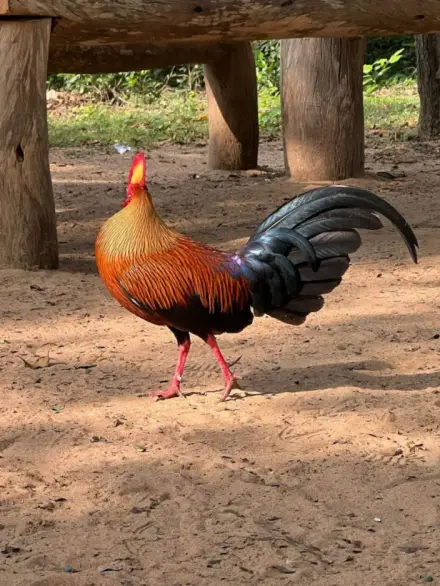
National bird of Thailand: Siamese fireback
Siamese fireback Lophura diardi National symbol
Also known as: Diard's fireback
In 1985 the Royal Forest Department's wildlife conservation division proposed the Siamese fireback as Thailand's national bird.
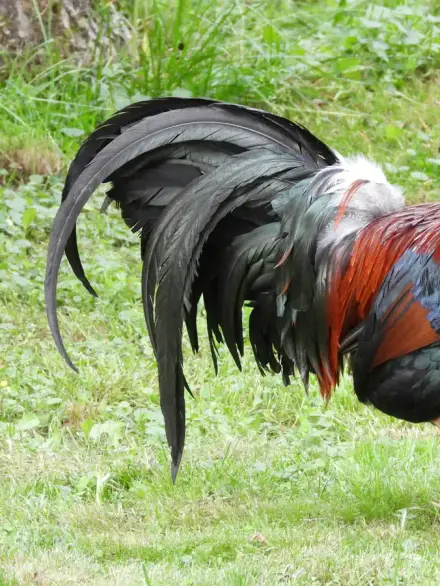
The Siamese fireback is a forest pheasant of north-eastern and south-eastern Thailand, Laos, Cambodia and Vietnam, living in evergreen, semi-evergreen and bamboo forest mostly below 300 metres. Small family groups often turn up near roads and tracks through the forest, and the bird copes with some degradation of its habitat. Forest loss together with heavy hunting and snaring has led the IUCN Red List to class the species as Near Threatened.
Other national symbols of Thailand
- National flower
Golden shower tree (ratchaphruek) Cassia fistula Officially designated
Thailand's Cabinet approved the ratchaphruek as one of three national symbols on 2 October 2001, alongside the Thai elephant and the sala Thai.
Frequently asked questions
What is the national animal of Thailand?
The national animal of Thailand is the Asian elephant (officially designated). It is the largest land animal in Asia, and until 1917 a white elephant on a red background appeared on the flag of Siam, the old name for Thailand.
Which country has the Asian elephant as its national animal?
The Asian elephant is the national animal of Thailand. The same species is also the national animal of Laos.
Why is the Asian elephant the national animal of Thailand?
On 13 March 1963 a national committee set up to select a national animal agreed on the white elephant, and in 2001 the Thai elephant was confirmed as one of three national symbols. Elephants have been part of Thai life for centuries, carrying timber and goods, working in farming and forestry and once being ridden into battle, and rare white elephants were long associated with the royal court.
Is the Asian elephant endangered?
The Asian elephant is listed as Endangered on the IUCN Red List, having lost most of its former range across Asia as forests were cut down. In Thailand, roughly 4,000 to 4,400 wild elephants live in national parks, wildlife sanctuaries and other protected areas.
Where does the Asian elephant live?
Tropical forests, bamboo thickets and grassy clearings in Thailand's protected areas.
What is the national bird of Thailand?
The national bird of Thailand is the Siamese fireback (a widely recognized national symbol, not set by law). In 1985 the Royal Forest Department's wildlife conservation division proposed the Siamese fireback as Thailand's national bird. The Siamese fireback is also known as Diard's fireback.
Where can you see the Asian elephant in the wild?
Wild Asian elephants in Thailand live in large forest protected areas such as Khao Yai National Park, Kui Buri National Park and the Huai Kha Khaeng Wildlife Sanctuary.
Sources
- Government Public Relations Department, Thailand. 13 มีนาคม วันช้างไทย.
- Animal Diversity Web, University of Michigan. Elephas maximus: Asian elephant.
- IUCN Red List of Threatened Species. Elephas maximus (assessment 2020).
- Thai PBS: ชวนส่อง 6 นกประจำชาติแห่งเอเชีย (6 national birds of Asia).
- ONEP (Office of Natural Resources and Environmental Policy and Planning): republication of the Thai PBS article, 9 Apr 2026.
- BirdLife DataZone: Siamese Fireback Lophura diardi Species Factsheet.
- Thansettakij (11 Jun 2024): PM's Office deputy spokesperson cites Cabinet resolutions of 2 Oct 2001, 1 Feb 2005, 5 Feb 2019 and 1 Nov 2022 on three national symbols (Thai elephant, ratchaphruek, sala Thai).
- Thai Post (11 Jun 2024): same statement.
- IUCN World Heritage Outlook – Dong Phayayen-Khao Yai Forest Complex.
- IUCN World Heritage Outlook – Kaeng Krachan Forest Complex.
- IUCN World Heritage Outlook – Thungyai-Huai Kha Khaeng Wildlife Sanctuaries.
- Conservation status: IUCN Red List of Threatened Species.