Why it represents the country
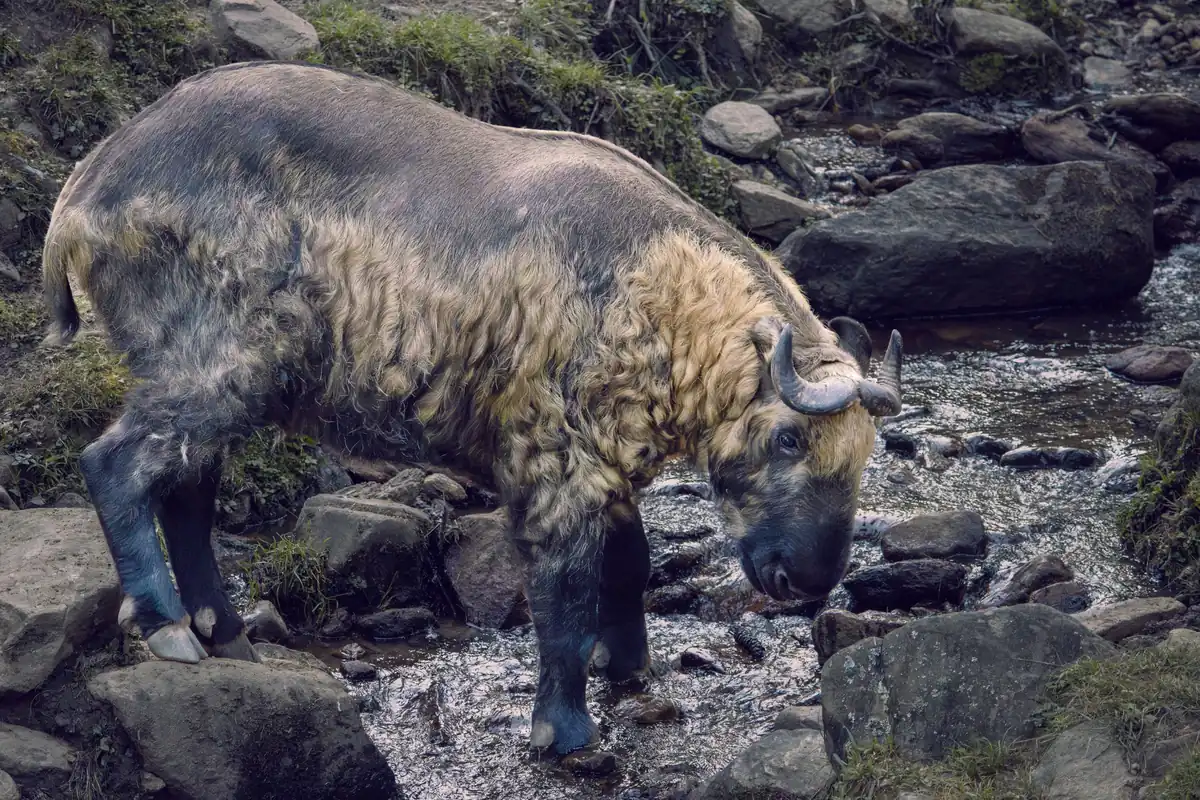
Bhutan has declared the takin its national animal. The animal has a long place in Bhutanese folklore and daily life, and its unusual looks make it memorable. In Bhutan it is known locally as drong gimtse.
The takin that lives in Bhutan is its own subspecies, often called the Bhutan takin or White's takin. It is one of four takin subspecies. It is found in the country's northern mountains and protected areas, where it moves between high meadows and forests with the seasons. Jigme Dorji National Park, in the northwest of the country, is thought to be its main stronghold in Bhutan.
In the capital, Thimphu, the Motithang Takin Preserve is home to takins that visitors can see up close. The fenced area covers about 3.4 hectares of forest, and it was redesigned in 2004 with help from WWF Bhutan, adding better viewing points and signs about the animals. It has become a popular place for families and travelers to learn about the national animal.
About the animal
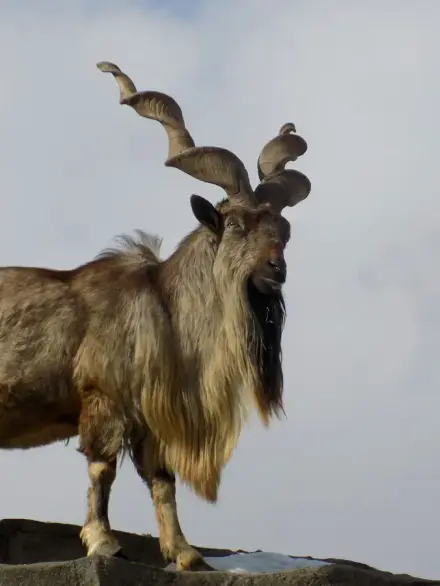
The takin is a large, heavy-bodied hoofed mammal with a thick neck, short, strong legs and a big, arched nose. Adult males can stand about 1.1 to 1.2 meters at the shoulder and weigh several hundred kilograms, while females are smaller. Both males and females have ridged horns that curve out to the sides and then turn back and up. Its thick coat ranges from yellowish to golden to dark brown, often with a darker stripe down the back, and it produces an oily substance that helps keep out rain and snow. Its broad, two-toed hooves have strong spurs that help it grip steep ground.
Although it looks a little like a cow or a musk ox, the takin is part of the goat and sheep family, and DNA studies place it closer to sheep than to the musk ox. Its large nasal cavity is thought to warm the cold mountain air before it reaches the lungs.
Takins make seasonal journeys. In summer they climb to high meadows and forests near the tree line, where they gather in larger herds that can number in the hundreds. As autumn and winter arrive, they move down to lower, warmer forest in smaller groups, while older males often live alone outside the mating season. They feed mostly in the early morning and late afternoon on grasses, herbs, leaves, shoots and the bark of shrubs and trees. To reach high leaves, a takin may stand on its hind legs or push over young trees. Takins also need a lot of minerals and will travel long distances to visit salt licks.
They are good climbers on steep, rocky slopes, and despite their bulky build they can move with surprising agility. When alarmed, takins make a coughing warning call, and the herd may retreat into thick bamboo or rhododendron forest. Mating takes place in summer, and after a pregnancy of about seven to eight months a female gives birth to a single calf. The calf can follow its mother within about three days of birth.
Conservation
The takin as a species is listed as Vulnerable on the IUCN Red List. Across its range, which also extends into neighboring countries, it has been affected by hunting and by the loss and disturbance of mountain forests. International trade in takins is controlled under CITES Appendix II.
Bhutan has a strong conservation record. A large share of the country is covered by forest, and a network of national parks and wildlife sanctuaries protects many of the places where takins live. The takin is legally protected in Bhutan.
Challenges include grazing competition with livestock in high pastures, disease that can spread from domestic animals, and the changes that a warming climate may bring to alpine habitats. Adult takins have few natural enemies, but calves can be taken by predators such as bears and wolves, so healthy herds depend on good numbers of young surviving each year. Monitoring herds and managing grazing land are important for keeping the national animal healthy.
Fun facts
- The takin's coat produces an oily substance that works like a natural raincoat.
- Takins are related to goats and sheep, not to cows.
- Takins spend summers high in the mountains and move down to lower forests for winter.
National bird of Bhutan: Common raven
Common raven Corvus corax tibetanus National symbol
Also known as: northern raven
The raven is Bhutan's national bird because it represents the protector deity Jarog Dongchen, and a raven's head tops the kings' Raven Crown.
The common raven is one of the most widespread birds on Earth, ranging across the Northern Hemisphere from northern Europe and Greenland south to the Himalayas. Reaching about 69 centimetres in length, the raven is the largest of all perching birds. Ravens live mainly as scavengers, and they are famous for their intelligence, often working out new solutions to problems they have never met before.
Other national symbols of Bhutan
- National flower
Himalayan blue poppy Meconopsis gakyidiana National symbol
The blue poppy is Bhutan's national flower; Bhutan's agriculture ministry announced in 2019 that it is a distinct species, Meconopsis gakyidiana.
Frequently asked questions
What is the national animal of Bhutan?
The national animal of Bhutan is the takin (officially designated). It is a sturdy, heavy-bodied hoofed mammal of the eastern Himalayas that looks like a mix of goat and cow, and the takins of Bhutan form their own subspecies, often called the Bhutan takin or White's takin.
Which country has the takin as its national animal?
The takin is the national animal of Bhutan. The takin is also known as gnu goat or cattle chamois.
Why is the takin the national animal of Bhutan?
Bhutan has declared the takin its national animal. The takin has a long place in Bhutanese folklore and daily life, where it is known locally as drong gimtse, and its unusual looks make it memorable; in the capital, Thimphu, visitors can see takins up close at the Motithang Takin Preserve.
Is the takin endangered?
The takin as a species is listed as Vulnerable on the IUCN Red List, and the Bhutan takin is one of its four subspecies. Across its range it has been affected by hunting and by the loss and disturbance of mountain forests, though in Bhutan it is legally protected.
Where does the takin live?
Steep forests and alpine meadows in the eastern Himalayas.
What is the national bird of Bhutan?
The national bird of Bhutan is the common raven (a widely recognized national symbol, not set by law). The raven is Bhutan's national bird because it represents the protector deity Jarog Dongchen, and a raven's head tops the kings' Raven Crown. The common raven is also known as northern raven.
Sources
- Animal Diversity Web, University of Michigan. Budorcas taxicolor: takin.
- Encyclopaedia Britannica. Takin.
- WWF Bhutan. Panda Quarterly, Autumn 2005.
- IUCN Red List of Threatened Species. Budorcas taxicolor (assessment 2008).
- Bhutan Biodiversity Portal (biobhutanatlas): National symbols.
- JICA Bhutan Office: National symbols of Bhutan.
- Animal Diversity Web: Corvus corax (common raven).
- Bhutan Biodiversity Portal (biobhutanatlas): National symbols (cites MoAF 2019, 'The National Flower of Bhutan found to be a New Species!').
- JICA Bhutan Office: National symbols of Bhutan.
- Conservation status: IUCN Red List of Threatened Species.