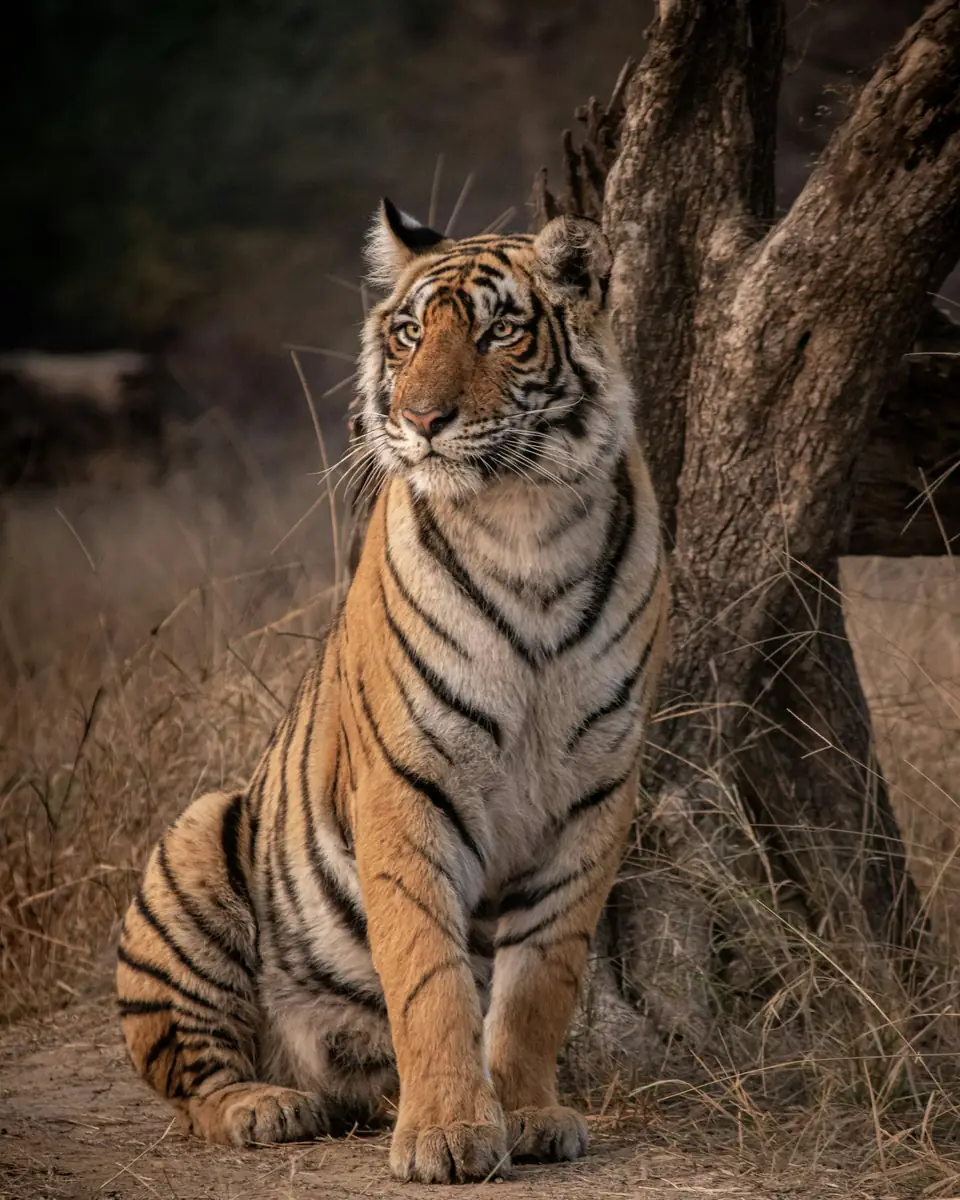
Why it represents the country
India adopted the tiger as its national animal in 1972, when the Indian Board for Wildlife chose it to replace the lion. The change came at a turning point: tiger numbers had fallen sharply because of hunting and the loss of forests, and in April 1973 the government launched Project Tiger, a national program to protect the big cat and the places where it lives.
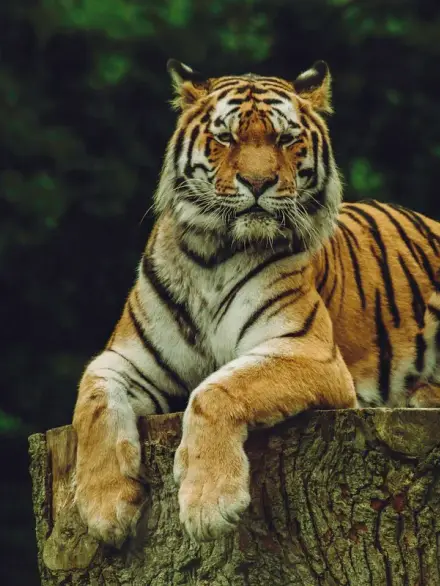
The tiger was a natural choice. It combines strength, grace and power, and it has lived alongside people in India for thousands of years. Tigers appear in folk tales, paintings and sculpture across the country, and they still roam forests from the Himalayan foothills to the mangroves of the Sundarbans.
Choosing the tiger also sent a clear message about conservation. By making the animal a national symbol at the moment it was most in trouble, India tied its identity to the survival of the tiger and of the forests, rivers and grasslands that tigers need.
About the animal
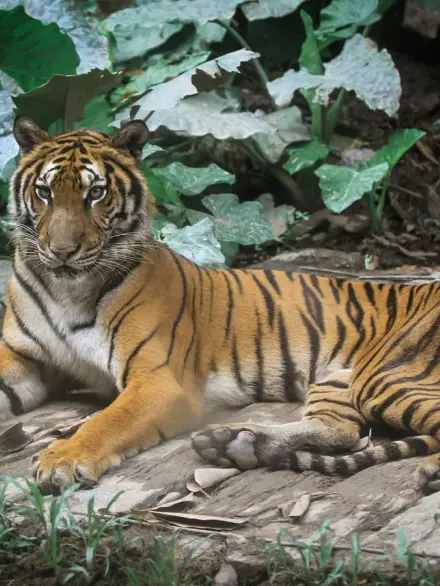
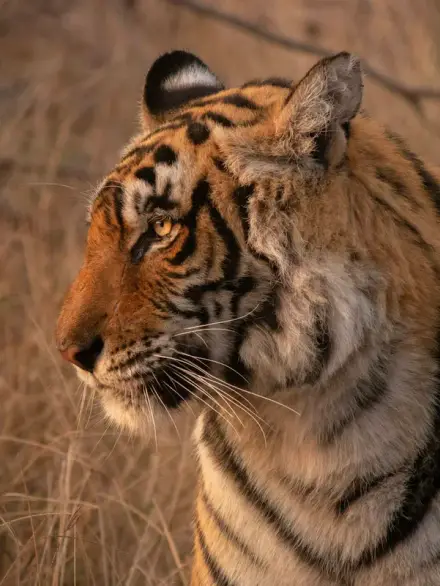
The tiger is the largest member of the cat family. Tigers in India belong to the mainland subspecies usually called the Bengal tiger. An adult male can weigh well over 200 kilograms, and females are noticeably smaller. The orange coat with dark stripes looks bold in a zoo, but in tall grass and dappled forest light it breaks up the tiger's outline and makes it very hard to see.
Tigers are mostly solitary. Each adult holds a territory that it marks with scent, scratches on trees and calls. They hunt large prey such as deer and wild pigs, usually at dawn, dusk or night, and rely on stealth: they creep close and then rush in over a short distance. A tiger may eat a very large meal and then not hunt again for several days.
Unlike many cats, tigers like water. They cool off in pools and rivers on hot days and are strong swimmers. In the Sundarbans, the huge mangrove forest shared with Bangladesh, tigers swim between islands and live in a world of tides and muddy channels.
Cubs are born blind and stay close to their mother for about two years. During that time she teaches them to hunt, and when they are ready they leave to find territories of their own.
Conservation
The tiger is listed as Endangered on the IUCN Red List. Over the past century tigers disappeared from most of their former range in Asia, mainly because of poaching, hunting of their prey and the loss of forests.
India now holds the majority of the world's wild tigers. Its national tiger estimate, carried out every four years with camera traps and field surveys, has shown numbers rising in recent rounds, and the 2022 estimate put the population at more than 3,000. The network of tiger reserves that began with Project Tiger has grown to more than 50 reserves.
Challenges remain. Tigers need large, connected areas of habitat, and growing towns, roads and farms can bring them into conflict with people and livestock. Keeping forest corridors open between reserves and helping communities that live near tigers are central to the next stage of tiger conservation.
Where to see the Bengal tiger in the wild
Wild Bengal tigers in India live in a nationwide network of tiger reserves, including well-known ones such as Ranthambore, Corbett, Kanha and Kaziranga.
Kaziranga National Park
Kaziranga National Park in Assam has recorded one of the highest tiger densities in India and has been a tiger reserve since 2007.
Official page ↗Sundarbans National Park
Sundarbans National Park in West Bengal protects part of the world's largest mangrove forest, the only mangrove forest inhabited by tigers, which swim long distances there.
Official page ↗Manas Wildlife Sanctuary
Manas Wildlife Sanctuary in the Himalayan foothills forms part of the core zone of the Manas Tiger Reserve and provides habitat for tigers alongside rhinos and elephants.
Official page ↗
Watch wild animals from a distance, never feed them, and follow the rules and rangers of each protected area.
Fun facts
- No two tigers have the same stripe pattern, so researchers can identify individual tigers from camera trap photos.
- A tiger's skin is striped too. If you could shave a tiger, the pattern would still show.
- Tigers are one of the few big cats that regularly swim, and they seem to enjoy water on hot days.
National bird of India: Indian peafowl
Indian peafowl (peacock) Pavo cristatus Officially designated
Also known as: Indian blue peafowl, common peafowl, blue peafowl
The Indian peacock was declared India's national bird in 1963, and the Ministry of Environment and Forests confirmed it by notification in 2011.
The Indian peafowl is native to India and Sri Lanka, where it favours open deciduous forest and stays in the same area all year instead of migrating. The male's famous train averages about 1.2 metres long. Peafowl eat almost anything they can catch, from insects and worms to lizards, frogs and snakes, with termites a favourite, and at night they climb branch by branch high into the trees to sleep.
Other national symbols of India
- National flower
Lotus Nelumbo nucifera National symbol
The lotus is listed as India's national flower on the government's Know India portal, though no formal notification has been issued for it.
Frequently asked questions
What is the national animal of India?
The national animal of India is the Bengal tiger (officially designated). It is the mainland subspecies of the tiger, the largest member of the cat family, and it still roams India's forests from the Himalayan foothills to the mangroves of the Sundarbans.
Which country has the Bengal tiger as its national animal?
The Bengal tiger is the national animal of India. The same species is also the national animal of Bangladesh, Malaysia and South Korea.
Why is the Bengal tiger the national animal of India?
In 1972 the Indian Board for Wildlife chose the tiger to replace the lion, at a time when tiger numbers had fallen sharply because of hunting and the loss of forests, and Project Tiger followed in April 1973. By making the tiger a national symbol at the moment it was most in trouble, India tied its identity to the survival of an animal that has lived alongside people there for thousands of years.
Is the Bengal tiger endangered?
The tiger, the species the Bengal tiger belongs to, is listed as Endangered on the IUCN Red List. India now holds most of the world's wild tigers, and its 2022 estimate put the population at more than 3,000, with numbers rising in recent rounds.
Where does the Bengal tiger live?
Tropical and mangrove forests, grasslands and wooded hills across India.
What is the national bird of India?
The national bird of India is the Indian peafowl (officially designated). The Indian peacock was declared India's national bird in 1963, and the Ministry of Environment and Forests confirmed it by notification in 2011. The Indian peafowl is also known as Indian blue peafowl, common peafowl or blue peafowl.
Where can you see the Bengal tiger in the wild?
Wild Bengal tigers in India live in a nationwide network of tiger reserves, including well-known ones such as Ranthambore, Corbett, Kanha and Kaziranga.
Sources
- Government of India, Know India portal. National symbols.
- National Tiger Conservation Authority. Status of Tigers, Co-predators and Prey in India 2022.
- Encyclopaedia Britannica. Tiger.
- IUCN Red List of Threatened Species. Panthera tigris (assessment 2022).
- Know India (Government of India): National Bird (Wayback copy).
- The Logical Indian: Govt clarifies India has no national flower (Rajya Sabha reply of 10 July 2019: tiger and peacock notified by MoEF&CC in 2011).
- Thai PBS: 6 national birds of Asia (peacock officially declared national bird in 1963).
- Animal Diversity Web: Pavo cristatus (Indian peafowl).
- Know India (Government of India): National Flower (Wayback copy, Feb 2023).
- The Logical Indian: Govt clarifies India has no national flower.
- Deccan Herald: MEA controversy: Is lotus the national flower?.
- National Tiger Conservation Authority – Tiger Reserves.
- UNESCO World Heritage Centre – Kaziranga National Park.
- UNESCO World Heritage Centre – Sundarbans National Park.
- UNESCO World Heritage Centre – Manas Wildlife Sanctuary.
- Conservation status: IUCN Red List of Threatened Species.