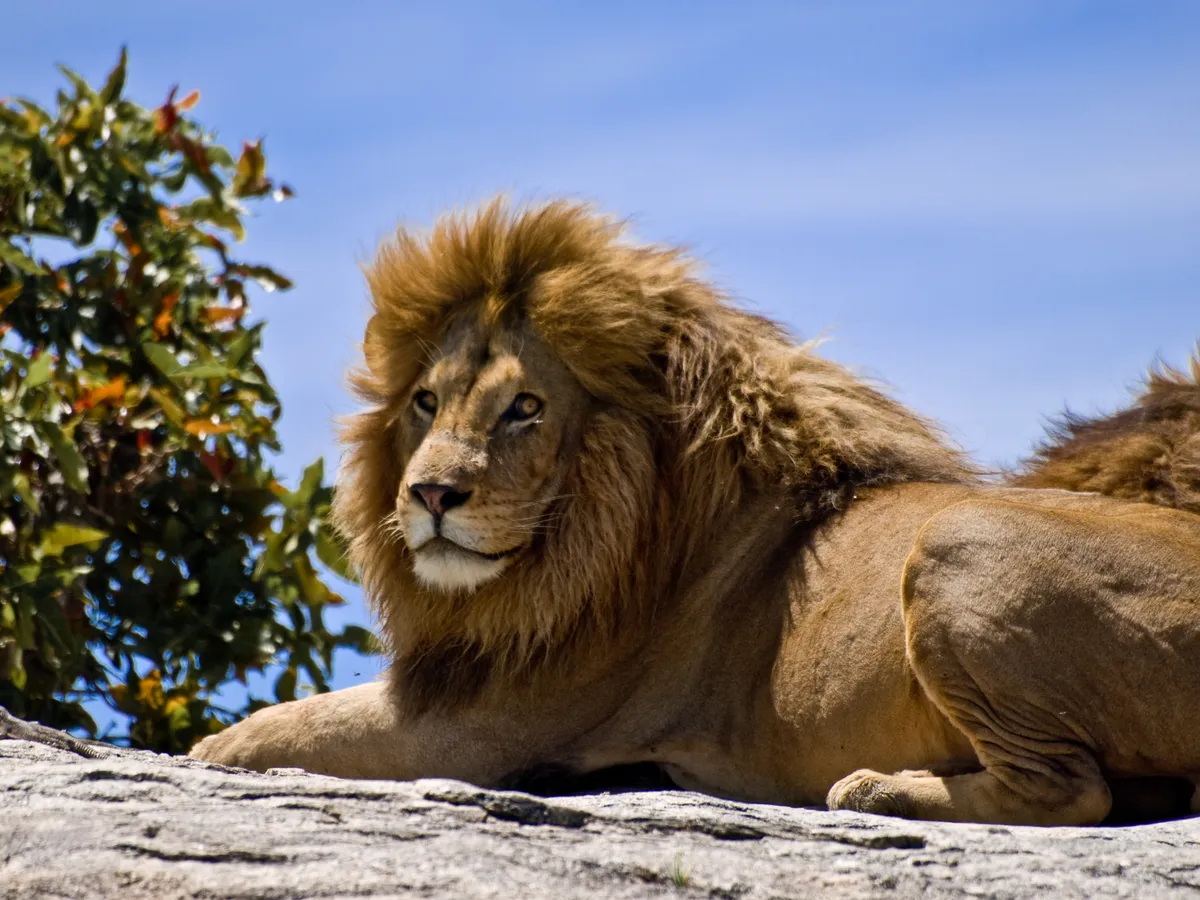
Why it represents the country
No law naming a national animal has been found in Ethiopia, but the Ethiopian Wildlife Conservation Authority describes the African lion as a national symbol of Ethiopia and an important element of national identity. The CIA World Factbook lists the Abyssinian lion as the country's traditional national symbol.
The lion appears throughout Ethiopian culture and history. According to the authority's lion action plan, statues of lions and emblems bearing the lion's image abound in Addis Ababa and other parts of the country, and the lion is prominently portrayed on coins, in many Ethiopian Orthodox churches and in historical manuscripts. During the imperial period, the national flag featured the crowned Lion of Judah, an emblem of the country's ancient monarchy.
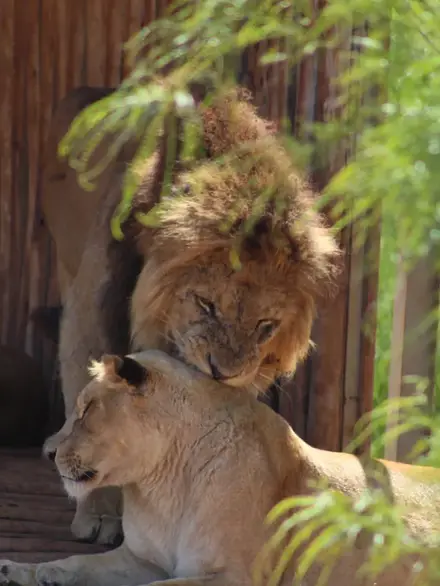
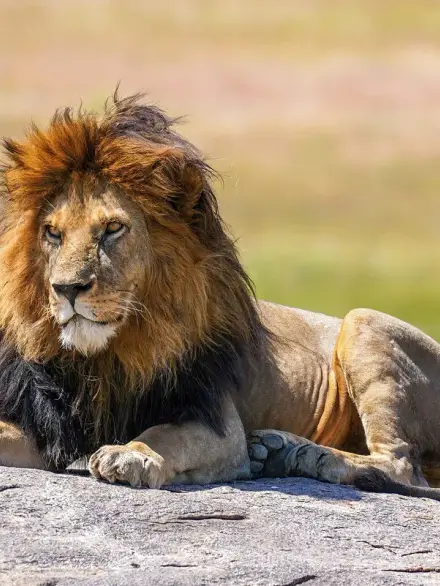
The Ethiopian lion is also known for the dark mane of many males. The lions of the Addis Ababa Lion Zoo, founded in 1948 by Emperor Haile Selassie, descend from his collection, and the males' dark manes extend down to the chest and belly. A 2012 genetic study of 15 of these lions found them to be genetically distinct from other lions.
About the animal
The lion is the most social of the cats. Related females stay together in prides, while males form coalitions that compete to take over prides. The average pride has four to six adults, but prides of up to 30 animals have been seen in large ecosystems.
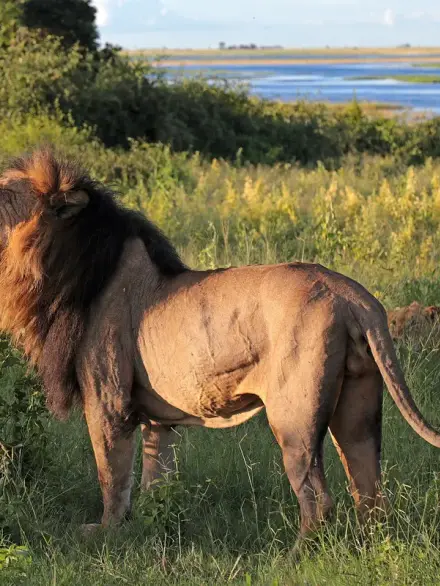
Male lions are clearly larger than females. Males measure about 1.7 to 2.5 meters long and weigh 150 to 260 kilograms, while females measure about 1.4 to 1.7 meters and weigh 122 to 180 kilograms, plus a tail of 70 to 105 centimeters. Lions stand about 1 to 1.2 meters tall at the shoulder, and male manes range in color from blond to reddish-brown to black.
Lions can live in many kinds of habitat and are absent only from tropical rainforest and the interior of the Sahara. They drink regularly when water is available, but they can also get moisture from their prey and even from plants, so they can survive in very dry areas. In Ethiopia, lions have been recorded at more than 4,000 meters above sea level in the Bale Mountains.
A lioness usually gives birth to one to four cubs after a pregnancy of about three and a half months. Cubs born in a pride are twice as likely to survive as those born to a lioness living on her own. In the wild, a lioness may live up to 16 years, but males rarely live past 12.
Conservation
The lion is listed as Vulnerable on the IUCN Red List. Its 2023 assessment estimated 22,000 to 25,000 adult and subadult lions in Africa and about 670 in India, and found that lions now occupy only about 6 percent of their historical range, after a decline of about 36 percent since 2002.
Ethiopia's lions matter beyond the country's borders. The Ethiopian Wildlife Conservation Authority notes that the south of the country is a crucial link between lion populations in East and Central Africa, and genetic studies place a contact zone between the two lion subspecies in Ethiopia. Continental overviews from 2002 and 2004 put Ethiopia's lions at about 1,477 and 1,000 animals, though the authority stresses that such estimates are imprecise.
In Ethiopia, the main threats are human population growth, habitat loss, a lack of wild prey and conflict over livestock, which can lead to lions being poisoned, trapped or shot. In 2012 the authority published a National Action Plan for the conservation of the lion, and the Born Free Foundation cares for rescued lions near Addis Ababa that cannot be returned to the wild.
Fun facts
- Lions have been recorded at more than 4,000 meters above sea level in Ethiopia's Bale Mountains.
- A lion's roar can be heard up to about 8 kilometers (5 miles) away.
- Where prey is plentiful, lions can spend about 20 hours a day sleeping.
Frequently asked questions
What is the national animal of Ethiopia?
The national animal of Ethiopia is the lion (a widely recognized national symbol, not set by law). Its image appears on statues, emblems and coins across Ethiopia, and a captive group in Addis Ababa, known for the dark manes of its males, has been found to be genetically distinct.
Which country has the lion as its national animal?
The lion is the national animal of Ethiopia. The same species is also the national animal of Belgium, Czechia, Kenya, Morocco and the United Kingdom.
Why is the lion the national animal of Ethiopia?
No law naming a national animal has been found, but the Ethiopian Wildlife Conservation Authority describes the African lion as a national symbol of Ethiopia and an important element of national identity, and the CIA World Factbook lists the Abyssinian lion as the country's traditional national symbol. The lion runs through Ethiopian culture and history, appearing on statues, coins, in many Ethiopian Orthodox churches and in historical manuscripts, and during the imperial period the national flag featured the crowned Lion of Judah.
Is the lion endangered?
The lion is listed as Vulnerable on the IUCN Red List, and its 2023 assessment found that lions now occupy only about 6 percent of their historical range. In Ethiopia, the main threats are human population growth, habitat loss, a lack of wild prey and conflict over livestock.
Where does the lion live?
Savanna, woodland and mountain areas; in Ethiopia, scattered populations in places such as Awash, Bale, Gambella, Nechisar and the Omo region.
Sources
- Ethiopian Wildlife Conservation Authority (via FAOLEX). National Action Plan for the conservation of the African Lion Panthera leo in Ethiopia (2012).
- University of KwaZulu-Natal. Population assessment and conservation status of African lions (Panthera leo), S. K. Nicholson, PhD thesis 2024 (includes the published 2023 IUCN Red List assessment).
- Down To Earth. Largely depleted: IUCN's new Green Status assessment for the lion in Africa and India.
- The Reporter Ethiopia. The Evolution of Ethiopian National Flag: From Traditional Symbols to the Present Emblem.
- IndexMundi (CIA World Factbook data). Ethiopia national symbol(s).
- NBC News / Associated Press. Lion cubs saved by embassy, then president (2006).
- NBC News / LiveScience. Big Manes Make 'Rasta' Lions Special (2012).
- Mongabay. Geneticists discover distinct lion group in squalid conditions (2013).
- Gulf News / AFP. Ethiopia's 'Iron Lion Zion' cats fading fast.
- San Diego Zoo Wildlife Alliance. Lion.
- Smithsonian's National Zoo. Lion.
- Animal Diversity Web. Panthera leo.
- Conservation status: IUCN Red List of Threatened Species.