Why it represents the country
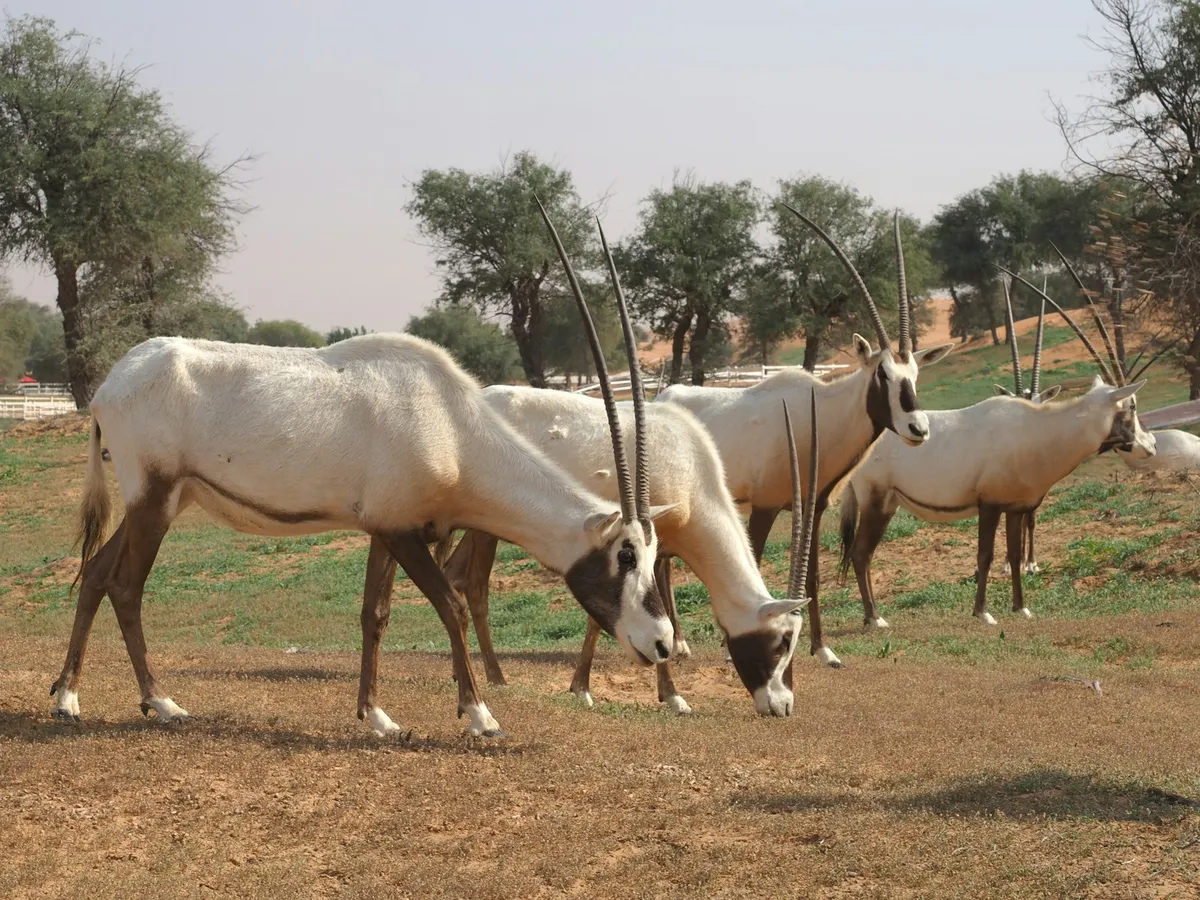
The Arabian oryx, called al-maha in Arabic, is named as the national animal of the United Arab Emirates by UAE newspapers and by Al Ain Zoo. A Khaleej Times street poll found that many residents guess the camel instead, and Arab News notes that the falcon is another common wrong answer; the falcon is in fact known as the national bird. Several other Gulf countries also count the oryx as their national animal.
The Arabian oryx's story in the UAE is closely tied to Sheikh Zayed bin Sultan Al Nahyan, the country's founding father. Sheikh Zayed set up an oryx breeding programme in Al Ain, which later expanded to Sir Bani Yas Island in Abu Dhabi, and he founded Al Ain Zoo in 1968. The Abu Dhabi government credits his large captive breeding effort with helping to save the species.
The oryx also has deep cultural roots in the region. In 2017, the UAE's Minister of Culture and Knowledge Development noted that the oryx has featured in Arab literature, art and poetry, valued for its beauty, adaptability, strength and courage. Today a picture of the oryx appears on the UAE's 50-dirham banknote.
About the animal
The Arabian oryx is a medium-sized antelope with a bright white coat and darker markings. Both males and females carry long, straight horns, roughly 50 to 68 centimeters long. Adults stand about 80 to 102 centimeters at the shoulder and weigh about 65 to 75 kilograms.
The oryx's light coat reflects the desert heat and sunlight. On cold winter mornings it can raise its hair to trap warmth in its thick undercoat, and its legs darken in winter to absorb more heat. Calves are born in shades of brown.
The Arabian oryx is built for a land with very little water. It can go without drinking for long periods and is most active in the cooler parts of the day, resting in the heat in shallow hollows it digs under trees and bushes. The UAE's Ministry of Climate Change and Environment says the oryx can track rainfall and new plant growth up to 90 kilometers away.
Oryx usually live in groups of 10 or fewer, though herds of up to 100 have been seen. A female gives birth to a single calf after a pregnancy of about 240 days, and the young can stand and walk within an hour of birth. Oryx can live for about 20 years.
Conservation
The Arabian oryx is listed as Vulnerable on the IUCN Red List. Uncontrolled hunting, much of it from motor vehicles, drove it out of the wild, and the last wild Arabian oryx was shot in 1972. Captive breeding and reintroduction brought it back, and in 2011 it became the first species once listed as Extinct in the Wild to be moved up to Vulnerable.
The UAE has played a large part in this recovery. Abu Dhabi launched the Sheikh Mohamed bin Zayed Arabian Oryx Reintroduction Programme in 2007, releasing 98 oryx that year and 87 more in 2011 into a protected area of about 6,000 square kilometers. By 2021, the herd in the Arabian Oryx Protected Area had grown from no more than 160 animals to 946, and oryx have also been returned to Qasr Al Sarab in Abu Dhabi and to reserves in Dubai.
According to the Ministry of Climate Change and Environment, the UAE is home to the largest population of Arabian oryx in the world: 8,016 animals in 2023, 5,679 of them in Abu Dhabi, counting both captive and wild herds. Drought and overgrazing remain threats, and in fenced reserves numbers can fall during long dry spells.
Fun facts
- The Arabian oryx appears on the UAE's 50-dirham banknote.
- According to the UAE's Ministry of Climate Change and Environment, an Arabian oryx can track rainfall and fresh plant growth up to 90 kilometers away.
- Arabian oryx calves can stand and walk within an hour of being born.
National bird of the United Arab Emirates: Falcon
Falcon Falco spp. National symbol
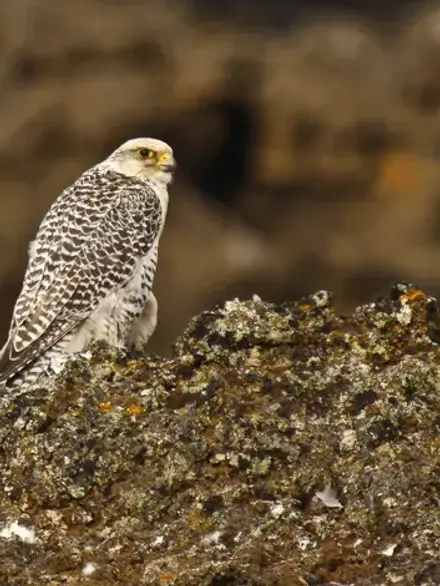
The falcon is widely called the UAE's national bird; a falcon badge is a formal emblem of the federal government and appears on passports and banknotes, but no source naming a specific species or a designation act was found.
Falcons such as the peregrine and the saker belong to the group that falconers call longwings, birds that mainly hunt other birds in flight. Because a chase can carry a falcon over long distances, falconers fly these birds over open country such as desert, where they can keep them in sight. Falconry is practised worldwide but remains a rare sport, and the United Arab Emirates and Saudi Arabia are among its strongholds.
Frequently asked questions
What is the national animal of the United Arab Emirates?
The national animal of the United Arab Emirates is the Arabian oryx (a widely recognized national symbol, not set by law). Called al-maha in Arabic, it is a white desert antelope with long, straight horns, and its picture appears on the UAE's 50-dirham banknote.
Which country has the Arabian oryx as its national animal?
The Arabian oryx is the national animal of the United Arab Emirates. The same species is also the national animal of Jordan and Qatar. The Arabian oryx is also known as white oryx.
Why is the Arabian oryx the national animal of the United Arab Emirates?
The Arabian oryx is named as the UAE's national animal by UAE newspapers and Al Ain Zoo, and its story in the country is closely tied to the founding father, Sheikh Zayed bin Sultan Al Nahyan, whose breeding programme the Abu Dhabi government credits with helping to save the species. The oryx also has deep cultural roots in the region, featuring in Arab literature, art and poetry, valued for its beauty, adaptability, strength and courage.
Is the Arabian oryx endangered?
The Arabian oryx is listed as Vulnerable on the IUCN Red List. The last wild one was shot in 1972, but captive breeding and reintroduction brought it back, and in 2011 it became the first species once listed as Extinct in the Wild to be moved up to Vulnerable.
Where does the Arabian oryx live?
Steppes, semi-deserts and deserts; in the UAE, protected areas such as the Arabian Oryx Protected Area and Qasr Al Sarab in Abu Dhabi and the Dubai Desert Conservation Reserve.
What is the national bird of the United Arab Emirates?
The national bird of the United Arab Emirates is the falcon (a widely recognized national symbol, not set by law). The falcon is widely called the UAE's national bird; a falcon badge is a formal emblem of the federal government and appears on passports and banknotes, but no source naming a specific species or a designation act was found.
Sources
- Gulf News. Watch: How UAE brought Arabian oryx back from the brink of extinction.
- Abu Dhabi Media Office. Environment Agency – Abu Dhabi records increase in the number of Arabian oryx (6 June 2021).
- Khaleej Times. 14 oryxes return to nature (23 November 2017).
- Khaleej Times. You thought camel was UAE's national animal? It's not.
- Al Ain Zoo. Arabian oryx.
- UAE National Red List of Mammals. Oryx leucoryx.
- Scientific American. Arabian Oryx makes history as first species to be upgraded from Extinct in the Wild to Vulnerable (17 June 2011).
- Arab News. Cute carnivores and beautiful birds: Six national animals from across the Arab world.
- Animal Diversity Web (University of Michigan). Oryx leucoryx.
- Ultimate Ungulate. Arabian oryx (Oryx leucoryx) fact sheet.
- Dimensions.com. Arabian Oryx (Oryx leucoryx).
- San Diego Zoo Wildlife Alliance. Oryx.
- IUCN Red List of Threatened Species. Oryx leucoryx (assessment 2017).
- Khaleej Times: A souq for falcons ("The national bird of the UAE - falcon").
- The National: Falcons (falcon on every page of Emirati passports, paper dirhams, army and police coats of arms; 12 July 2009).
- Gulf News: Spirit of the Union: Know the national symbols of the UAE and their meaning (falcon badge a formal emblem of the federal government).
- Encyclopaedia Britannica: Falconry.
- Conservation status: IUCN Red List of Threatened Species.