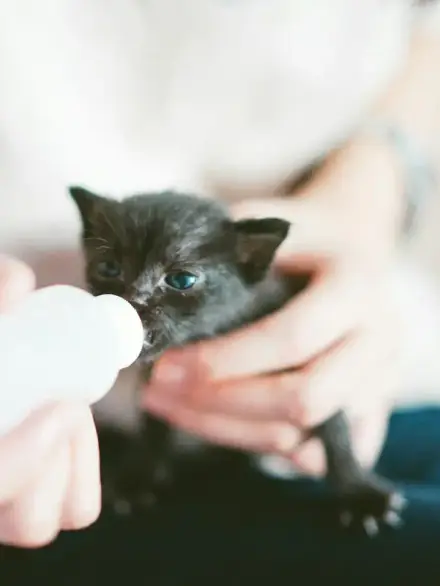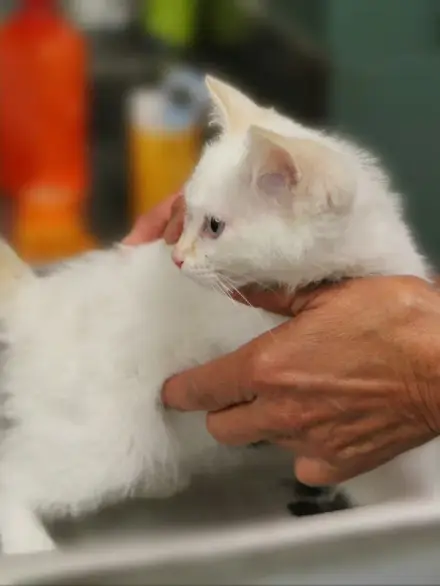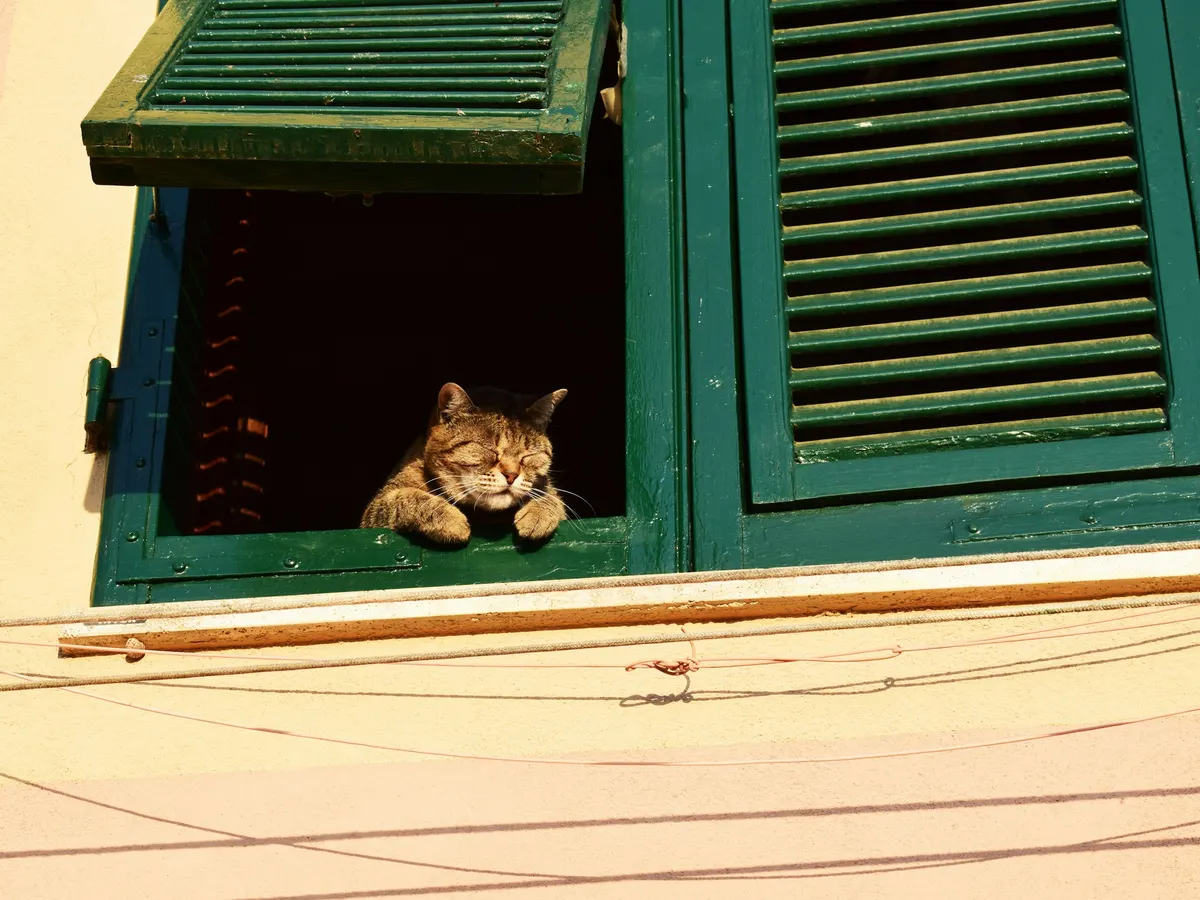
For most of the summer, a thin tabby has turned up at your back door at dusk. At first he waited at the bottom of the steps. Now he sits on the mat, and last night, when you opened the door to bring in the bowl, he walked straight past your feet and into the kitchen as if he had always lived there.
He looked around, sniffed the corner by the fridge, and settled. You stood in the doorway and wondered whether he could stay.
Many stray cats can learn to live indoors, especially cats that were once pets and still trust people. The move is rarely instant, though. A cat that has spent months or years outside is used to choosing where it sleeps, where it toilets and when it wanders, and it has to learn a smaller, quieter world one room at a time.
Truly feral adult cats are a different case. They have never been comfortable with people, and for most of them a life indoors would be frightening rather than safe. This guide explains how to tell the difference, what to do first, and how to help a cat that is ready to come in.
- Friendly strays and former pets usually can adjust. Adult feral cats usually cannot, and are often better helped where they live.
- See a vet first. A health check, parasite treatment, vaccines, neutering and FIV/FeLV testing come before any contact with your own pets.
- Start with one safe room. Give it hiding places, scratching posts and an open litter tray with soft litter. Soil can help a cat used to the outdoors.
- Replace what the outdoors gave. Daily play, places to climb, a view from a window and food to hunt for make indoor life interesting.
- Expect weeks to months. Some cats take a long time and a few never settle. A vet or behavior professional can help.
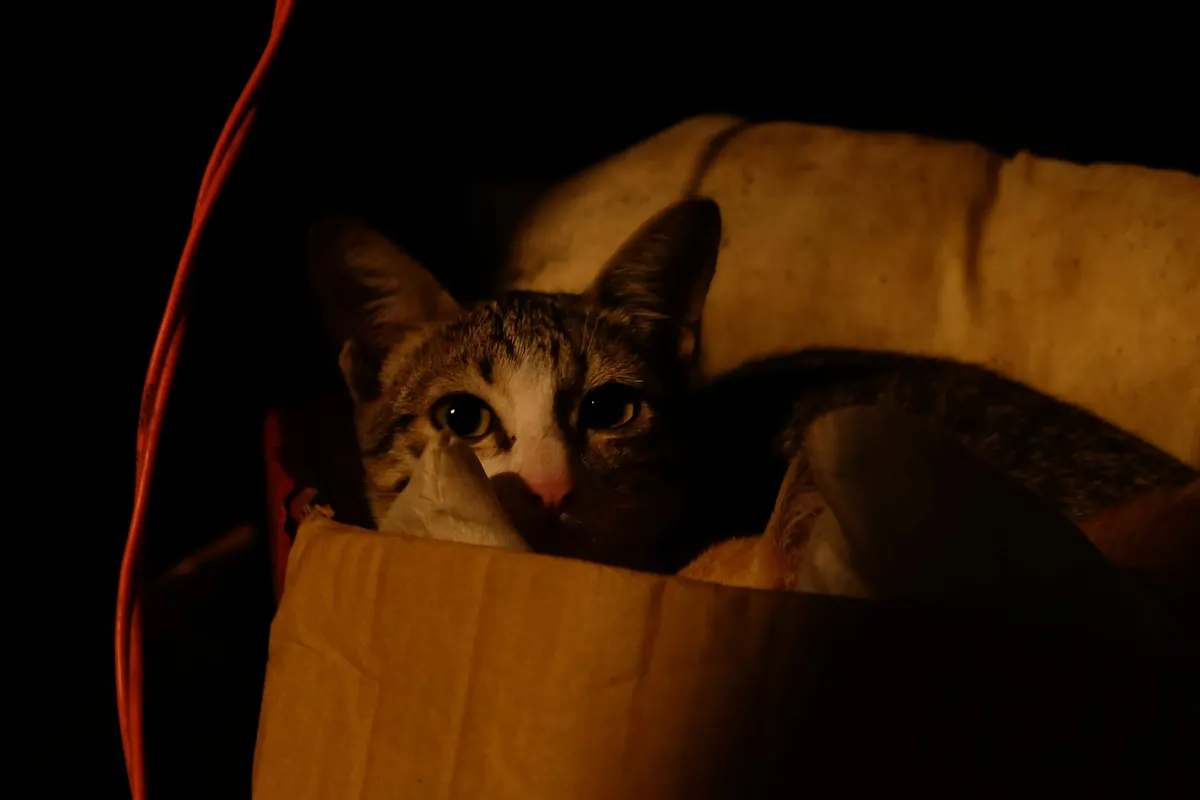
Which cats can make the move?
Cats that once lived with people, or that are clearly at ease around them, have the best chance; adult cats that have never been handled usually do not.
How to tell a stray from a feral cat
A stray is a cat that lived with people at some point and has since been lost or abandoned. With patience and a safe home, many strays settle back into life as someone’s pet. A feral cat has had little or no friendly contact with people. Adult ferals rarely come to enjoy life indoors.
Behavior usually gives the clearest clues. A stray may come up to people, houses or porches, look at you and blink, meow in reply to your voice, and walk with its tail held up like a house cat. A feral cat tends to keep its distance, avoids eye contact, stays silent, and moves low to the ground with its body tucked in.
These signs are not fixed. A frightened stray in a strange place can behave exactly like a feral cat for a while, and many scared strays relax once they are given time and quiet.
If a cat has a straight, flat tip on one ear, it has almost certainly been neutered through a trap-neuter-return program and probably has a caretaker. Read what TNR is and how it works before deciding anything for that cat. For a frightened adult that has never been handled, staying in its familiar territory with neutering and steady outside care is often the kinder choice. Very young kittens are another matter, as they can learn to trust people early; see what to do if you find kittens.
Before a friendly cat moves in, it is also worth checking that it is not someone’s missing pet. A vet can scan for a microchip, and the found an animal guide walks through the other steps.
Start with a vet visit
The first appointment is with a vet, before the cat meets your family’s other animals.
Keep the newcomer apart from your own pets until a vet has examined it. Strays can carry parasites and infections that do not show at first. Give it its own room, bowls and litter tray, wash your hands after handling it, and read common diseases in stray cats and dogs for how to set up a simple quarantine.
What the first check usually covers
At that first visit, a vet will usually give the cat a physical examination and talk to you about testing for feline leukemia virus (FeLV) and feline immunodeficiency virus (FIV) before it meets your other pets. The cat will need vaccinations and treatment for worms and fleas, and if it has not been neutered, the vet will plan when to do it. Neutering is especially useful here, because an unneutered cat feels a strong pull to roam and will try hard to get out whenever it senses a possible mate.
Ask about a microchip too. Even in a careful home, no one can guarantee a cat will never slip outside, and a chip improves the chance of getting it back. Treatments and their timing are for your vet to decide.
Set up a safe room
A single quiet room with everything the cat needs is easier to learn than a whole house, and it keeps the cat safe while it settles.
How to set up the room
A spare bedroom or study works well. Check that windows are closed or securely screened and that there are no gaps the cat could squeeze through. Inside, put food and water, at least one litter tray, a bed, scratching posts and several hiding places. A cardboard box on its side or a paper bag is enough. Visit often, and leave a radio on softly when you are out.
Let the cat decide when to come out. Once it is eating, using the litter tray reliably and showing curiosity about the door, you can begin to open up the rest of the home a little at a time. Leave one tray in the original room even after that, so the cat always has a familiar place to go.
For a cat used to soil: a cat that has always toileted outside may find an indoor tray easier if the tray starts with soil. Then, very gradually, mix in a soft, sand-like, unscented litter and reduce the soil. Keep the litter about 3 cm deep, use a large tray without a lid, place it away from food and water, and scoop at least once a day, ideally twice.
More on trays and scratching
Most cats prefer a soft surface they can dig in and bury their waste. Scented litter, deodorizers, hard pellets, crystals and plastic liners often put them off. Many commercial trays are too small for an adult cat. A tray at least one and a half times the cat’s length, such as a large storage box with a low entry cut into one side, is often more welcome. Covered and automatic trays can trap smells and stop a cat keeping watch, which matters to an animal that still feels exposed. For one cat, two trays in different places give it a choice.
Scratching is just as basic a need. It relieves stress and keeps claws in good condition, and outdoors a cat had trees and fence posts for it. Indoors, put sturdy scratching posts in several places so the cat has less reason to use your furniture.
If the cat still goes in and out
A cat that already has a home but roams outside can be moved indoors in stages, and it usually takes at least a couple of months.
A gradual plan
The gentlest way is to change one part of the day at a time. Begin by keeping the cat in overnight. When it has accepted that, extend the time indoors to cover dawn and dusk, then keep it in around mealtimes, and keep lengthening the stretch until it is home all the time. Move to the next stage only when the cat is coping with the current one. If you have been feeding outside, move the bowls indoors. Food, play and attention all help a cat link home with good things.
A securely enclosed outdoor area, if you have the space, gives a roaming cat fresh air and more to do while keeping it safe, and can make the change easier.
Replace what the outdoors gave
Outdoor life is full of climbing, watching and hunting, so an indoor cat needs those things built into its day.
Ideas for an interesting indoor life
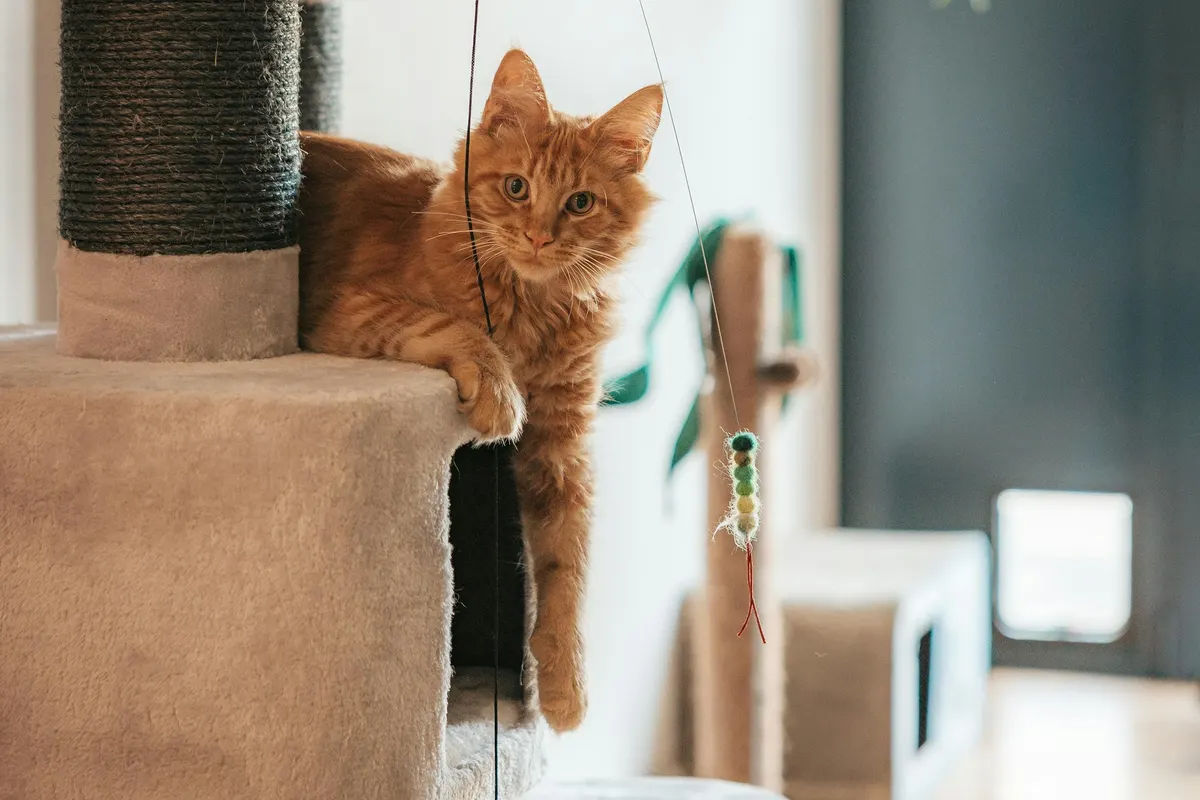
Height matters to cats. Shelves, cat trees and perches around 60 to 90 cm (two to three feet) high let a cat look down on its surroundings. A perch by a window is especially valuable, because it turns the street or garden into something to watch.
Hunting can move indoors too. Set aside a play session every day with a wand or fishing-rod toy that the cat can stalk and pounce on, and swap the toys every few days so they stay new. Hiding treats, or part of a meal, around the room or in a puzzle feeder lets the cat search for food rather than finding it waiting in a bowl.
Keep everyday hazards out of reach as the cat gets to know the house: loose wires, medicines, cleaning products and plants that are harmful to cats. If it shows interest in something unwanted, guide it toward a toy or a scratching post instead. Punishment does not work with cats; it only makes them more anxious.
Common problems and how long it takes
Door-dashing, nighttime yowling, litter accidents and scratched furniture are the usual early problems, and each has practical fixes.
Working through the usual problems
Door-dashing. A cat that has lived outside may wait by the door for its chance. Neutering helps, as intact cats are most driven to escape. Before you leave, give the cat something to do away from the door, such as a treat in a puzzle feeder or a toy tossed across the room. Choose a greeting spot far from the door and say hello and goodbye only there. For a determined escaper, a tall pet pen around the inside of the door creates a simple airlock.
Yowling and restlessness. Calling, especially at night, can come from frustration, from the urge to find a mate in a cat that is not yet neutered, or from stress. Daily play and plenty to do often help. A sudden change in voice or behavior is a reason to check with a vet.
Litter problems. A cat used to soil may need time to accept a tray, and stress alone can lead to accidents. Never punish it. Go back to the room setup above, and see why cats pee outside the litter box for a step-by-step approach.
Scratching furniture. This is normal behavior in the wrong place. Offer posts the cat prefers in the spots it already targets; how to stop a cat scratching furniture explains how.
As for time, every cat is an individual. For a roaming cat, the adjustment to staying home probably takes at least a couple of months. A frightened stray often needs time simply to relax before it shows its real personality. Some cats take a very long time, and a few never cope with life indoors. For a general picture of how rescued pets settle in, see the 3-3-3 adjustment guide.
When to ask a vet or behavior professional
Ask for help when the signs of stress are serious, are not improving, or might have a medical cause.
Contact a vet promptly if the cat’s toileting habits change, its appetite changes noticeably, or signs of stress are serious or not getting better. Medical problems can look like behavior problems, and they should be ruled out first.
Signs the move is not going well
Watch for these signs of stress or frustration, especially if they last or get worse:
- hiding all the time or withdrawing from people
- grooming far more than usual
- a change in appetite
- toileting outside the tray
- more conflict with other pets
- aggressive or destructive behavior
- much more meowing or yowling than usual
Your vet can check for illness and may refer you to a veterinary behaviorist or a qualified feline behavior consultant. They can also talk through other options for a cat that truly cannot cope with being kept in. Notes on when and where problems happen, and what you have tried, make those visits more useful.
Frequently asked questions
Will a former outdoor cat be unhappy indoors?
Not necessarily. Many cats can adjust when the home gives them things to climb, watch and hunt, plus daily play and quiet places to rest. The change is often harder for adults than for young cats, so go slowly and watch for signs of stress.
Can a feral cat ever become an indoor cat?
Adult feral cats rarely do. They have never learned to feel safe around people, and confinement is usually very stressful for them. Kittens are different, as they can learn to trust people when they are young.
How long does it take an outdoor cat to adjust to indoor life?
Usually weeks to months. For a cat that roamed, a gradual move often takes at least a couple of months, and some cats need much longer. A few never settle, and a vet or behavior professional can help you decide what is best.
For more on helping animals you meet outside, see how to approach strays safely and caring for community animals responsibly, or visit the helping stray animals section.
The tabby at the back door chose the kitchen for himself. Making it his home is slower work: a quiet room, a box to hide in, a tray of soft earth and an evening game, repeated until the house feels as familiar as the garden once did.
Sources
- Alley Cat Allies – Feral and Stray Cats: An Important Difference
- The Ohio State University Indoor Pet Initiative – Bringing Cats Indoors
- RSPCA Australia Knowledgebase – How do I adjust a roaming cat to a stay-at-home life?
- RSPCA NSW – Understanding a cat’s toileting behaviours
- Cats Protection – Indoor cats
- Battersea – How to create the best litter tray setup for your cat
- The Anti-Cruelty Society – Preventing Door Dashing
This guide is general information and not a substitute for veterinary advice.