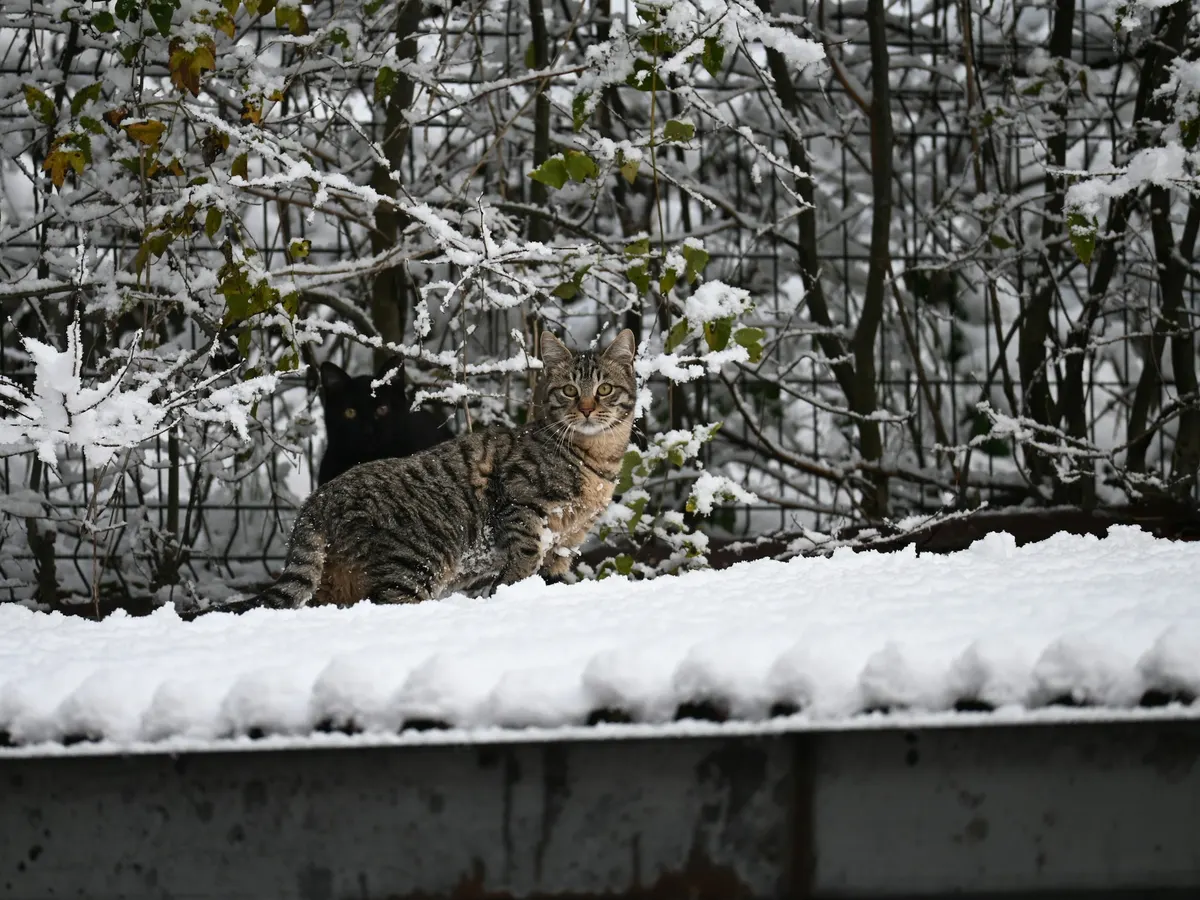
The first hard frost arrives overnight. In the morning the tabby who usually waits by the garden shed is sitting on its roof instead, paws tucked under, shoulders hunched, the snow around her untouched. She watches you set down the bowl and does not move until you step back.
She has made it through one more night. With a little planning, the rest of the winter can be easier for her.
Stray and community cats are tougher than they look. They grow a thicker coat as the days shorten, and they are experts at finding dry corners out of the wind. Still, cold turns dangerous quickly when a cat is wet, thin, very young, old or ill, and winter brings hazards made by people: warm car engines, sweet-tasting antifreeze and salted pavements.
If you already feed cats on a routine and have put out a simple shelter, you have done the most important things; caring for community animals responsibly covers those basics. This guide goes further into winter itself: how to recognize a cat in trouble, how to remove the hidden dangers, and how to keep food, water and shelter working when the temperature drops.
- Know the danger signs. Weakness, pale gums, slow breathing or a cat that has stopped shivering needs a vet now.
- Check before you drive. Look under the car and tap the hood on cold mornings.
- Keep antifreeze and de-icers away. A small amount of antifreeze can kill a cat.
- Feed a little more, and keep water liquid. Refresh both daily rather than letting them freeze.
- Keep shelters dry and clear. Loose straw, doors out of the wind, snow cleared after storms.
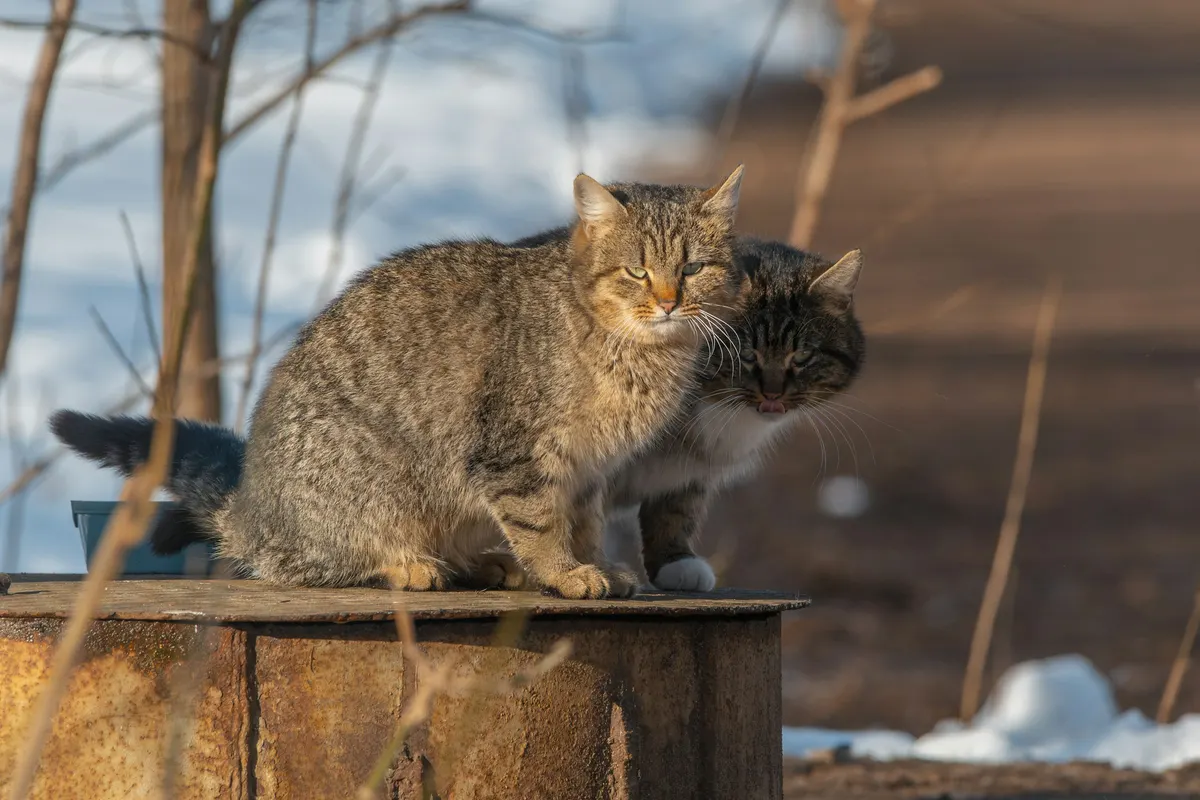
How do stray cats survive winter?
They rely on a thicker coat, shared body heat and any dry space out of the wind, but cold becomes dangerous once a cat is wet, weak or exposed for long.
Why some cats feel the cold more
A cat’s normal body temperature is about 38 to 39°C (100 to 102°F), and fur insulates well as long as it stays dry. Wet fur loses that advantage, which is why sleet, melting snow and damp bedding can be harder on a cat than a dry, still frost. Cat welfare advice suggests that below about 7°C (around 45°F), long periods outdoors can start to be unsafe.
Some cats feel the cold far more than others. Kittens, elderly cats, sick or thin cats and cats with arthritis lose heat faster and have less energy to spare, and cats with heart disease or diabetes are more prone to frostbite. If you look after a group, these are the cats to check first on a cold evening.
Signs that a cat is dangerously cold
A cat that is weak, clumsy, has pale gums or has stopped shivering in the cold may have hypothermia, and it needs a vet straight away.
Call a vet straight away if you see:
- Strong shivering, or shivering that has stopped while the cat is still cold
- Weakness, sleepiness, confusion or clumsy movement
- Pale gums, or slow, shallow breathing
- Collapse, unresponsiveness or dilated pupils
- Ear tips, paws or tail tip that look pale, grey or bluish, feel cold, or hurt when touched
While you get help: if you can do it safely, move the cat somewhere warm and dry, towel off wet fur and wrap it loosely in a blanket. Warm it gradually. Do not use hot water bottles, heating pads or hair dryers, do not rub frostbitten areas, and never give human pain medicine.
More about hypothermia and frostbite
Hypothermia means the body is losing heat faster than it can make it. At first a cat shivers to warm itself. As it cools further it grows slow and confused, its breathing and heart rate fall, and the shivering may stop. That last change can look like recovery when it is really a sign of decline; untreated, hypothermia can be life-threatening.
Frostbite strikes the parts furthest from the heart: ear tips, paws and tail tip. The skin may look pale or grey at first, then turn red and swollen as it thaws, and blisters or darkened skin can follow. These signs can take several days to show, so a cat that seemed fine on the night of a freeze may still need checking later in the week.
Both conditions need a vet even if the cat perks up once warm, because a low temperature can also point to other serious illness. A frightened cat in pain may bite or scratch, so read how to approach strays safely first, and use a carrier or sturdy box.
Cars, antifreeze and de-icing salt
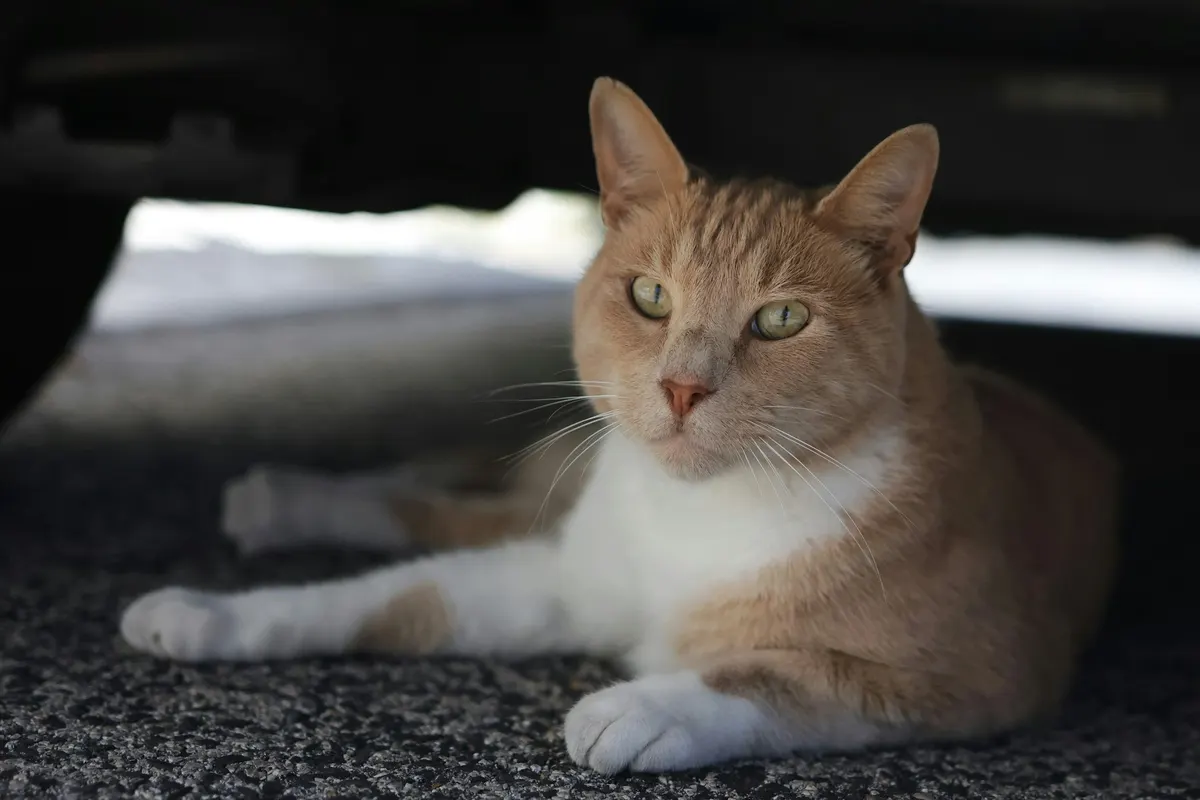
The most common winter dangers are made by people: warm engines that cats crawl into, antifreeze that tastes sweet, and de-icers that cats lick from their paws.
Before you start a car on a cold day, look underneath, check between the tires, then give the hood a few firm taps so a sleeping cat has time to escape.
Antifreeze is deadly to cats. As little as a teaspoon spilled on a driveway can be fatal. Signs may appear from about 30 minutes to 12 hours later and start vaguely: vomiting, wobbling, weakness. If you think a cat has had any contact with it, go to a vet at once, without waiting for signs.
How to reduce these risks
To a cat on a freezing night, the space around a recently driven engine looks like the warmest shelter in the street, so a few seconds of looking and tapping can save a life. For the same reason, glance into sheds and garages before you shut them; a cat that slipped in to escape the cold can be locked in for days.
Antifreeze is so dangerous because it tastes appealing and only a little is needed to damage the kidneys for good. The same poison can be found in screen wash, brake fluid and radiator fluid, and even rainwater collected in an old antifreeze container can harm a cat. Clean up spills thoroughly, keep containers sealed, and consider products made with propylene glycol, which is much less toxic.
De-icing salt and chemical ice melts do quieter harm. Cats lick them off their paws or drink from melting puddles, and the chemicals can sting their pads. Keep them well away from feeding spots and shelters, and choose pet-friendly ice melts where you can.
Keeping water from freezing
Use a thick, deep plastic container in a sunny, sheltered spot, and put out fresh water every day rather than waiting for the ice to thaw.
Practical ways to keep water drinkable
Thin bowls with a wide surface open to the wind freeze first. A deep container of thick plastic holds its warmth longer than thin plastic or ceramic, and a sunny position buys a few more hours. Rubber containers have the advantage of not cracking when the water inside freezes. Where power is available, a heated or solar-heated bowl keeps both water and wet food from turning to ice.
Keep the water outside the shelter, though. One tipped bowl can soak the bedding, and a wet bed is colder than none. A small roofed feeding station raised off the ground shields bowls from wind and snow.
More food for the cold months
Cats burn extra energy keeping warm, so give a little more food in winter and serve fresh portions daily instead of leaving food to freeze.
Feeding tips for freezing weather
Wet food takes the least energy to digest, leaving more for warmth, but it can freeze solid overnight, so serve it fresh and clear away the rest. In a well-insulated shelter, food can go inside, well away from the doorway, where the cats’ own body heat helps keep it soft. Before a storm or cold snap, leave extra food and water in case you cannot get there for a day or two.
Making a winter shelter work
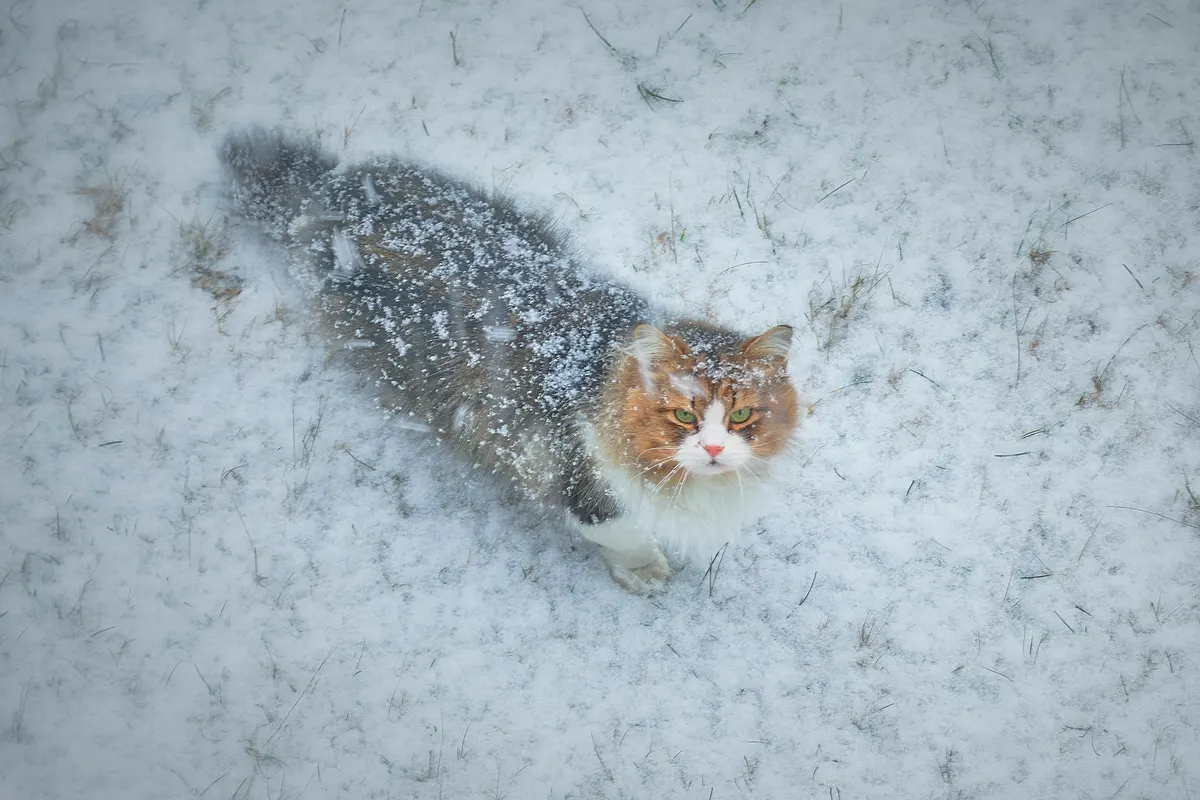
A good winter shelter is small, dry and raised off the ground, filled loosely with straw, with its entrance turned from the wind and kept clear of snow.
Shelter details that make a difference
A shelter stays warm only if the cats’ body heat can fill it, so small beats large. The basic build, size and door width are in caring for community animals responsibly; what follows keeps that shelter working through a hard winter.
Bedding. Straw repels moisture and lets cats burrow in. Pack it loosely until the shelter is a quarter to half full, top it up before storms, and replace it once it is damp or dirty. Hay looks similar but soaks up water and can go moldy. Blankets and towels draw heat away from a cat lying on them and can freeze.
Insulation. Where it is very cold, or where you cannot check often, lining the inside walls and floor with a reflective foil sheet, like the material of an emergency blanket, helps hold body heat in.
Entrances. Turn the doorway away from the wind or toward a wall. Some groups suggest two entrances, so a cat cannot be trapped inside, set so they are not directly opposite each other, which would make a draft. A simple flap helps keep out snow and rain.
Placement. Raise the shelter on a pallet or bricks, cover it with a tarp while leaving the doors open, and weigh it down against storms. Pick a quiet, familiar, hidden spot out of dogs’ reach, and set it out before the worst weather, because cats can take a while to trust it.
After snow: clear the entrances of shelters and feeding stations, and dig a path out from under porches and bushes, so no cat is snowed in.
Kittens, older cats and sick cats
The youngest, oldest and weakest cats lose heat fastest, so they need help first.
Caring for the most vulnerable cats
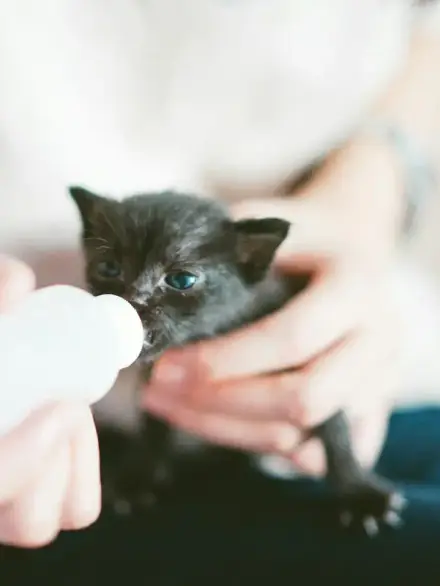
A mother cat often leaves her litter for a few hours, and warm kittens in a sheltered spot can manage that. Kittens that are cold or wet cannot wait: they need to be taken in and warmed now, and a cold kitten should never be fed until it is warm again. See what to do if you find kittens.
Older, arthritic, thin or unwell cats have less energy to spare, so act early if one stops coming to eat or looks hunched and slow. And if a group is due for neutering in winter, traps are never left unattended in the cold, trapped cats go straight into a heated vehicle or building, and they are returned only to a warm, dry shelter. Done this way, winter neutering also means fewer kittens are born in spring; see what TNR is and how it works.
When to bring a cat in or call a vet
Get a vet’s help for any cat with signs of cold injury, illness or antifreeze contact, and consider bringing in a friendly cat that may be someone’s lost pet.
How to decide
Call a vet now for any of the danger signs above, for possible antifreeze contact, or for a cat that is injured, cannot walk properly or has stopped eating. Phone ahead if you can.
A friendly, tame cat that turns up in winter may be lost rather than homeless. A vet can scan it for a microchip, and keeping it warm while you look for its owner is a kindness. The I found an animal helper walks you through the next steps.
A healthy feral cat, one that fears people and cannot be handled, is usually better off outdoors with good shelter, food and water than shut indoors, where it would be very stressed.
When spring comes, the tabby on the shed roof will stretch out in the sun as if winter never happened. What carried her through was nothing dramatic: a dry bed of straw, a bowl that did not freeze, a car that waited a few seconds before it started.
Frequently asked questions
How cold is too cold for a stray cat?
There is no single number, because a dry, healthy adult copes far better than a wet, thin or very young cat. As a rough guide, below about 7°C (around 45°F) long periods outdoors can start to be unsafe, and wind and wet make it worse.
Should I put a blanket in an outdoor cat shelter?
It is better not to. Blankets soak up moisture, draw heat away from the cat and can freeze. Loose straw stays dry and lets cats burrow in.
Can I bring a stray cat inside for the winter?
A friendly cat may be someone’s lost pet, so it can come in while you look for its owner, ideally after a vet check and microchip scan. Keep it apart from your own pets at first; see common diseases in stray cats and dogs. A fearful feral cat usually does better outdoors with a good shelter.
To learn more, see winter safety for dogs and cats, or visit the helping stray animals section.
Sources
- Alley Cat Allies – Help Outdoor Cats in Winter: Top 10 Tips
- Alley Cat Allies – Top 10 Winter Weather Tips for Community Cats
- Alley Cat Allies – Outdoor Cat Cold Weather Tips
- Alley Cat Allies – Straw, not Hay, for Outdoor Cat Shelters
- Humane World for Animals – How to Care for Outdoor Cats in Winter
- Cats Protection – Do cats feel cold?
- Cats Protection – Keeping Cats Warm & Preventing Hypothermia
- Cats Protection – How to make an outdoor stray or feral cat shelter
- Cats Protection – Found a Cat? What to Do Next
- PDSA – Hypothermia in Pets
- PDSA – Antifreeze poisoning in cats
- VCA Animal Hospitals – Frostbite in Cats
- ASPCA – Cold Weather Safety Tips
This guide is general information and not a substitute for veterinary advice.